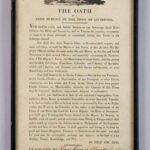
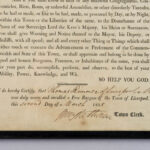
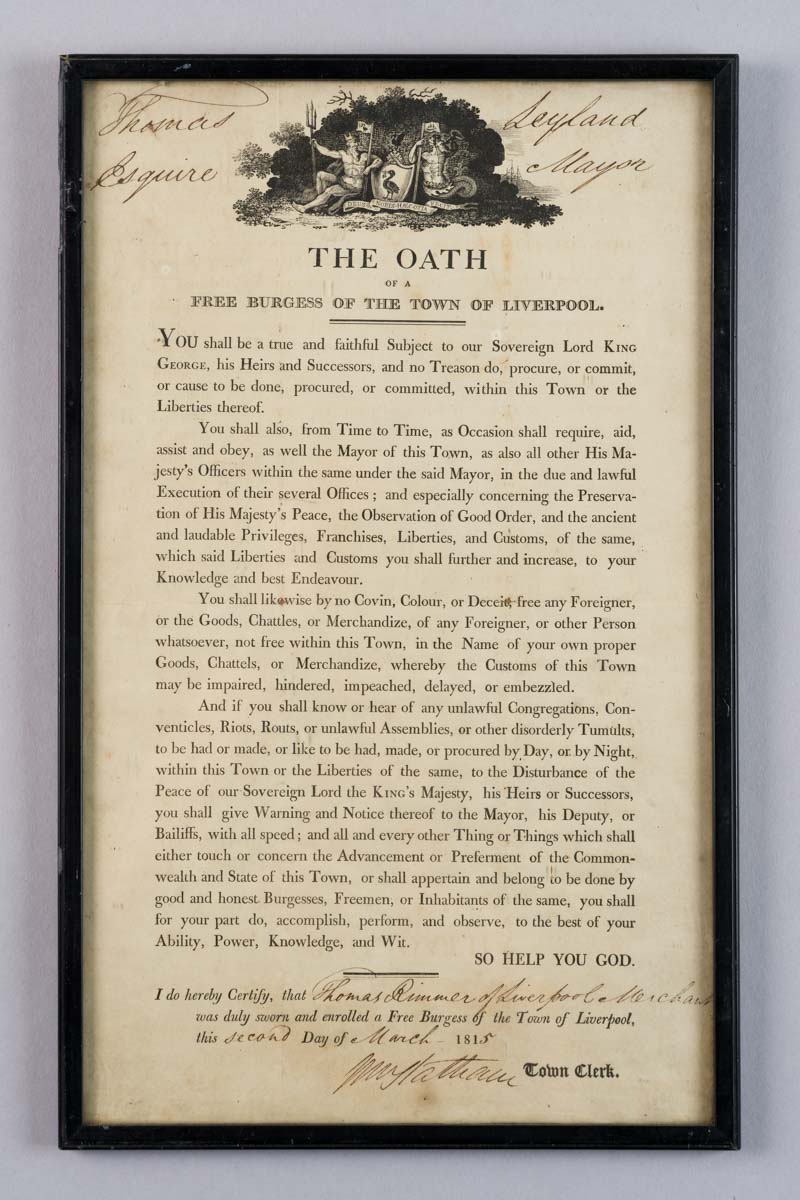
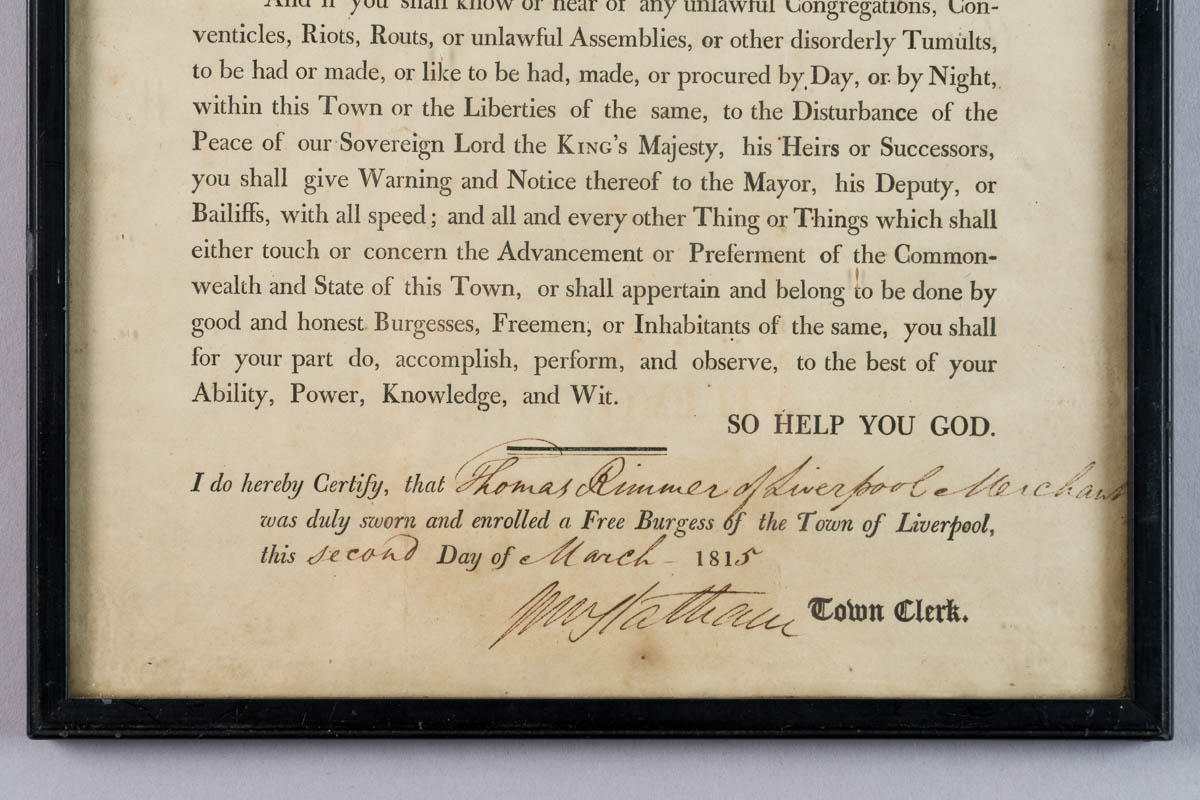
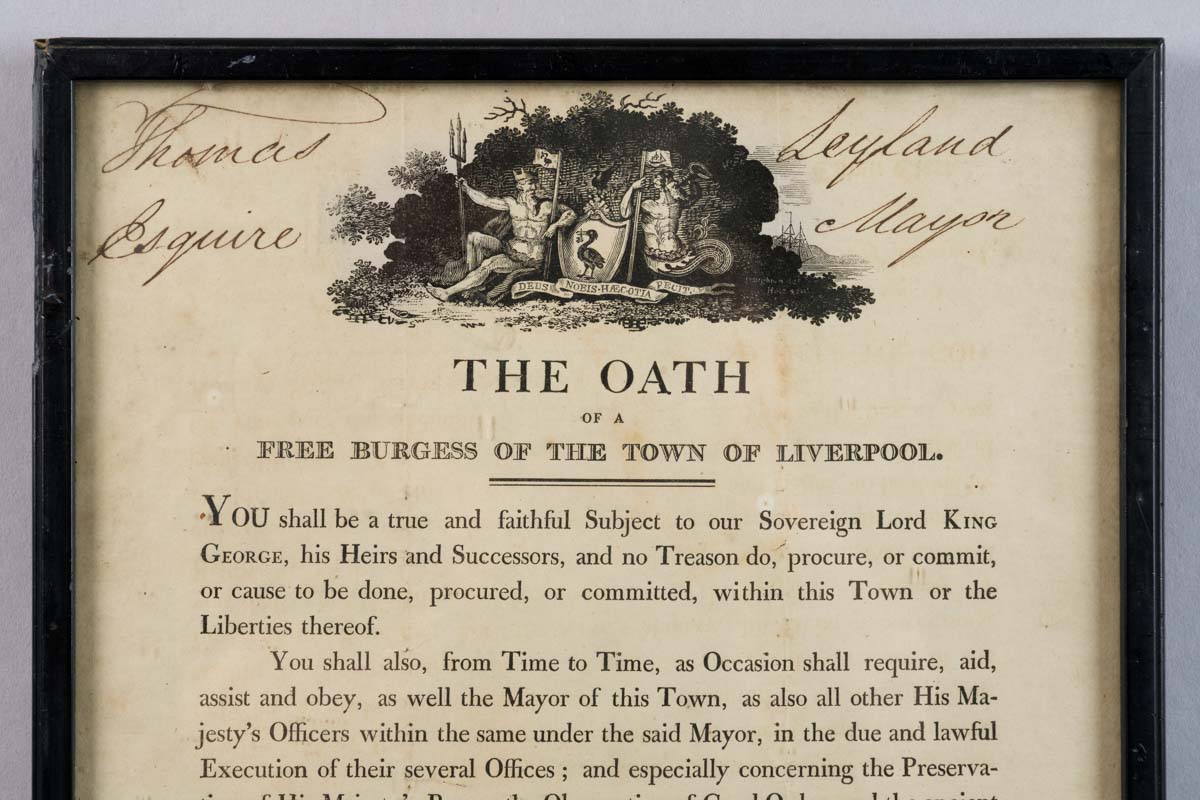
In March 1815, only months before the Battle of Waterloo, Liverpool merchant Thomas Rimmer stood before the civic authorities of one of Britain’s most important commercial ports and swore this oath.
Becoming a Free Burgess of Liverpool was considerably more than receiving a decorative certificate. The status belonged to an old system of urban privilege and civic responsibility under which freemen enjoyed particular commercial and municipal rights while accepting formal obligations to the town.
The language of the oath vividly reflects the political anxieties of Georgian Britain. Rimmer promises allegiance to King George III, obedience to Liverpool’s Mayor and officers, protection of the town’s ancient “Liberties, Franchises, Liberties, and Customs,” and even undertakes to report knowledge of “unlawful Congregations, Conventicles, Riots, Routs, or unlawful Assemblies.”
That wording places the document firmly within the social and political world of Britain during the final phase of the Napoleonic Wars.
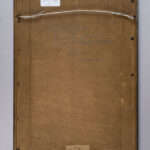
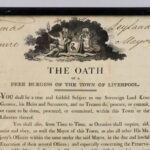
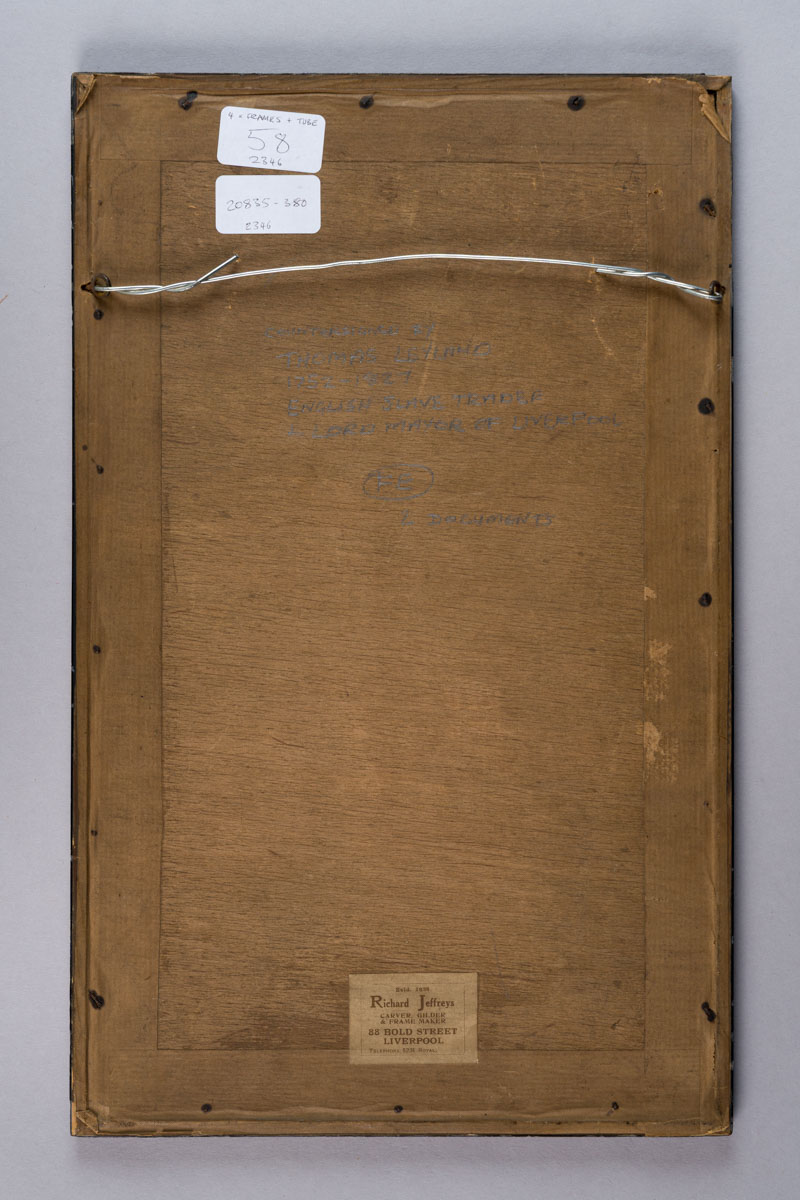
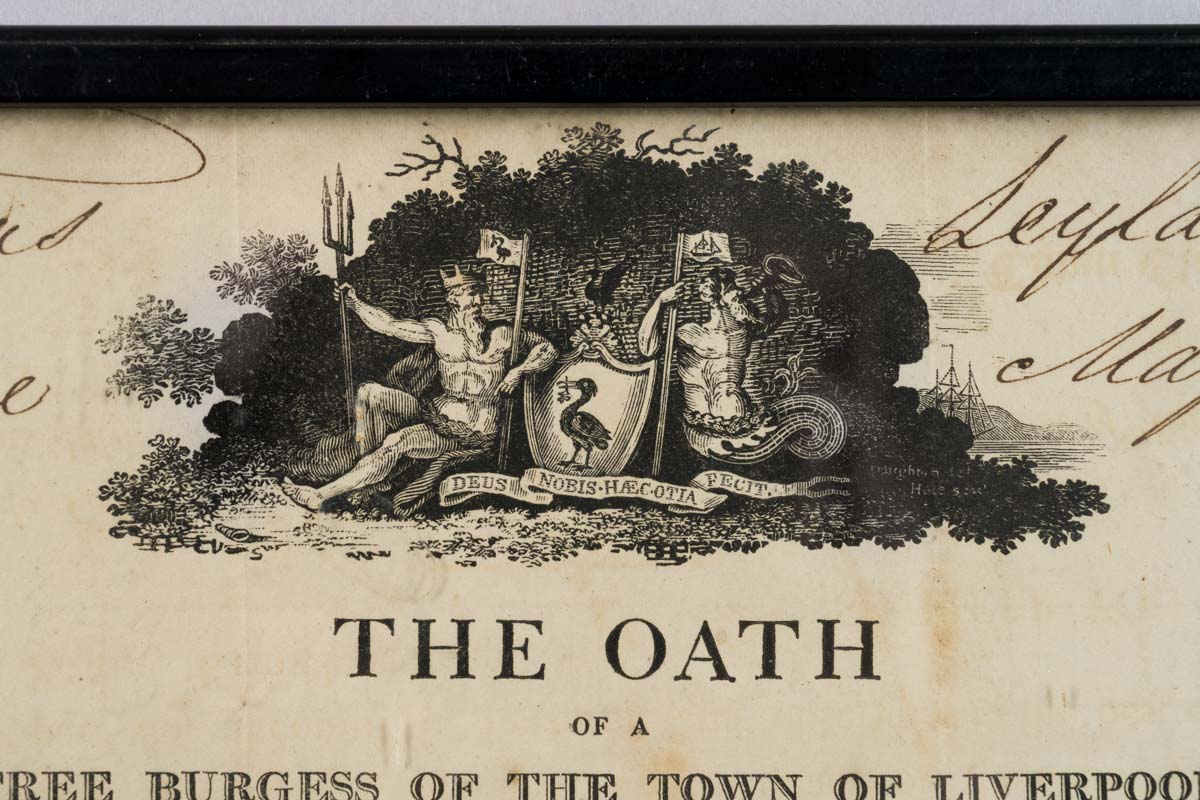
There is also a strong Liverpool connection beyond the document itself. Its engraved heading incorporates the city’s celebrated Liver bird, flanked by Neptune and Triton and accompanied by Liverpool’s motto, Deus Nobis Haec Otia Fecit. The surviving Liverpool framer’s label on the reverse adds another layer to its local history.
Unlike an unused printed form, this example became part of the documentary record of an actual Liverpool citizen. The manuscript completion, date and signatures transform a piece of civic printing into a tangible record of the commercial and municipal life of Georgian Liverpool.
This is an evocative piece of Liverpool social, commercial and civic history, combining printed ephemera, manuscript material and attractive heraldic engraving.
Its appeal extends beyond collectors of Liverpool history. It is relevant to collections concerned with Georgian Britain, municipal government, merchant history, freemen and burgesses, British social history and early nineteenth-century printed ephemera.
Most importantly, it is a document that can be understood immediately when displayed: an actual oath sworn by a Liverpool merchant more than two centuries ago, in 1815, with the original manuscript completion still clearly visible.