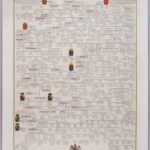
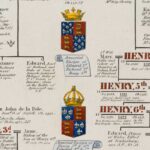
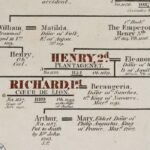
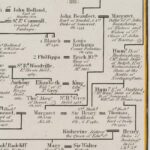
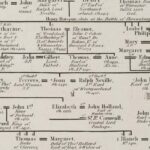
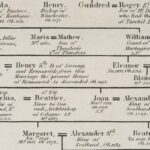
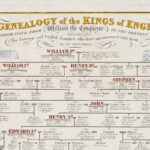
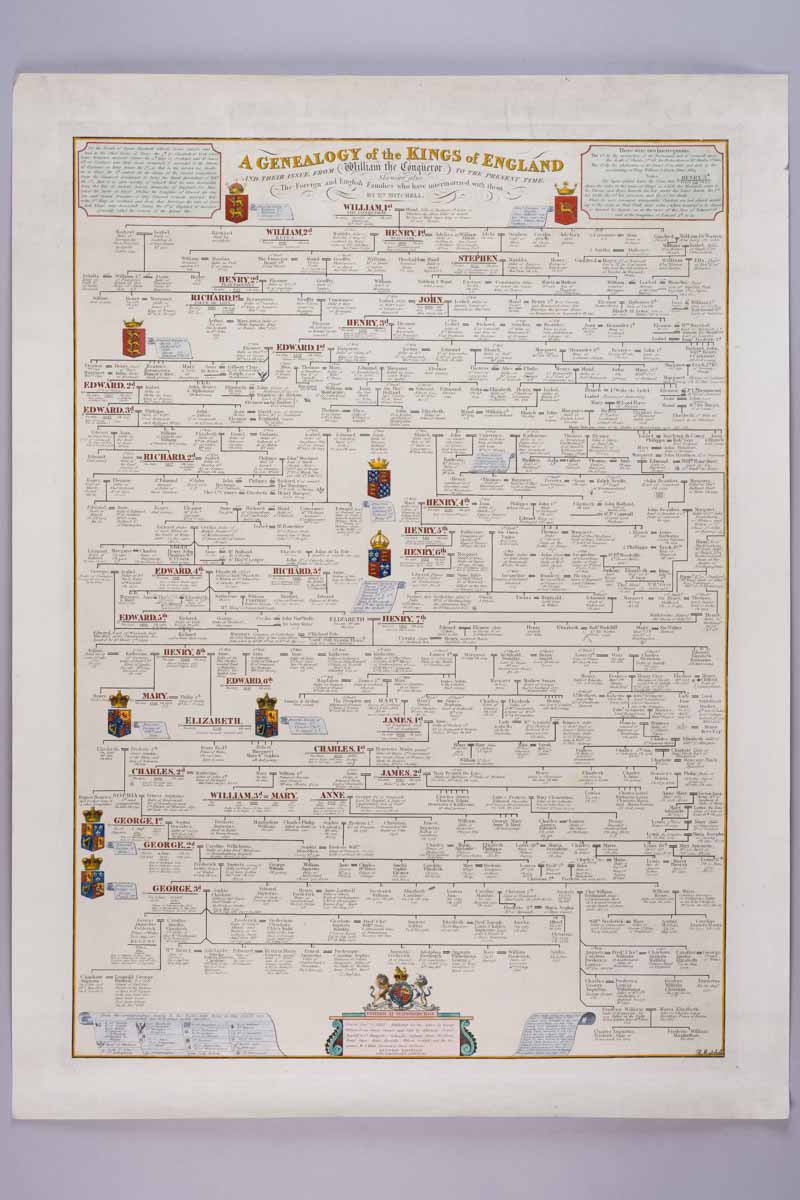
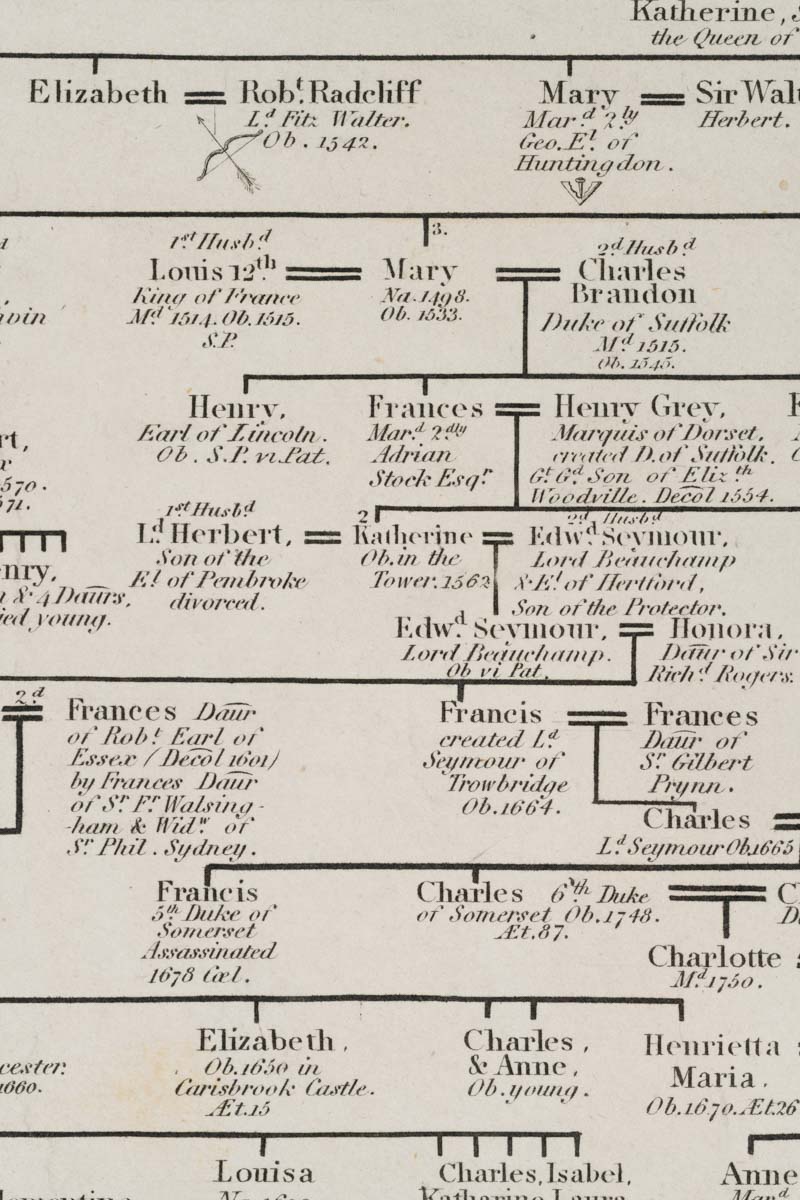
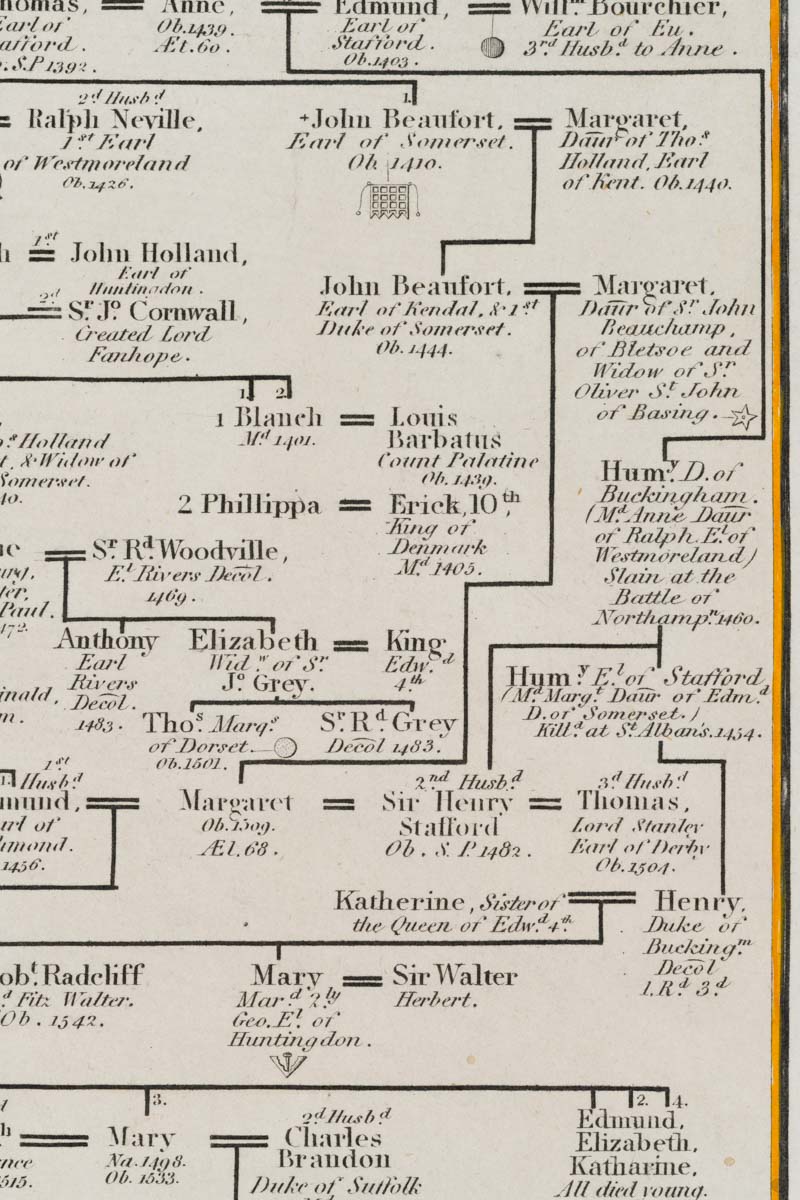
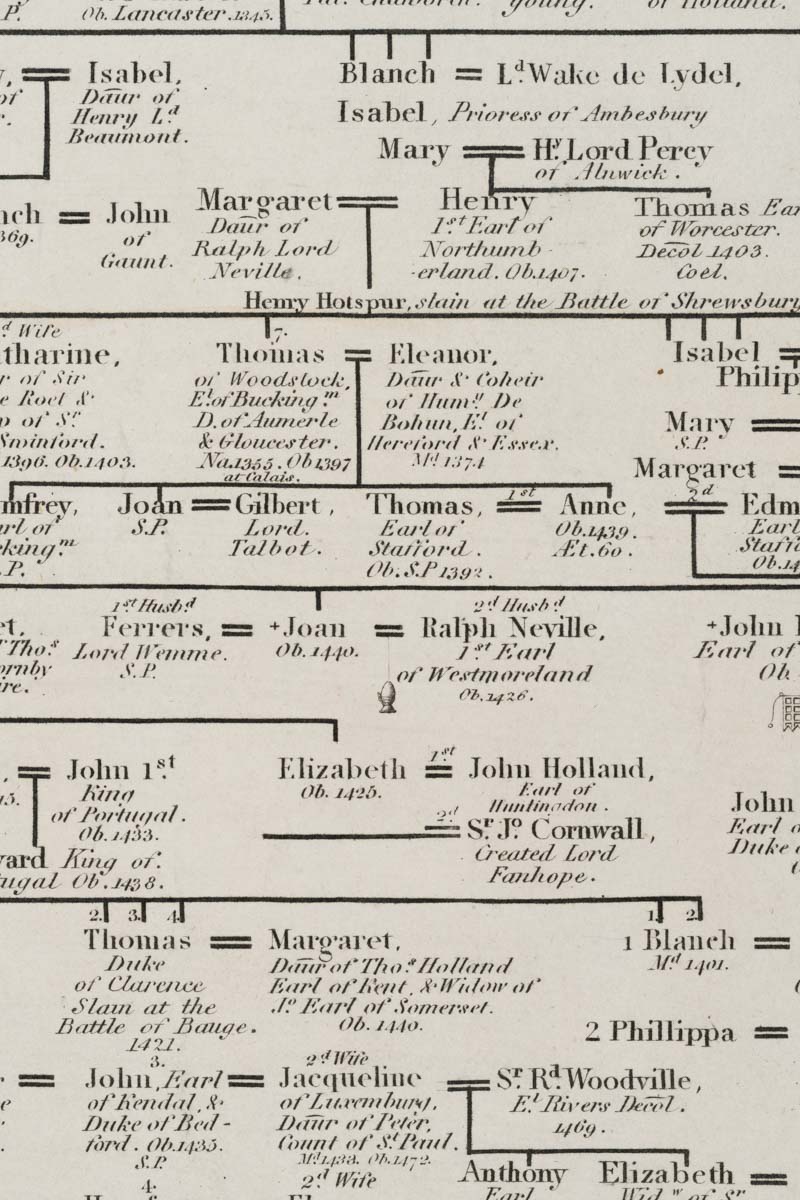
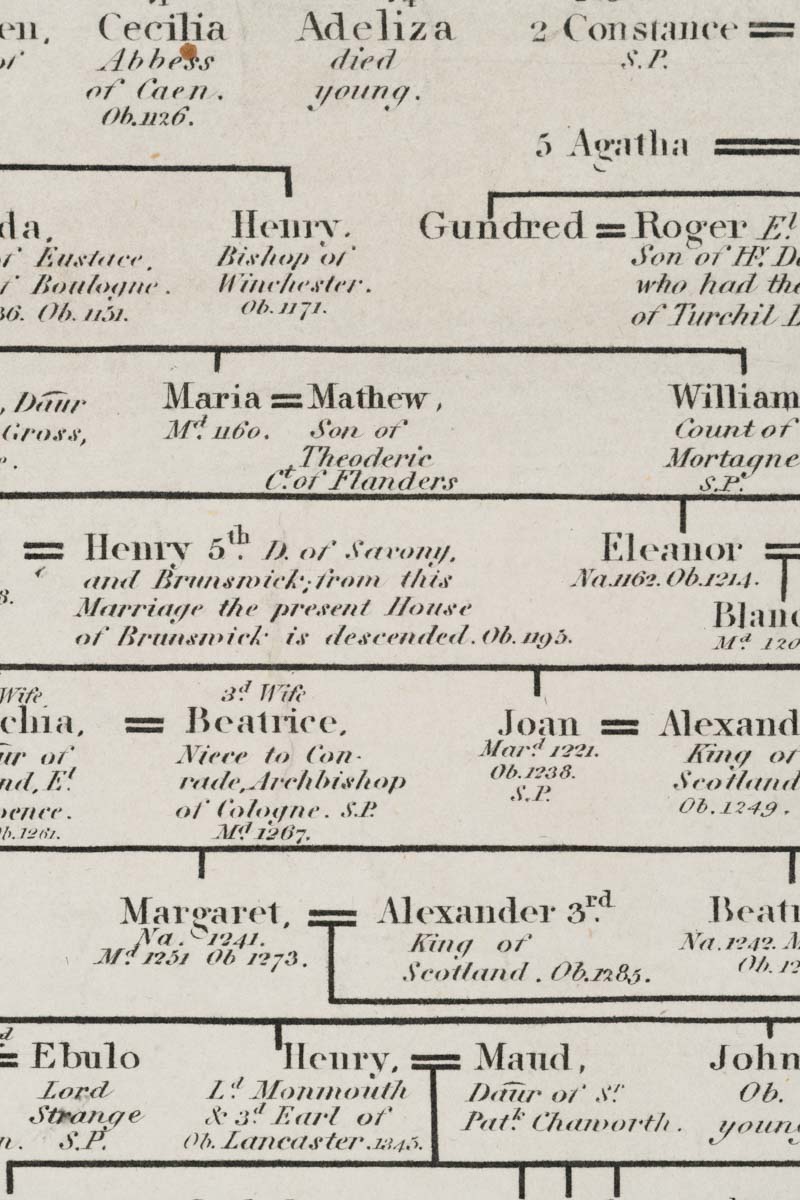
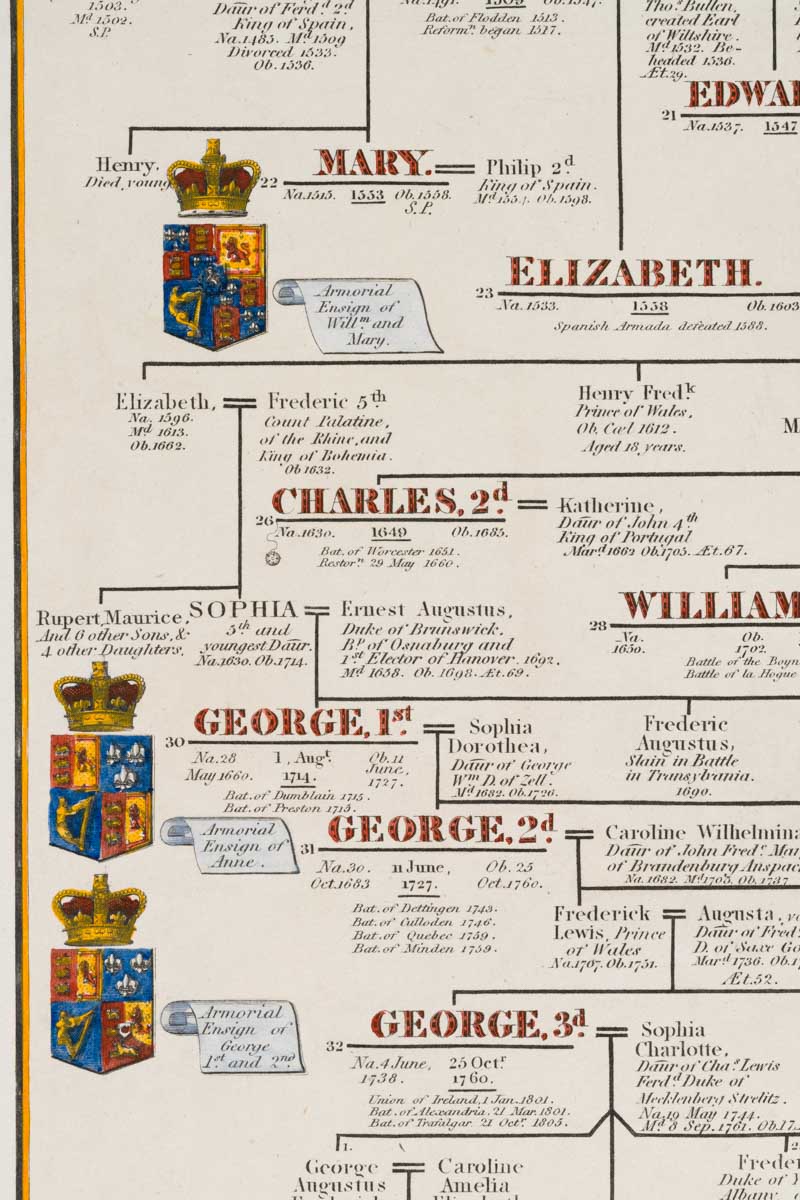
Before history could be searched electronically or royal ancestry reduced to a simple family tree, objects such as this extraordinary chart attempted something considerably more ambitious: to place almost the entire history of the English monarchy before the viewer on a single sheet.
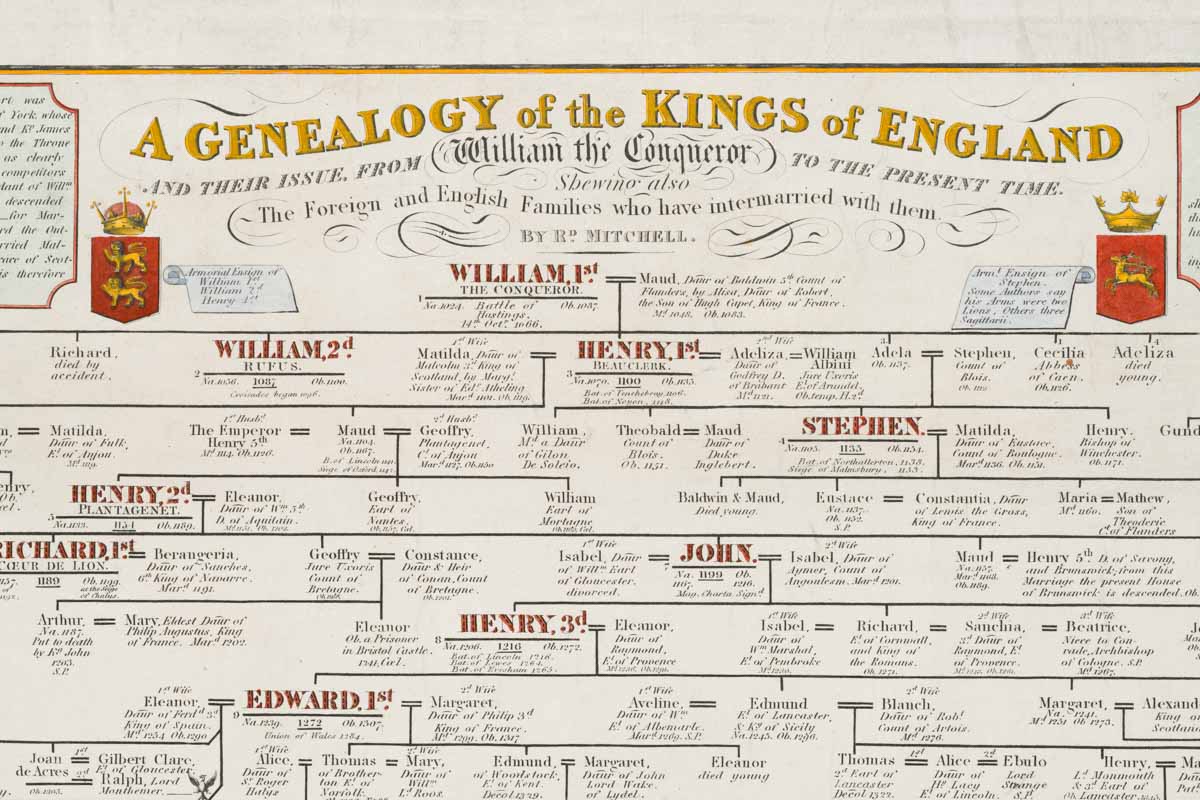
Beginning with the earliest English kings, the genealogy follows the Crown through centuries of marriage, inheritance, disputed succession, civil war and dynastic change.
The great royal houses emerge across the sheet — Plantagenet, Lancaster, York, Tudor, Stuart and Hanover — interconnected through a remarkably intricate network of descent.
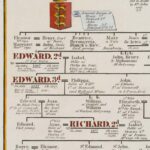
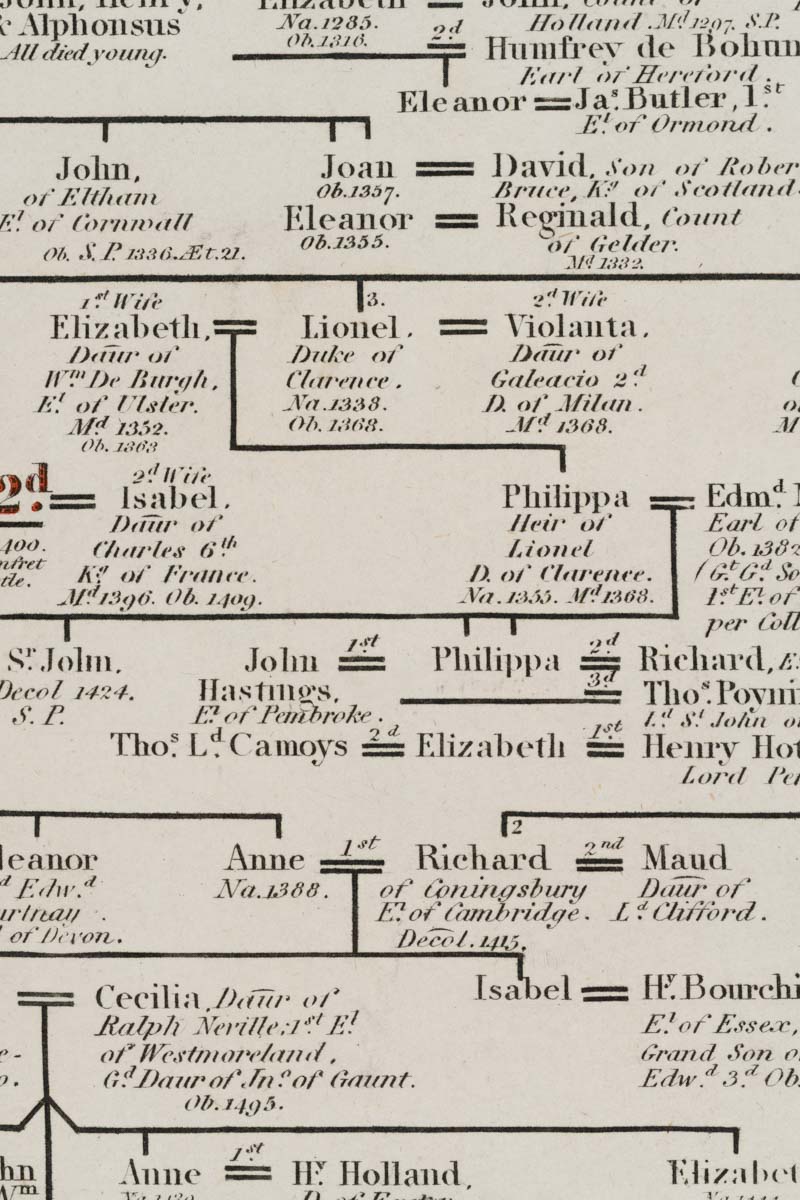
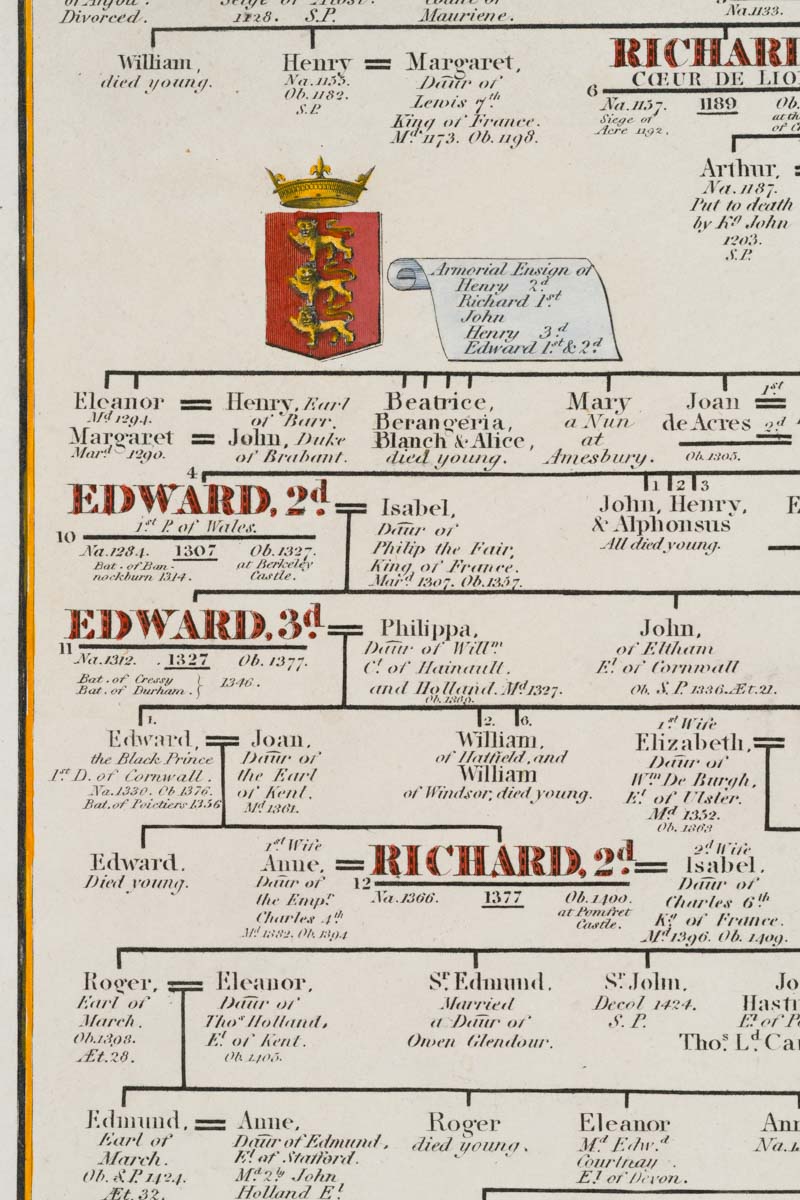
The chart also demonstrates why English royal history was rarely a straightforward progression from father to son. Younger children, daughters, cousins and marriages into other noble and European royal families repeatedly became crucial to determining who would ultimately inherit the Crown.
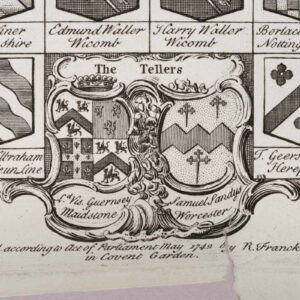
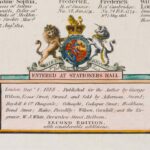
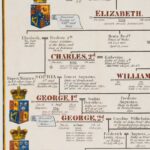
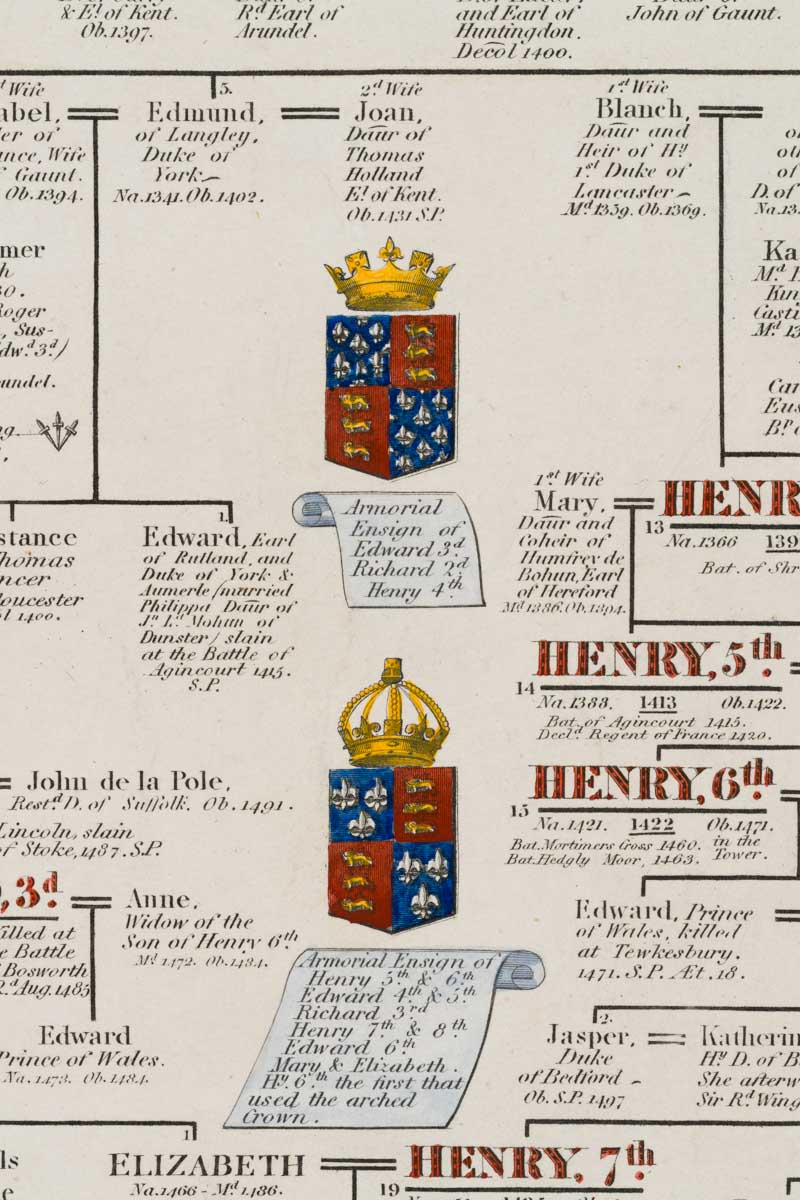
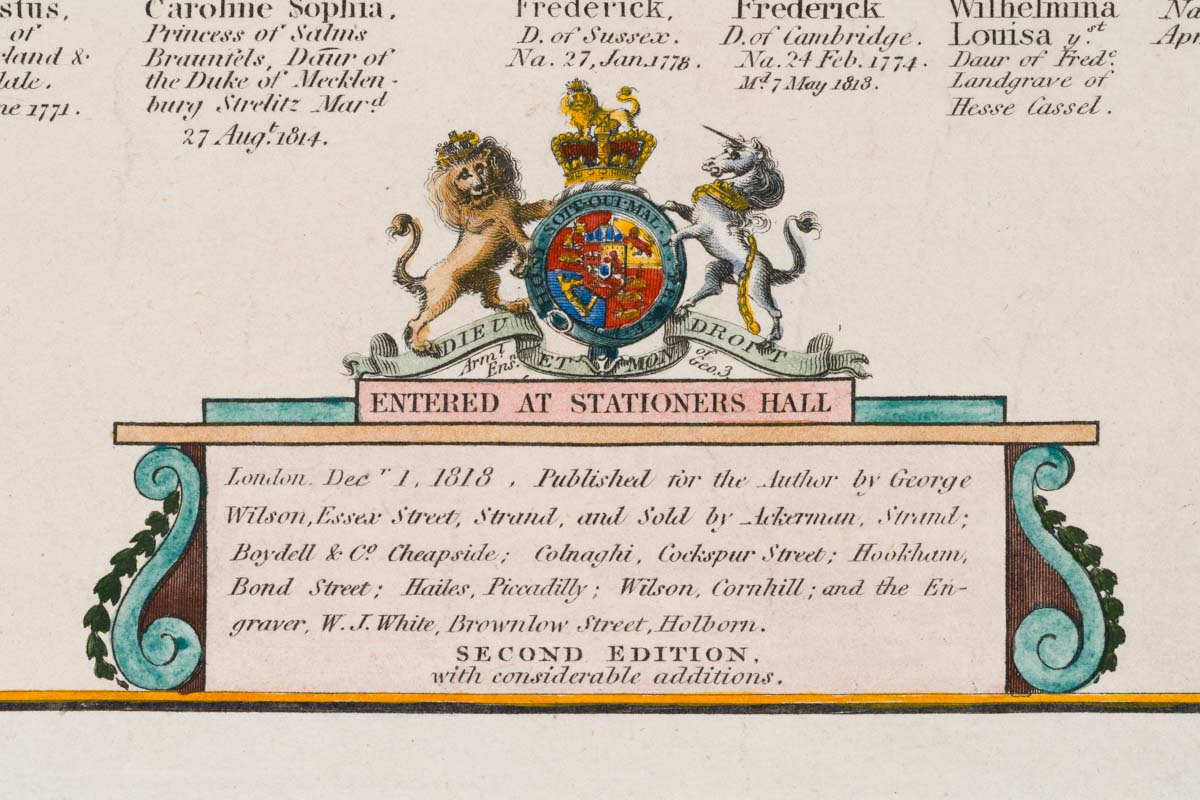
The hand-coloured heraldry provides visual landmarks within this enormous genealogical landscape. The royal arms associated with important monarchs and dynasties allow the viewer to follow not only changes in succession but the evolution of the symbols through which royal authority itself was represented.
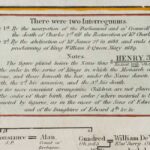
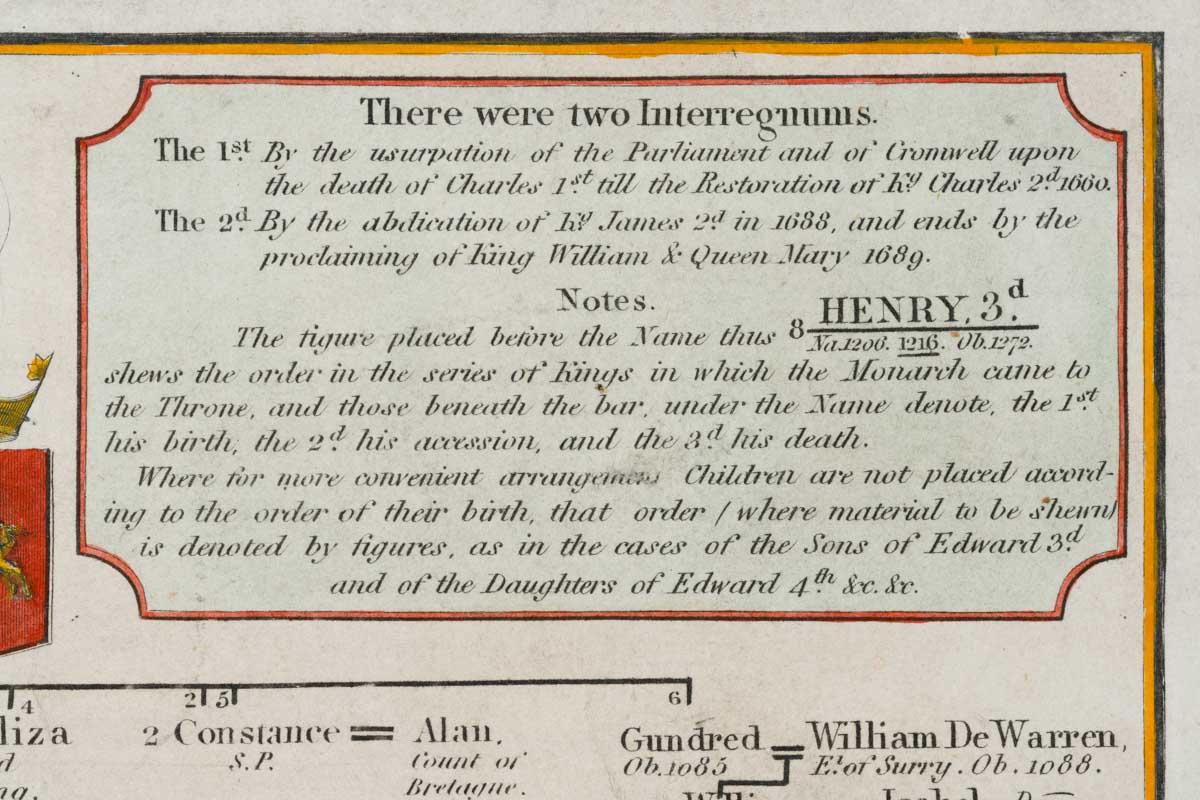
Particularly fascinating is the chart’s treatment of periods when the monarchy was interrupted. Its explanatory panel specifically records two Interregnums: the Commonwealth following Charles I’s death and the period between the abdication of James II in 1688 and the proclamation of William III and Mary II in 1689.
By the time the genealogy reaches George III, the viewer has travelled through centuries of English constitutional and dynastic history.
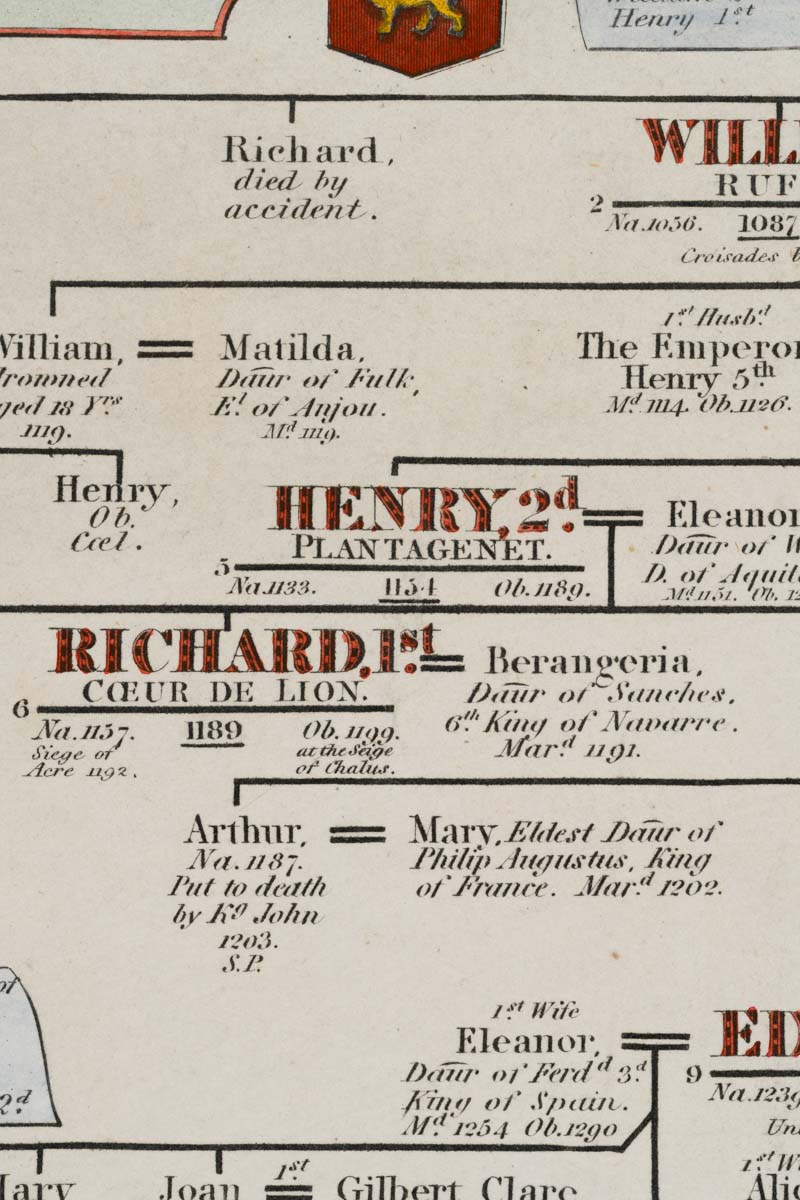
It is an object that can be studied repeatedly: individual monarchs lead into forgotten children, marriages reveal unexpected connections between dynasties, and apparently distant branches ultimately reconnect with the succession to the throne.
This is an unusually impressive combination of royal history, genealogy, heraldry and decorative engraving.
Its large scale and extensive hand-coloured heraldic elements give it immediate visual presence, while the extraordinary density of genealogical information makes it considerably more than a decorative historical print.
For collectors of British history, the monarchy or heraldry, it offers the history of the English Crown presented as contemporaries themselves understood it: through bloodline, marriage, inheritance and arms.
It is also precisely the type of historical object that rewards physical display. Viewed from a distance it is a handsome Georgian royal genealogy; examined closely, it becomes an intricate historical document containing hundreds of individual relationships and biographical details.