This extraordinary engraving was created out of one of the most contentious parliamentary elections in eighteenth-century London.
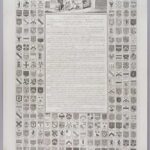
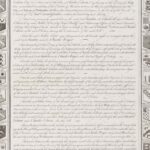
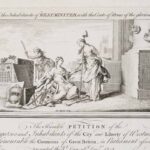
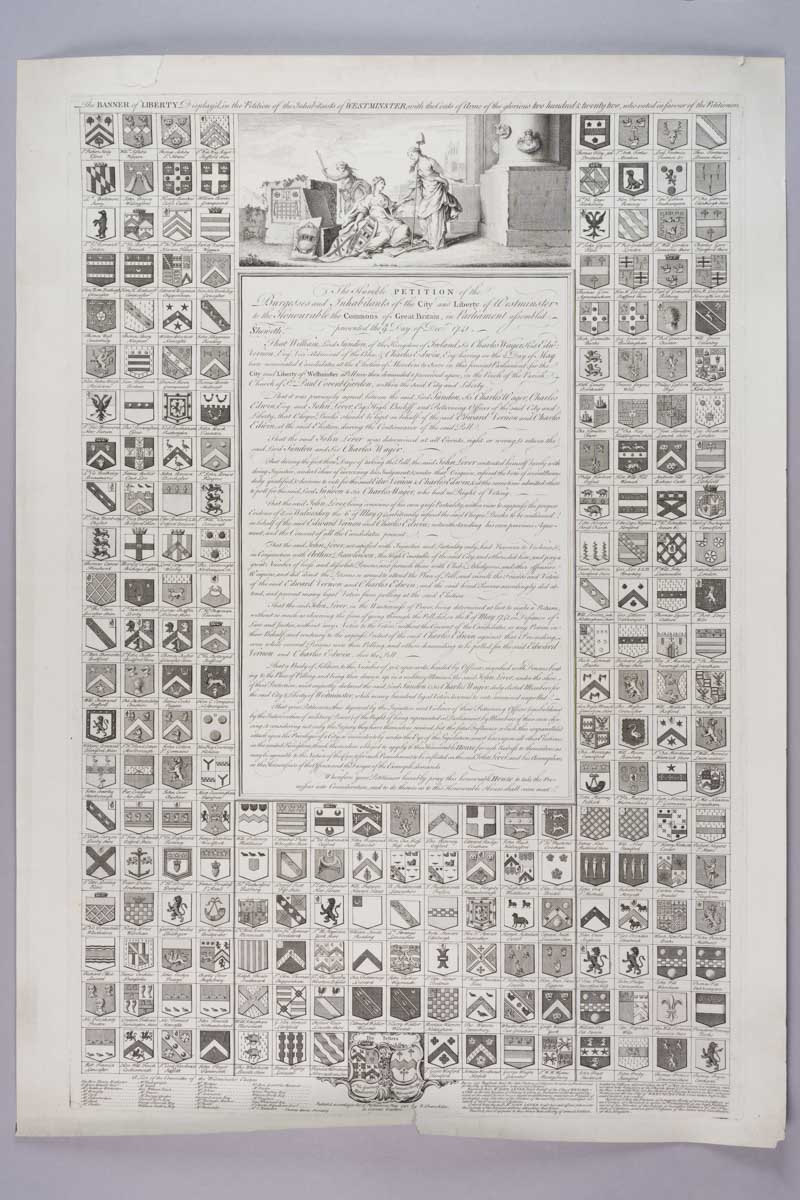
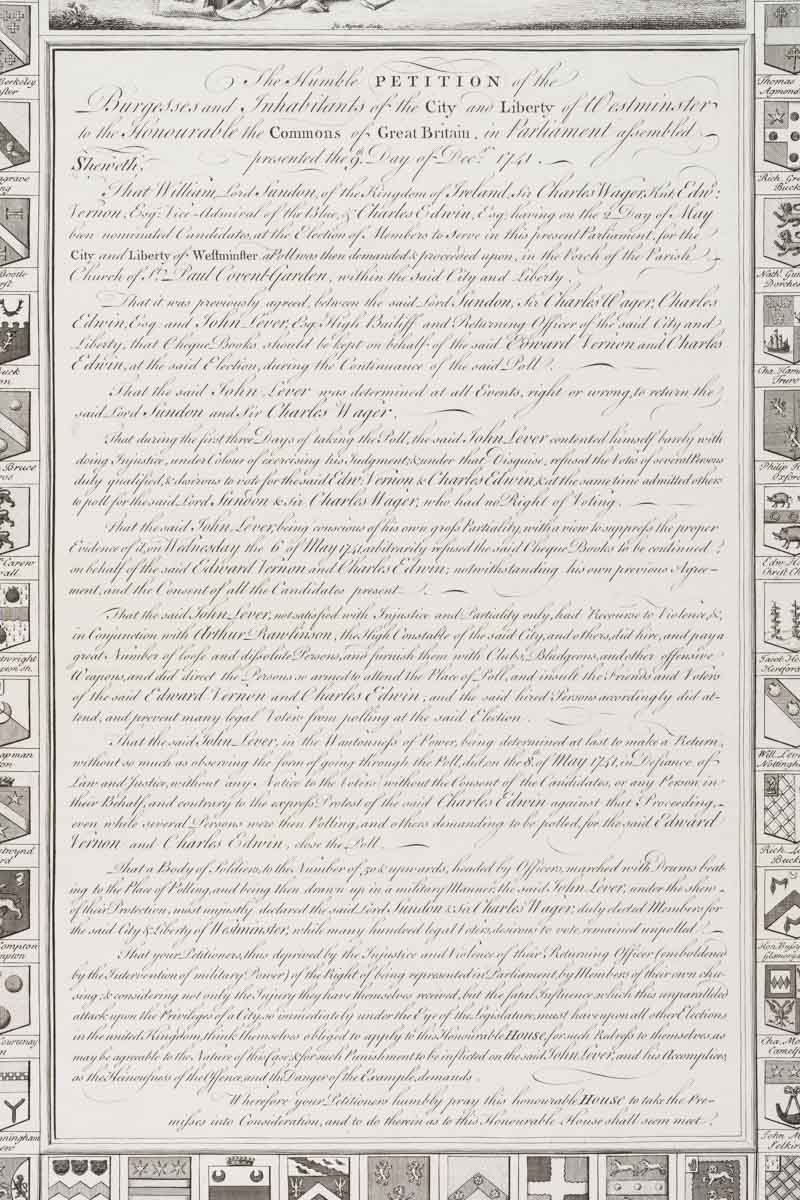
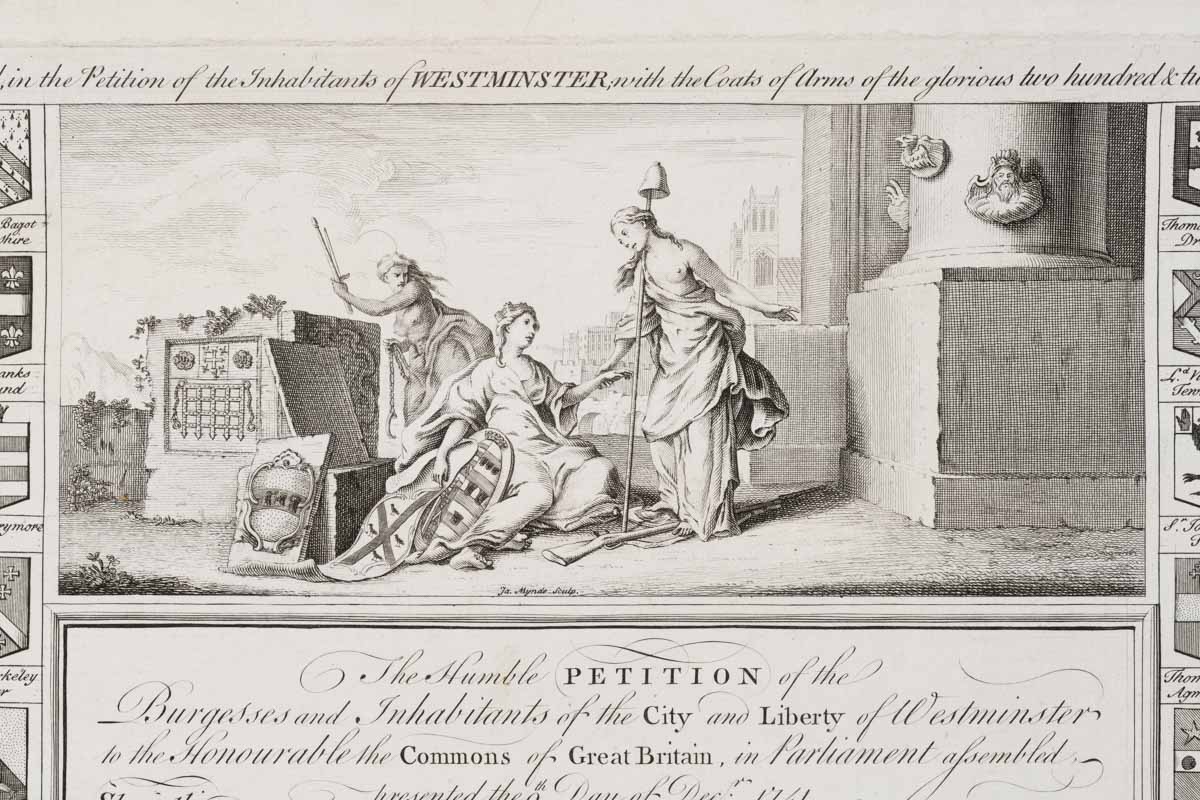
The Westminster election of 1741 became a struggle extending far beyond the choice of two Members of Parliament. The petition reproduced at the centre of this engraving accuses supporters of the government interest of interference, intimidation and the improper use of military force during the poll.
The petitioners alleged that armed soldiers had appeared during the election and that their presence threatened the ancient right of electors to choose their representatives freely.
Their response was not merely written protest.
The following year, the episode was transformed into this remarkable visual declaration of political solidarity.
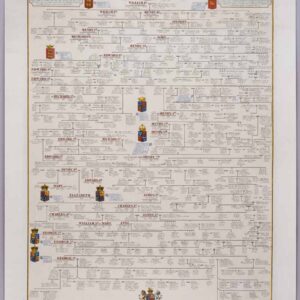
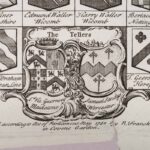
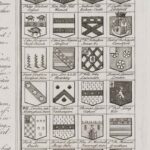
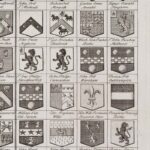
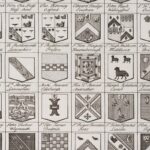
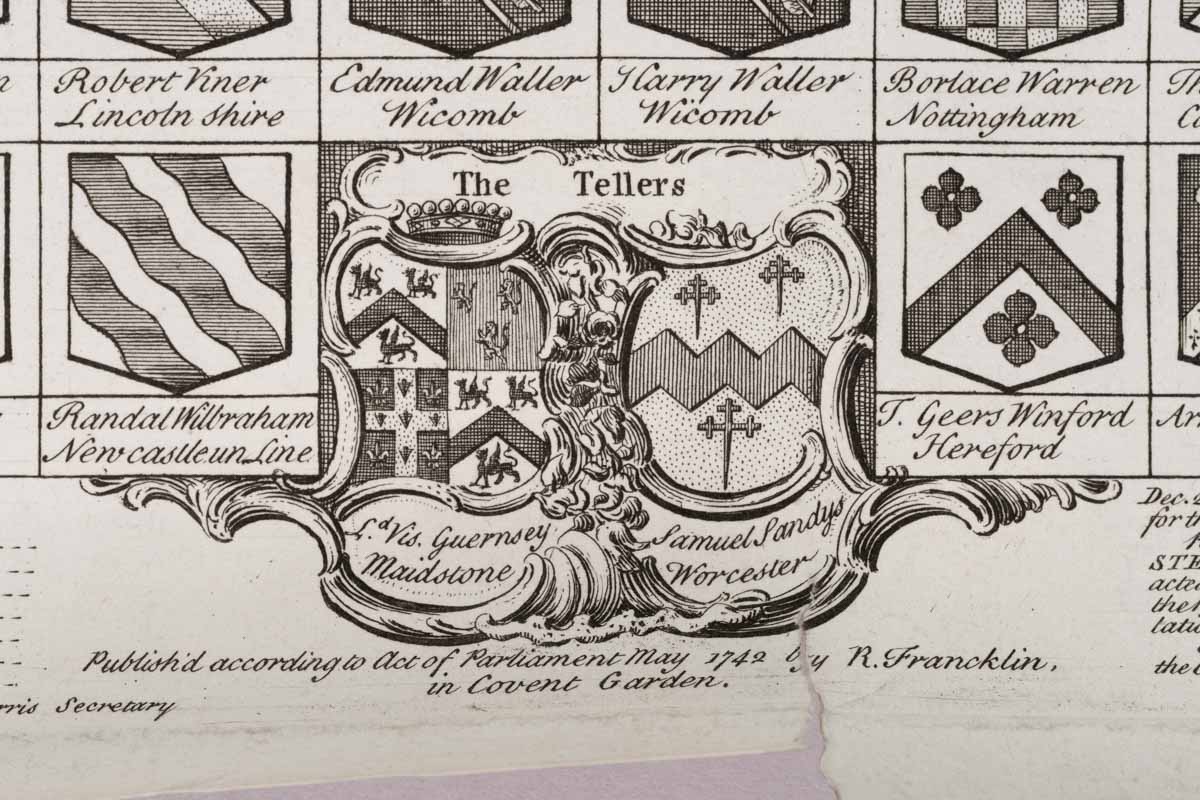
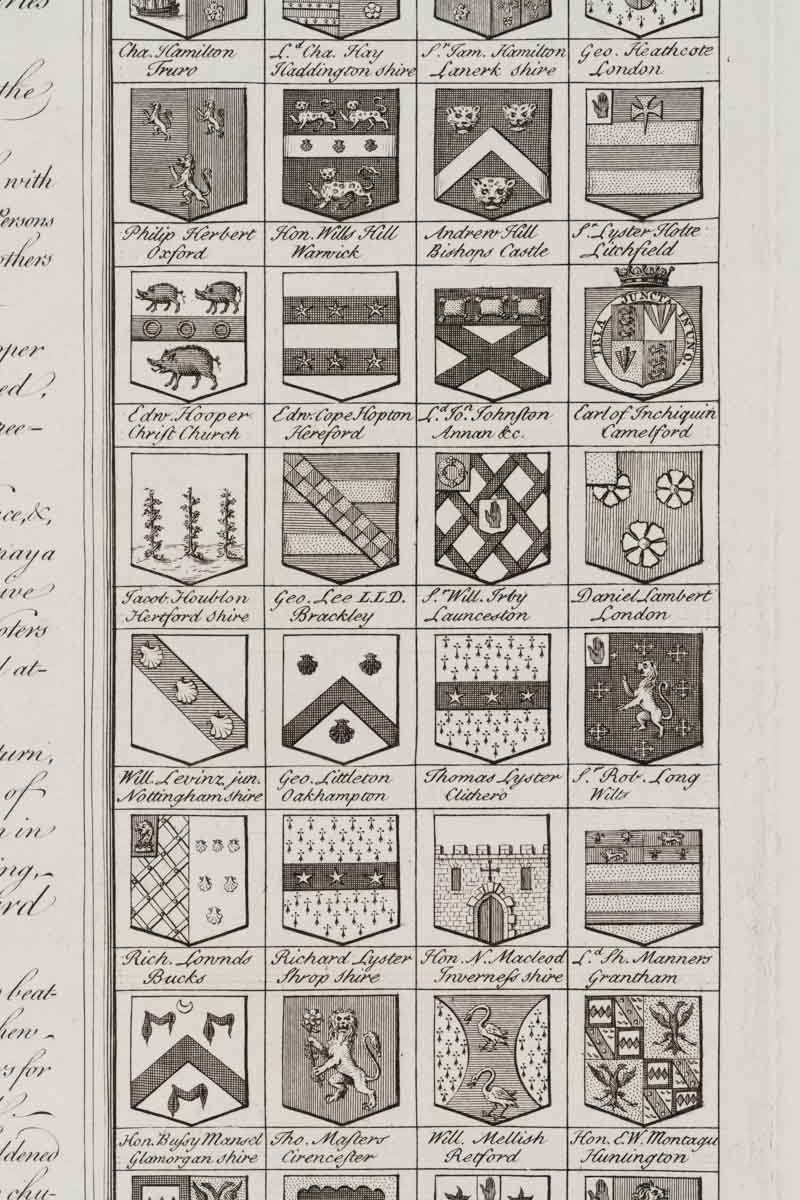
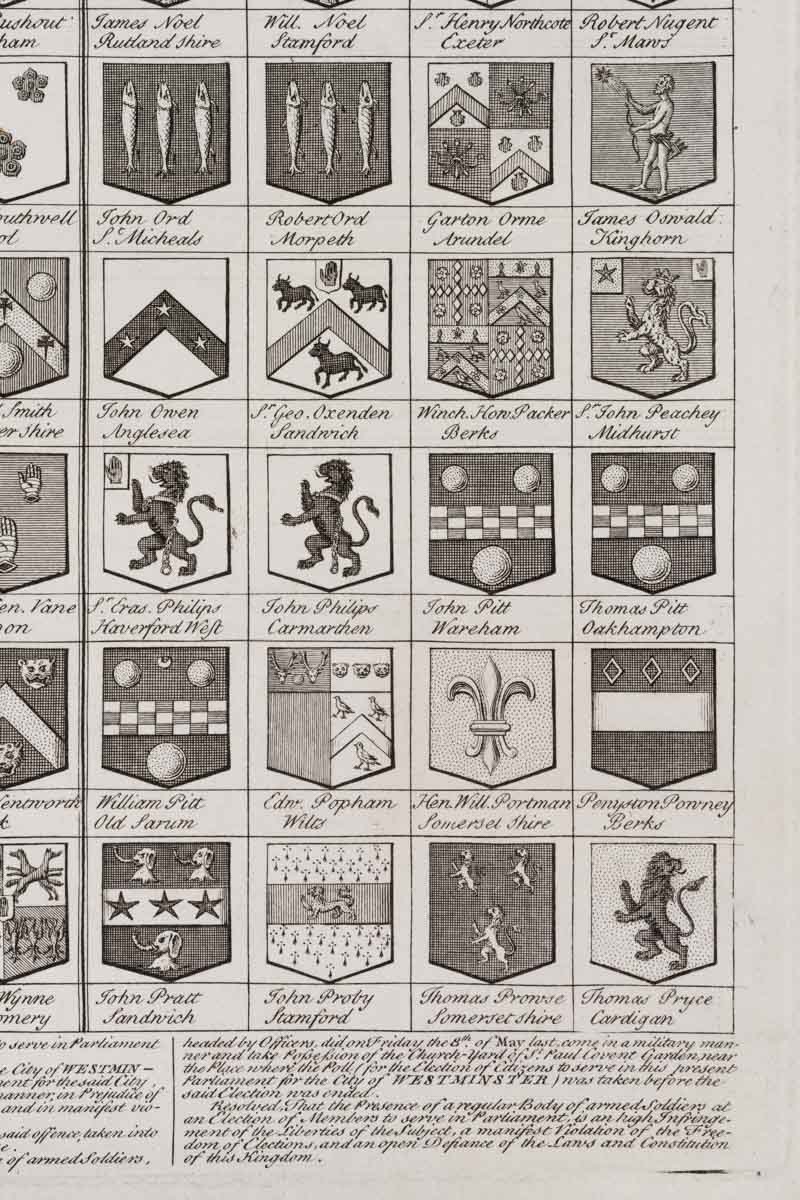
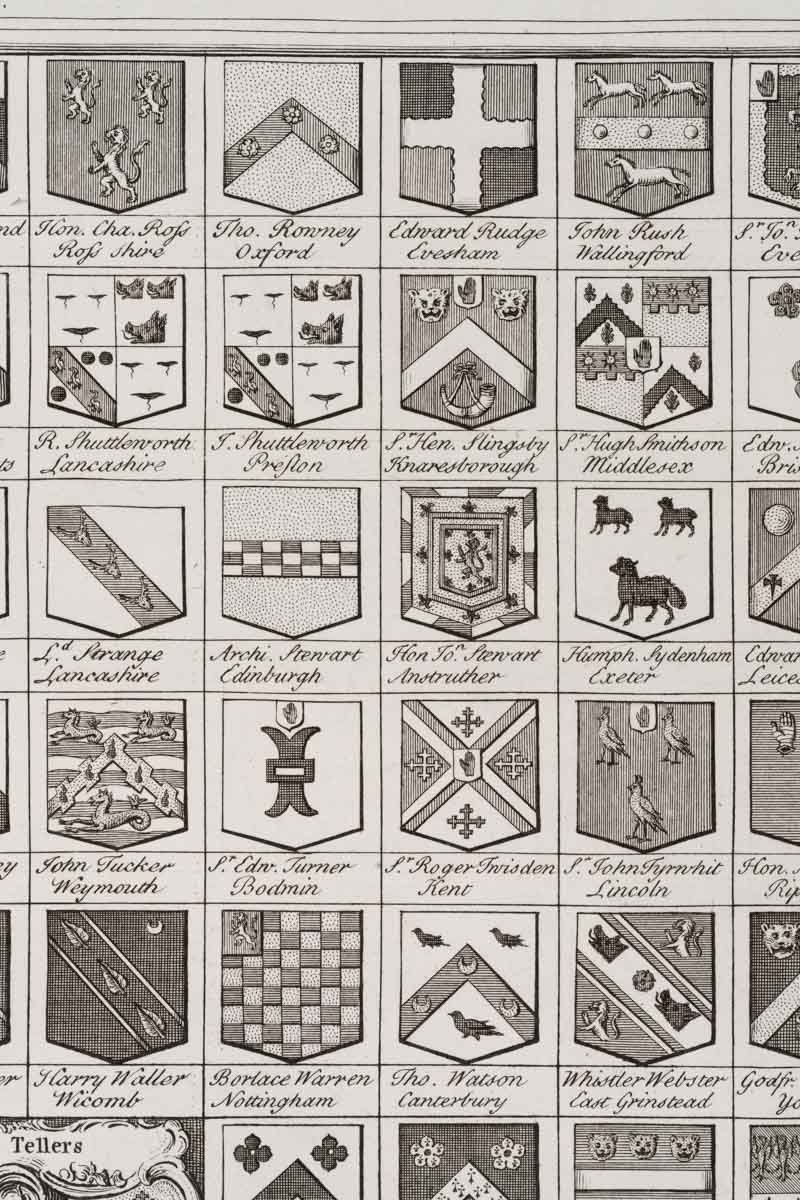
Surrounding the petition are 222 individual coats of arms, representing the men who supported it. Their identities were therefore quite literally placed around the grievance they had endorsed, turning the engraving into both a political document and a collective portrait expressed through heraldry.
At its head, an elaborate allegorical scene presents Liberty within the architectural and symbolic landscape of Westminster. Below, the dense field of heraldic shields creates what the publisher called a “Banner of Liberty.”
Published in 1742, more than three decades before the American Declaration of Independence and nearly half a century before the French Revolution, the print belongs to Britain’s developing eighteenth-century debate about electoral independence, parliamentary representation and the limits of governmental power.
It is therefore far more than a decorative heraldic sheet. It is a substantial surviving artefact of Georgian political culture — a visual record of men prepared to attach their names and family arms publicly to a protest concerning the freedom of parliamentary elections.
The sheer visual impact of the engraving is exceptional. Hundreds of heraldic devices surround a central parliamentary petition and a large allegorical composition, producing an object that rewards examination both from across a room and at close range.
Its collecting interest is unusually broad: British political history, parliamentary history, Georgian London, heraldry, genealogy and eighteenth-century engraving all converge in one object.
The individual identification of the 222 supporters also provides considerable scope for further genealogical and historical research.
Above all, this is an impressive example of eighteenth-century political propaganda presented on a monumental scale — an object designed not simply to record a political argument, but to make that argument visible.