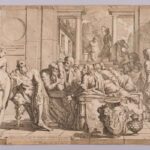
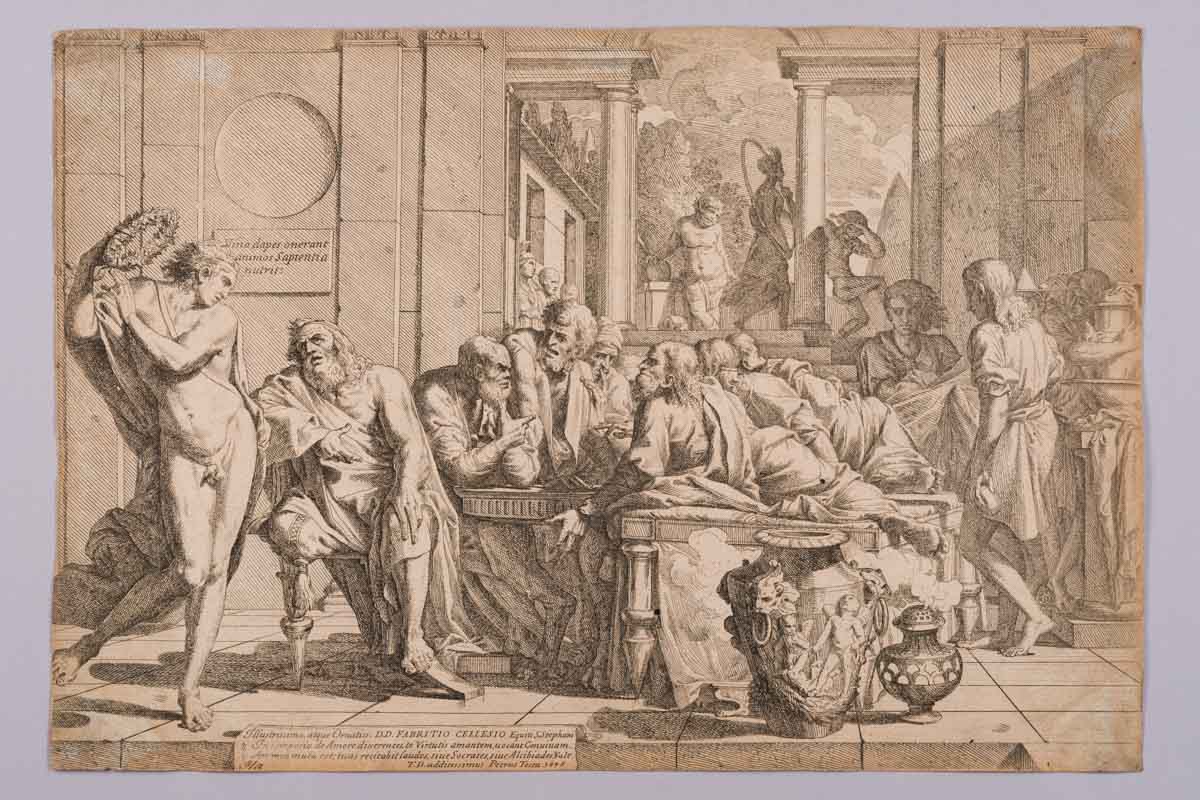
In 1648, Pietro Testa turned to one of the great texts of Western philosophy for this ambitious composition: Plato’s Symposium.
The dialogue takes place during a banquet at which Socrates and his companions debate the nature of love, beauty and virtue. Testa chooses one of its most theatrical moments—the arrival of the intoxicated Alcibiades, who interrupts the gathering and ultimately delivers his extraordinary praise of Socrates.
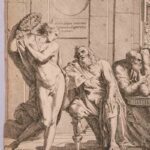
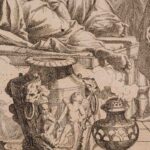
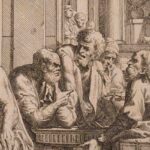
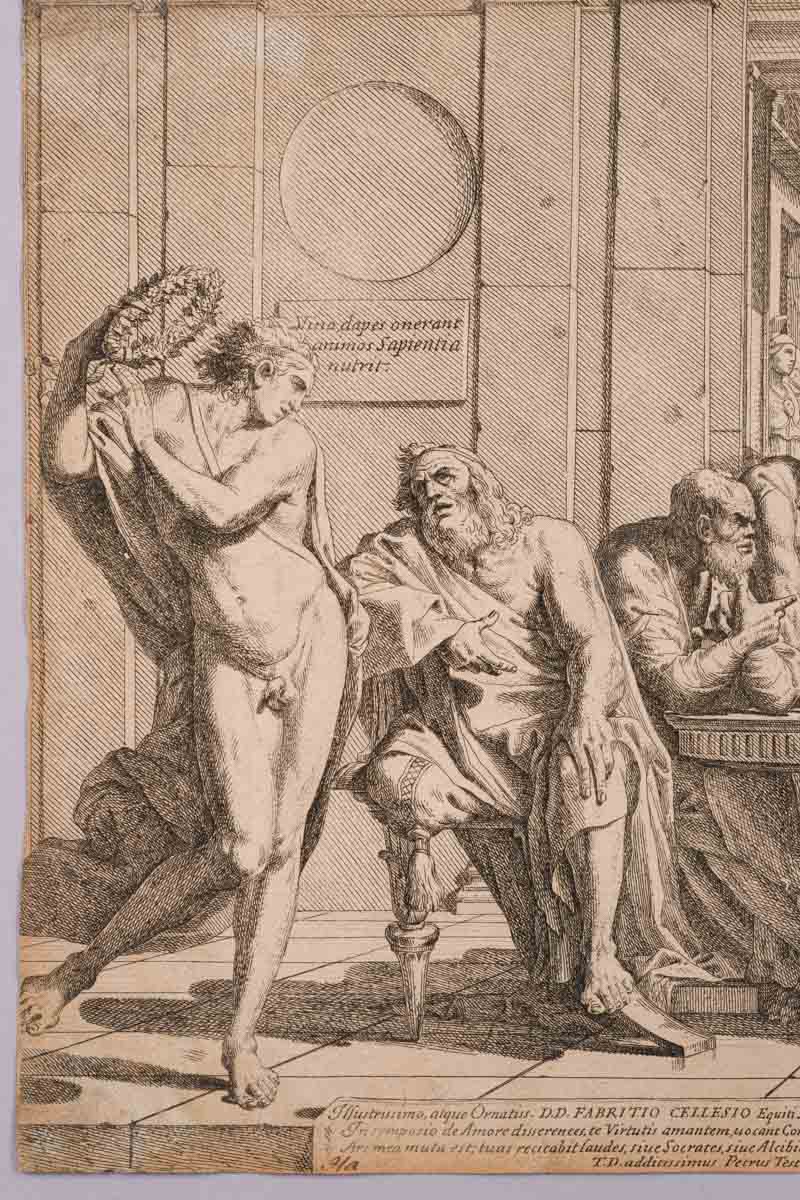
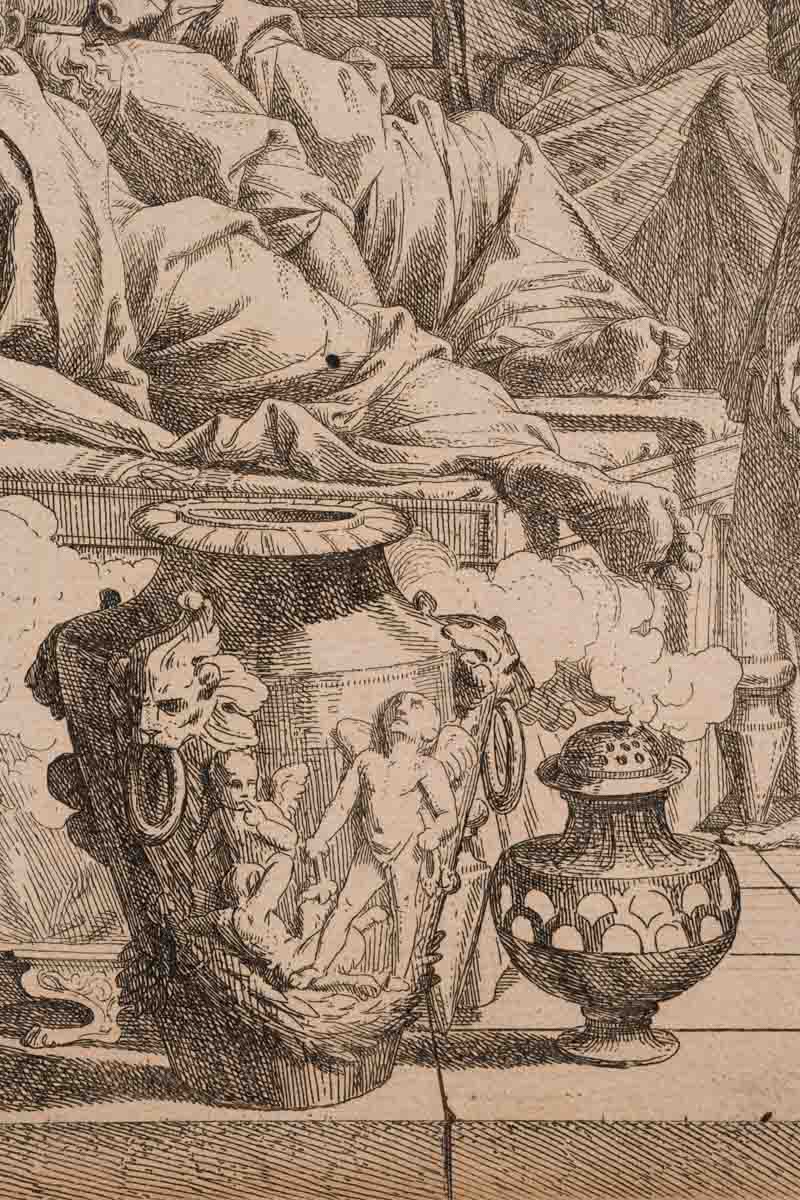
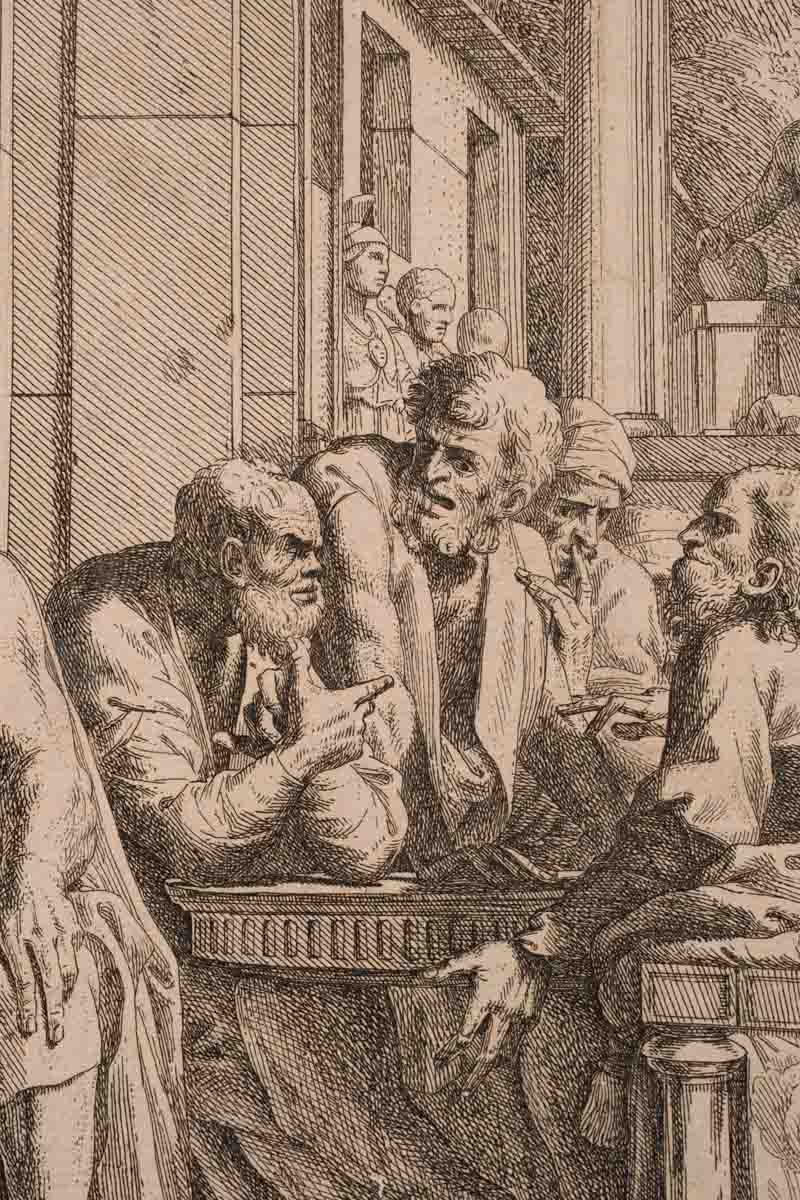
At the left, Alcibiades enters crowned and dishevelled; across the centre, philosophers converse around the banquet table, while servants, vessels, smoke and architectural details fill the scene.
Testa reinforces the philosophical message with the Latin inscription on the wall:
“Vina, dapes onerant animos, sapientia nutrit”
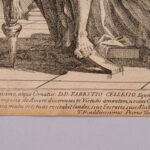
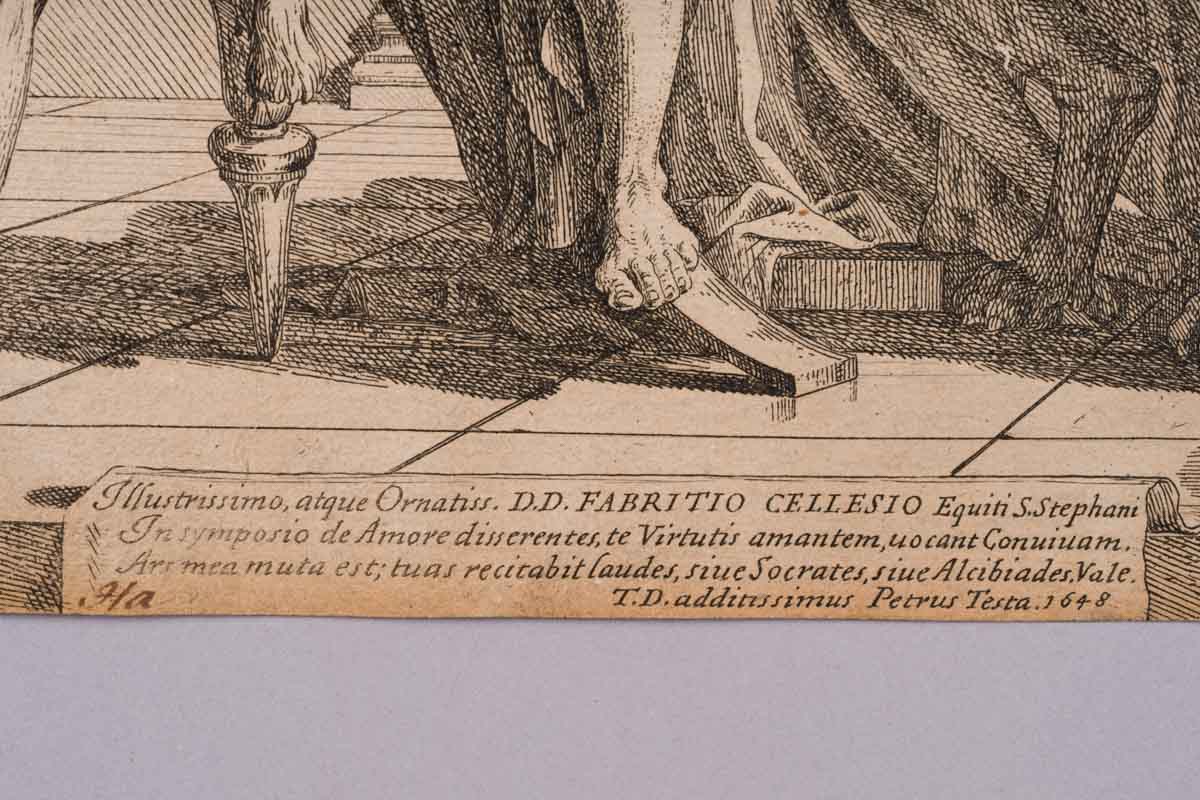
— essentially contrasting the burden of wine and feasting with the nourishment provided by wisdom. The lower inscription dedicates the work to Fabrizio Cellesio and explicitly refers to the discussion of love at the symposium.
It is therefore much more than an elaborate classical banquet scene: it is Testa’s visual interpretation of the conflict between physical appetite and intellectual wisdom.
This is a compelling intersection of classical philosophy and Italian Baroque printmaking.
Pietro Testa was both the designer and engraver of the composition, and the surviving preparatory drawing is held by the Louvre. The work is also represented in major institutional collections and recorded in the standard literature on Testa.
For a collector, it combines several highly desirable elements: an important seventeenth-century Italian artist, a direct connection with Plato and Socrates, a dramatic classical subject, extensive contemporary Latin inscriptions, and the artist’s name and 1648 date incorporated into the plate.