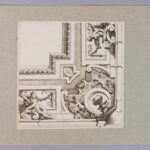
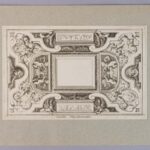
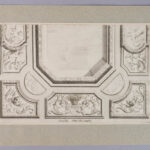
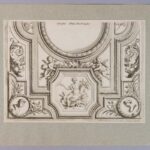
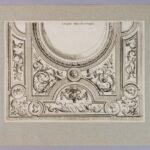
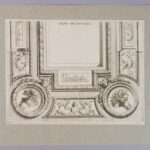
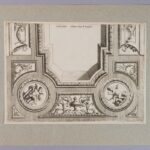
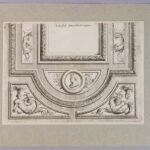
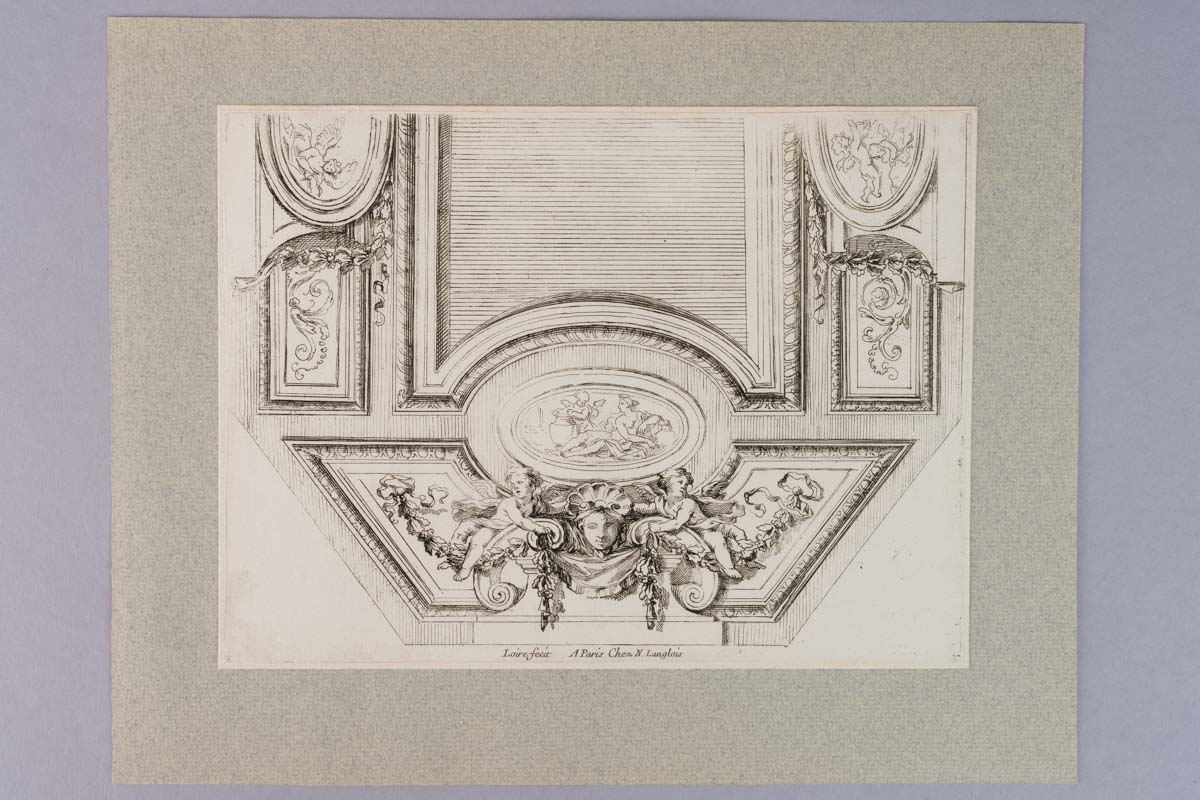
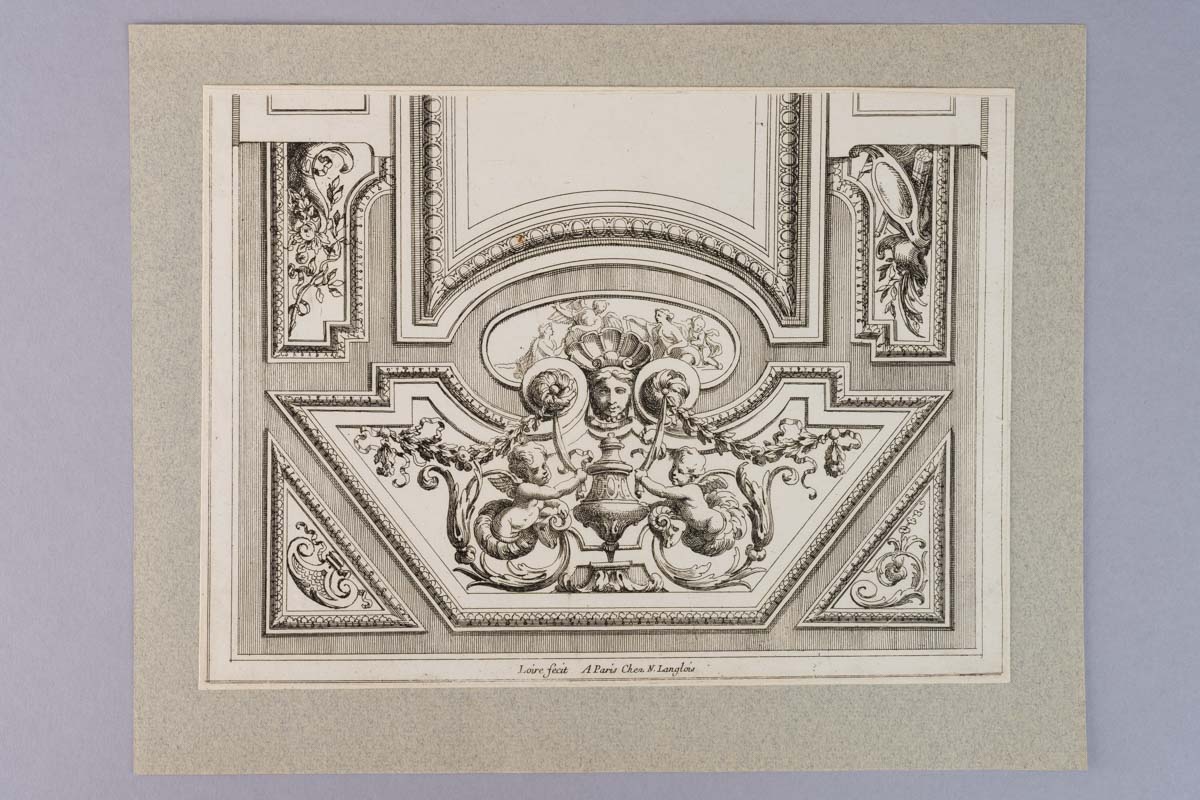
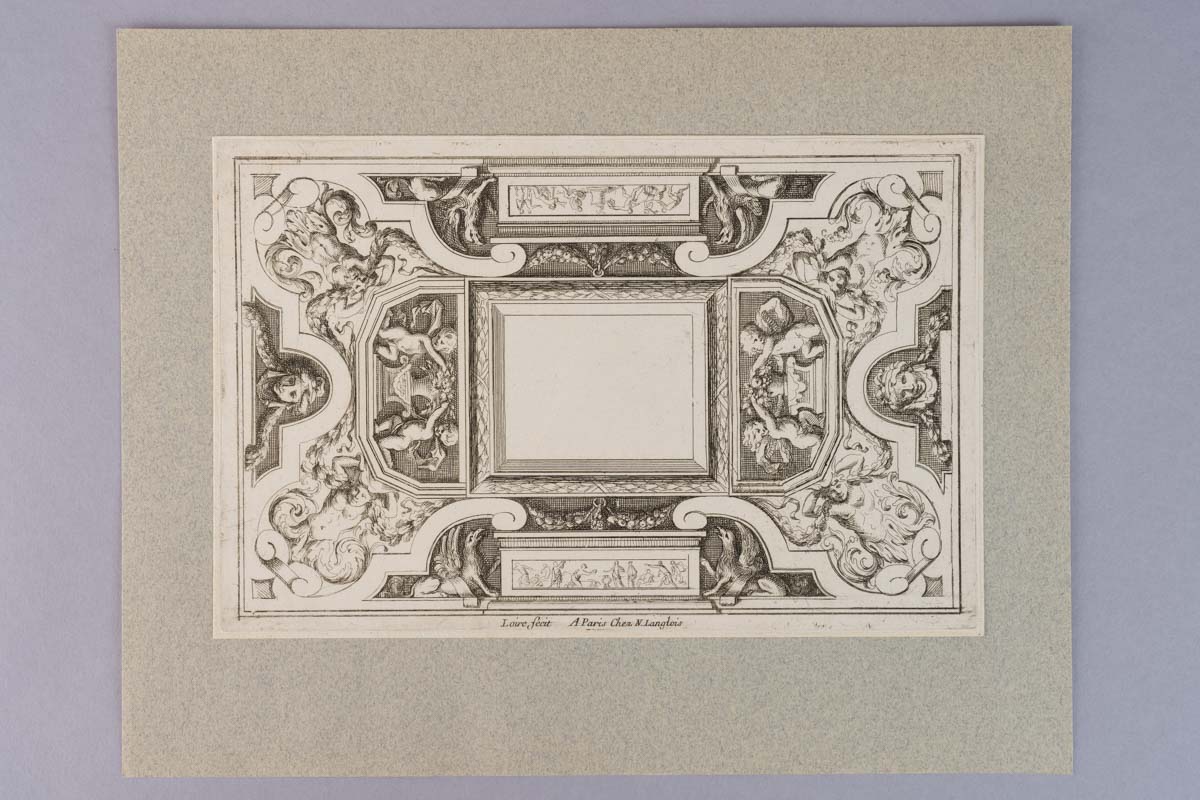
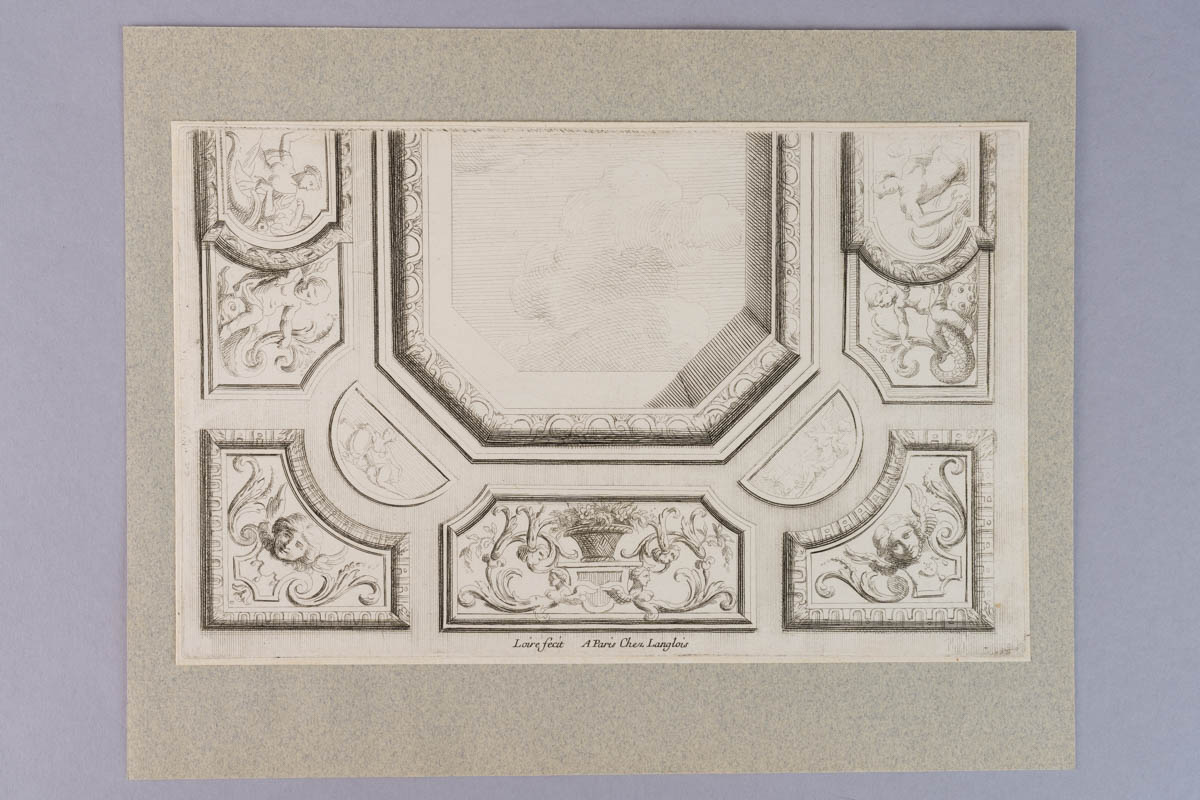
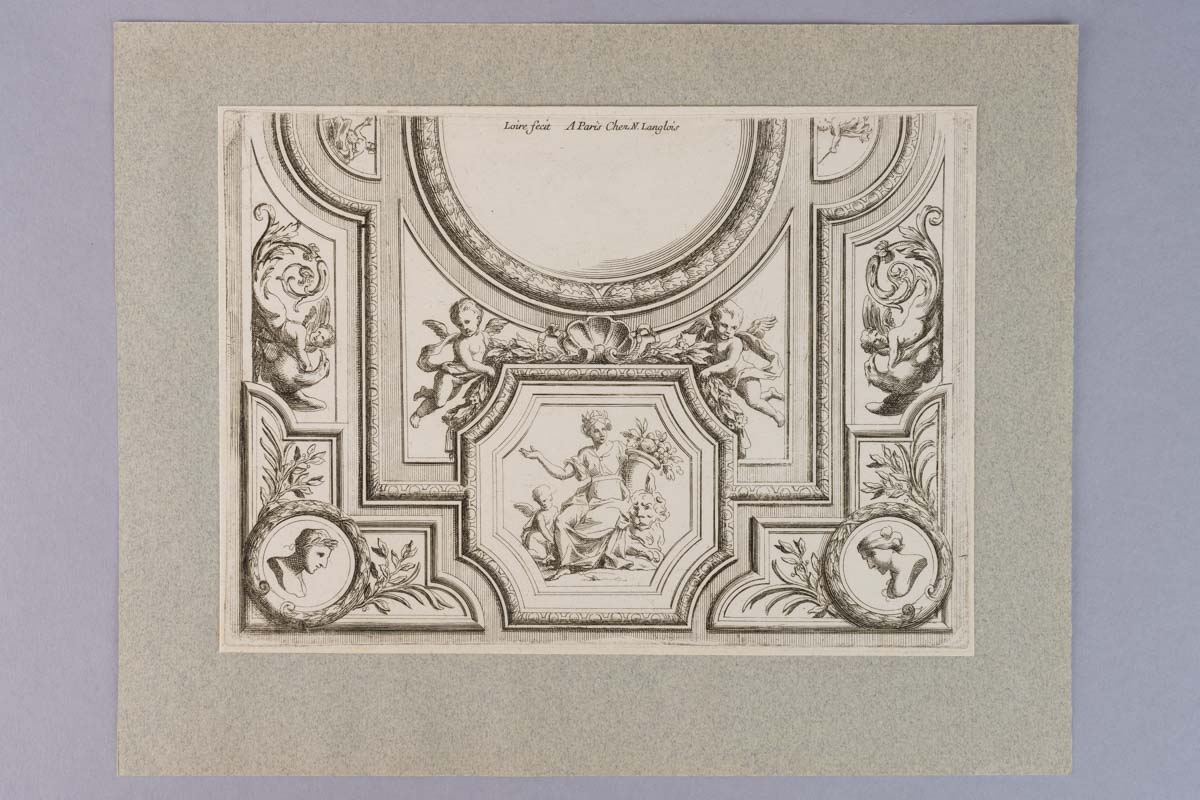
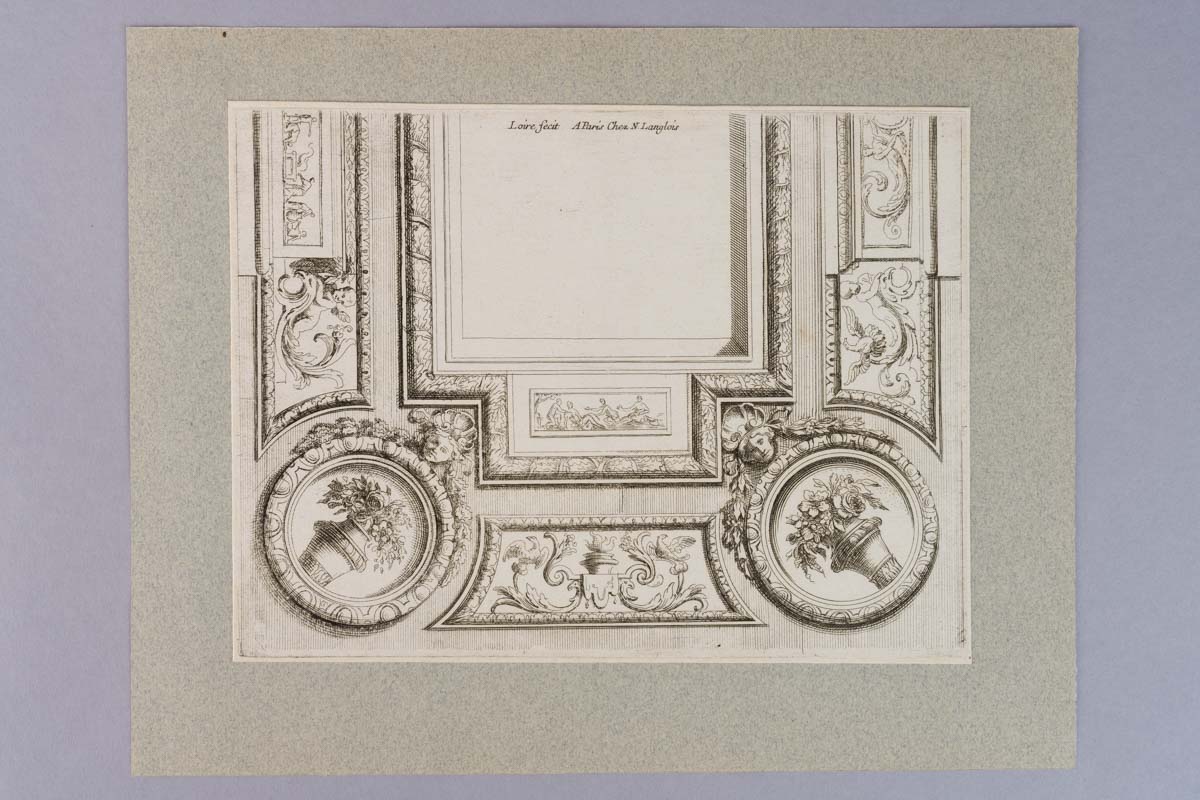
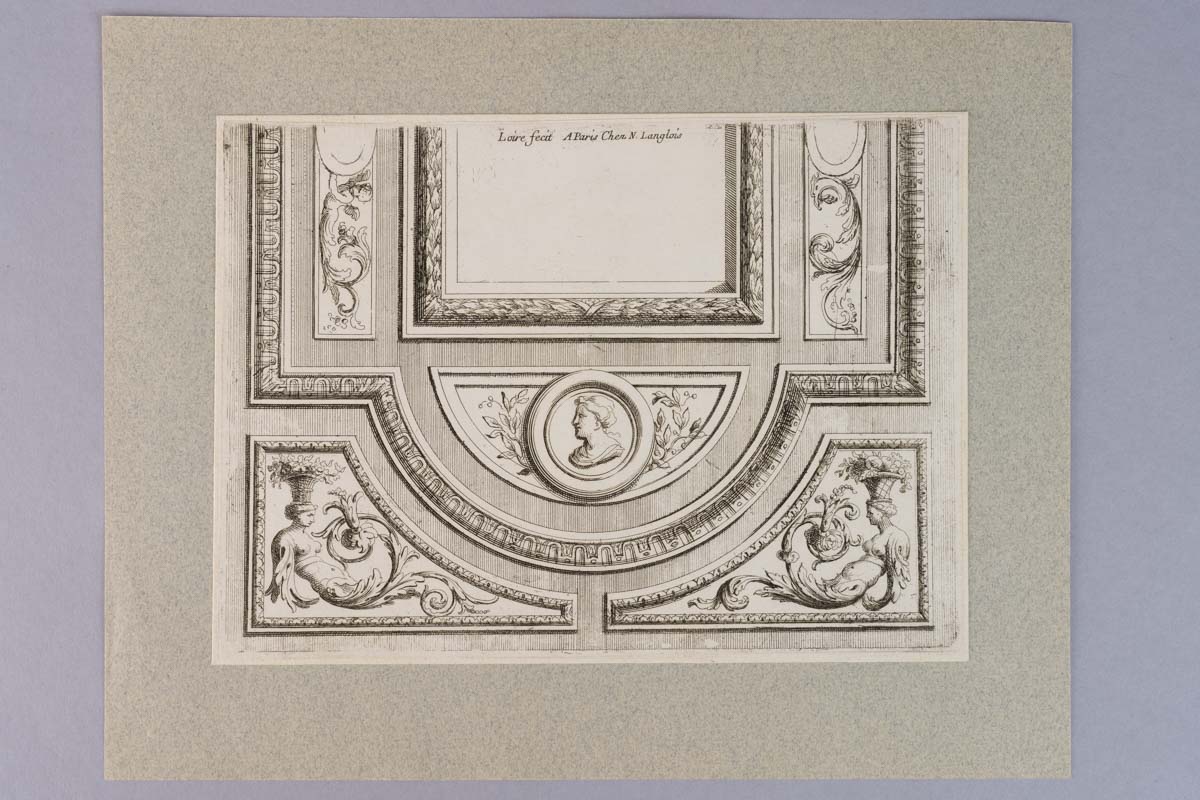
These engravings belong to the great age of Louis XIV and the transformation of the French interior into a theatrical work of art.
Nicolas-Pierre Loir was not simply an ornamental designer. He was a painter and engraver who entered the Académie Royale de Peinture et de Sculpture in 1663 and worked on important royal decorative projects, including commissions associated with the Tuileries, Vincennes and Versailles.
Plafons à la Moderne translated this new decorative language into print.
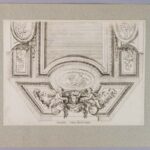
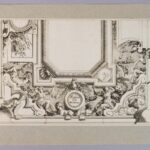
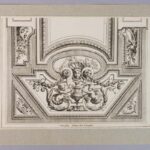
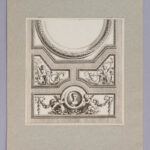
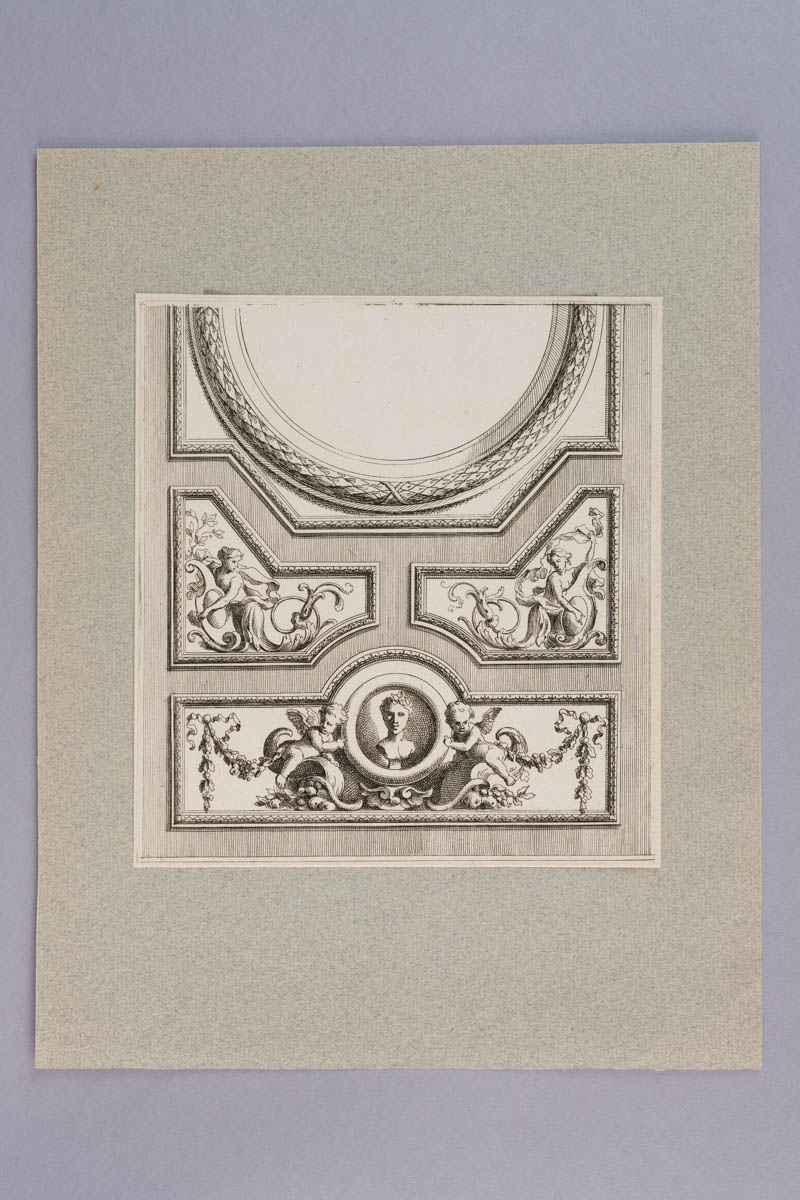
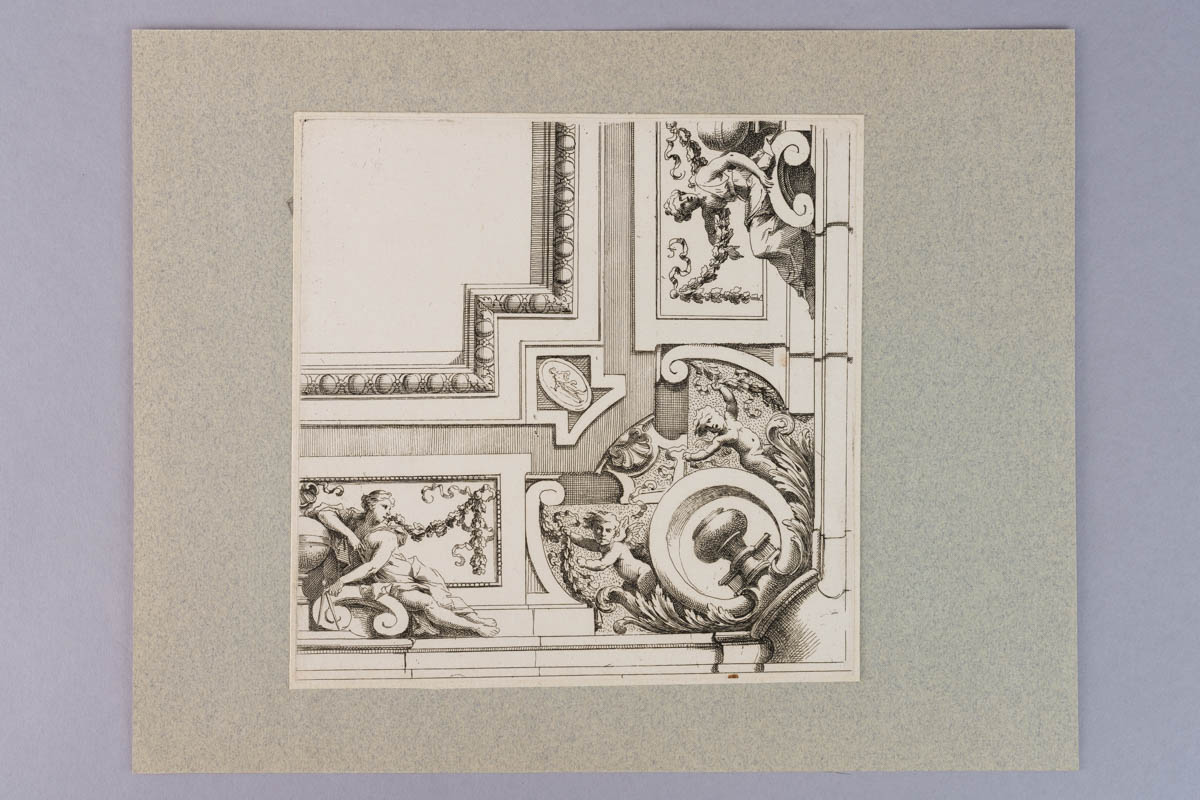
Rather than depicting completed rooms, the plates offered designs for ceilings in which architecture, painting and ornament could be integrated into a single composition. Empty central compartments await paintings or allegorical scenes, while the surrounding framework explodes into the vocabulary of the French Baroque: reclining figures, masks, foliage, flowers, medallions, fantastic creatures and classical ornament.
Such engraved pattern books were instrumental in spreading fashionable Parisian design. Architects, decorators, painters, craftsmen and patrons could encounter the newest ornamental ideas through prints rather than having to see the great interiors themselves.
There is also an interesting element of attribution. Nicolas worked closely with his younger brother Alexis Loir, himself an engraver and designer. The BnF notes that the plates’ signatures do not provide a forename and therefore may refer to Nicolas or Alexis; specialist bibliography has consequently treated Nicolas as the designer while allowing that Alexis may have been responsible for part of the engraving.
More than three and a half centuries later, the complete suite survives as both a work of graphic art and a document of how the visual language of Louis XIV’s France was disseminated.
Medium: Engravings on paper, subsequently mounted on grey-green paper supports and preserved in a later portfolio
Reference: Cf. Berlin 4016; Guilmard, p. 80
This is particularly desirable as a complete suite rather than an individual decorative print. Examples of Plafons à la Moderne are held institutionally by both the Rijksmuseum and Bibliothèque nationale de France, while individual sheets naturally appear separately on the market.
The appeal crosses several collecting fields: seventeenth-century French prints, architectural history, interior design, Baroque ornament, decorative arts and the artistic culture surrounding Louis XIV.
The individual plates are also exceptionally decorative objects in their own right. Presented together, however, the twelve designs reveal the coherent ornamental vocabulary Loir intended and give the suite considerably greater bibliographical and collecting significance.