£495.00
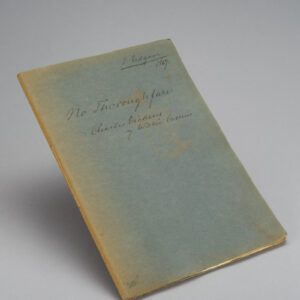
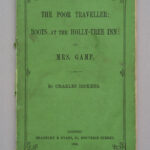
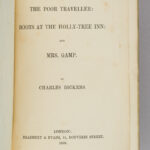
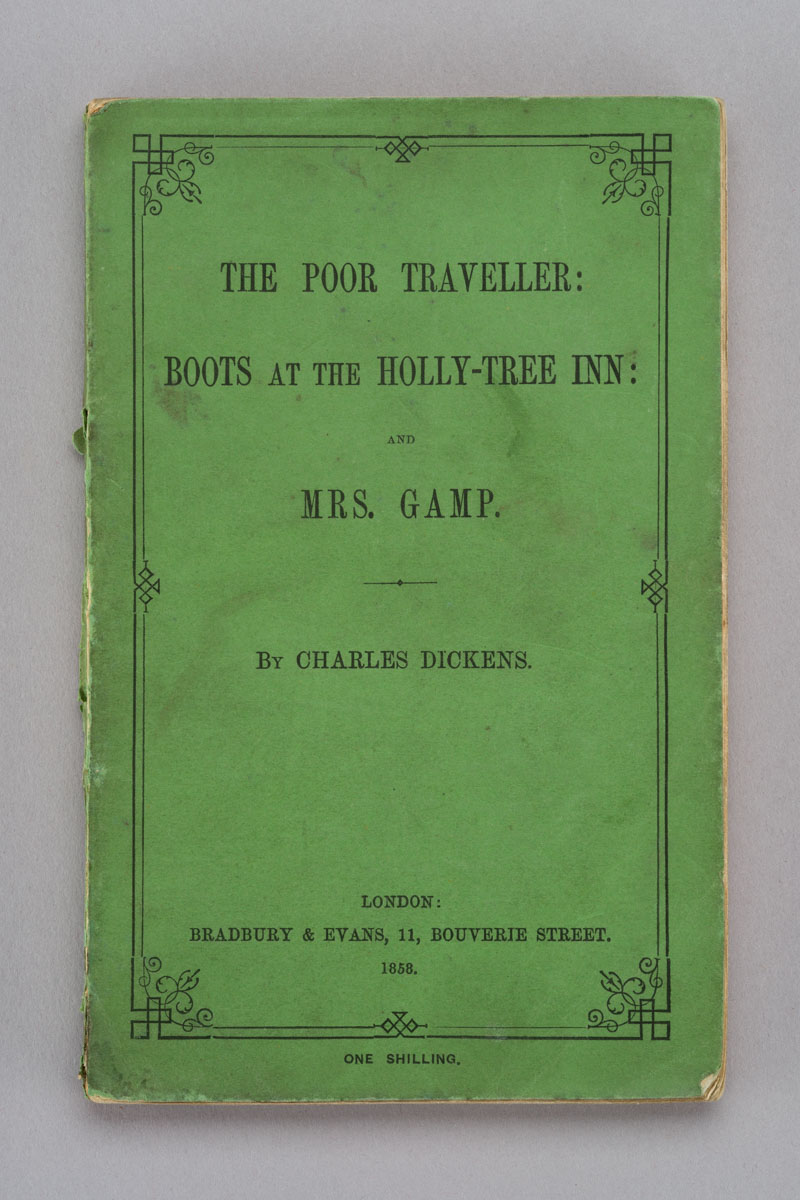
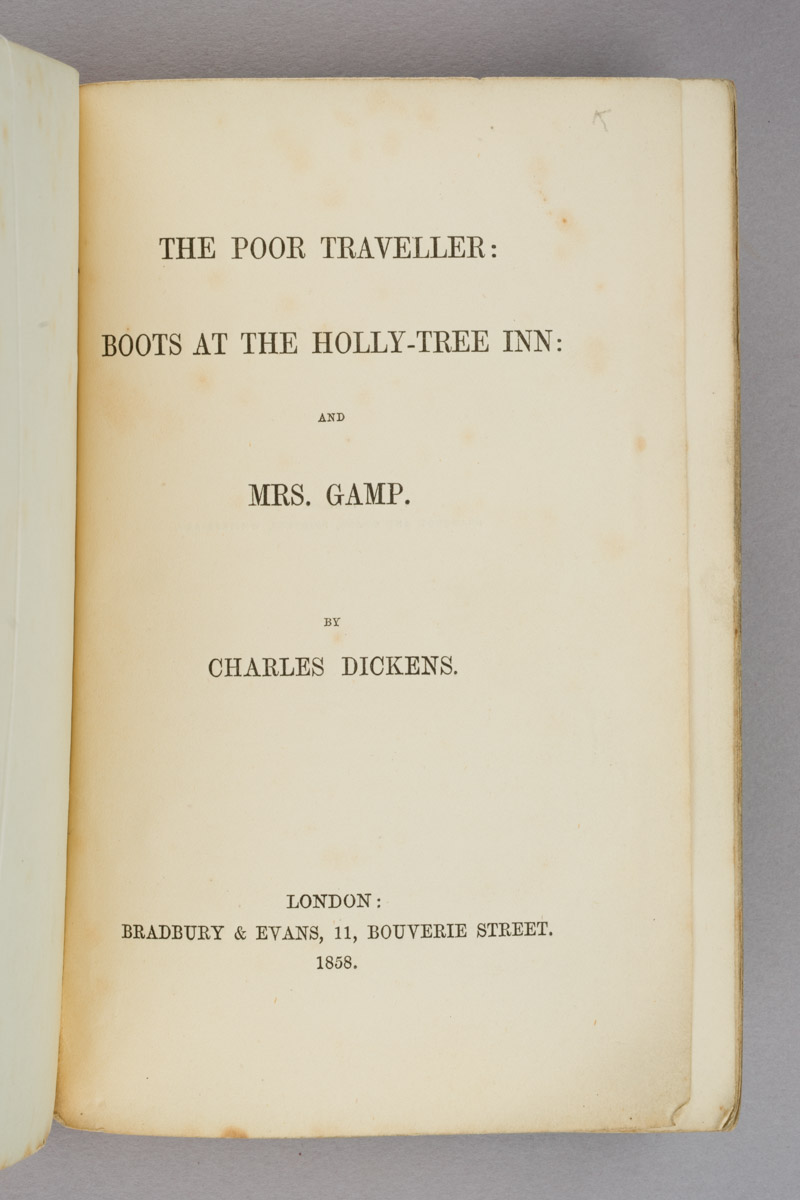
Dickens (Charles). The Poor Traveller: Boots at the Holly-Tree Inn: and Mrs. Gamp. London: Bradbury & Evans, 11 Bouverie Street, 1858.
First edition in this form, comprising three of Dickens’s popular shorter pieces: The Poor Traveller, Boots at the Holly-Tree Inn, and Mrs. Gamp.
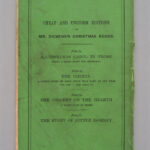
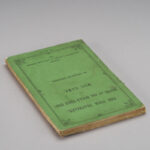
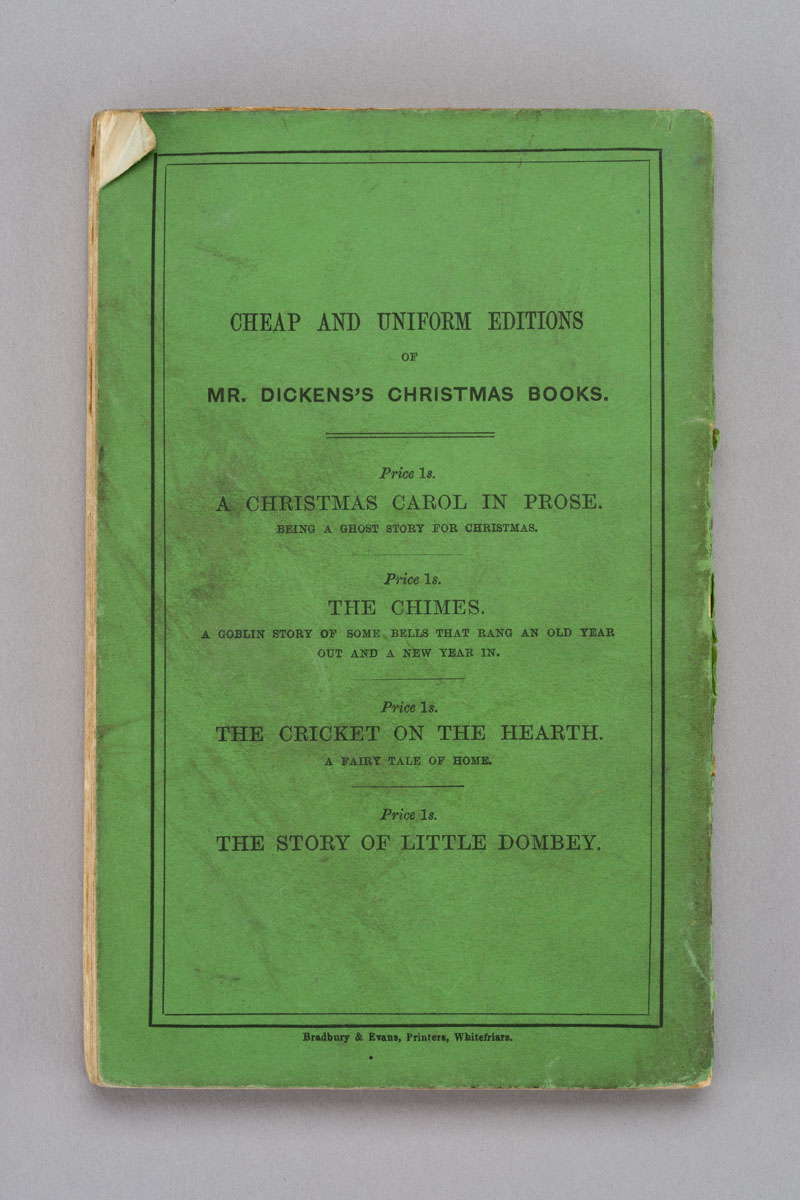
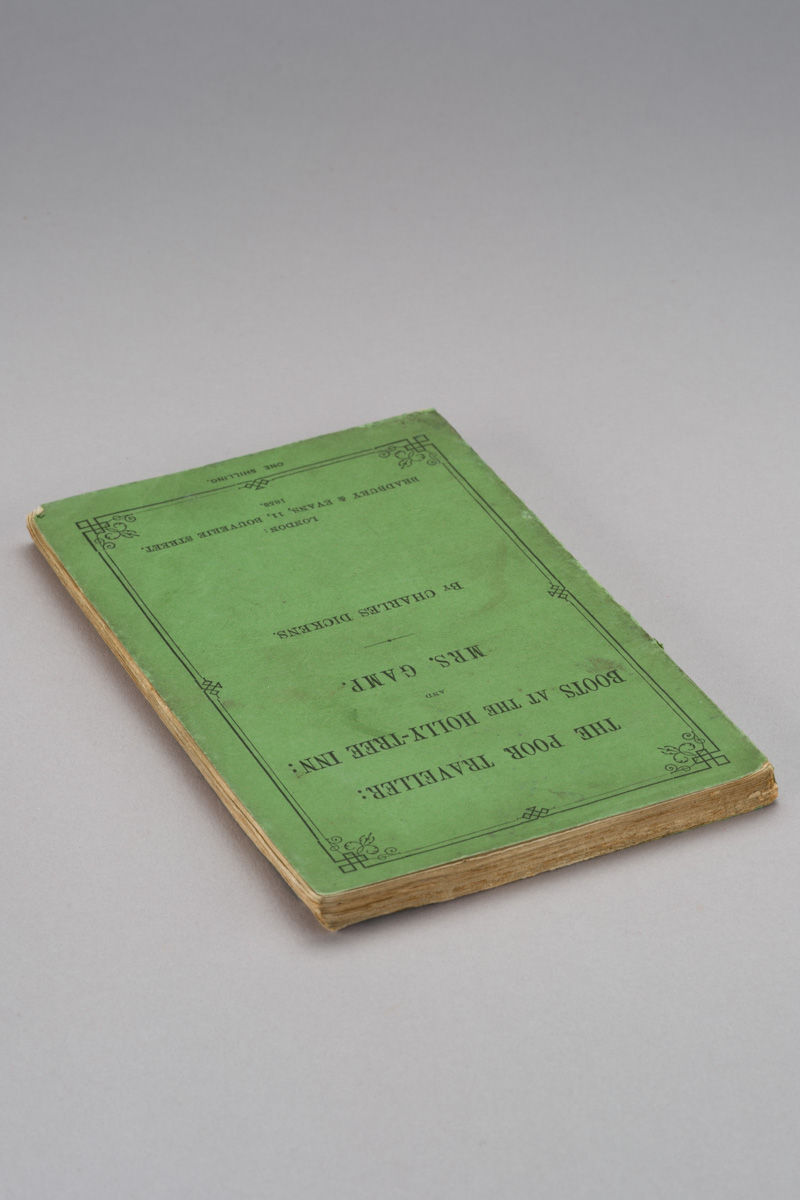
Preserved in the particularly desirable original green printed wrappers, the upper wrapper printed with the title, author’s name, publisher and original price of One Shilling within an ornamental border. The rear wrapper advertises the publisher’s “Cheap and Uniform Editions of Mr. Dickens’s Christmas Books”, including A Christmas Carol, The Chimes, The Cricket on the Hearth and The Story of Little Dombey.
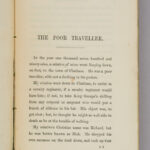
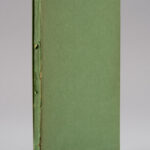
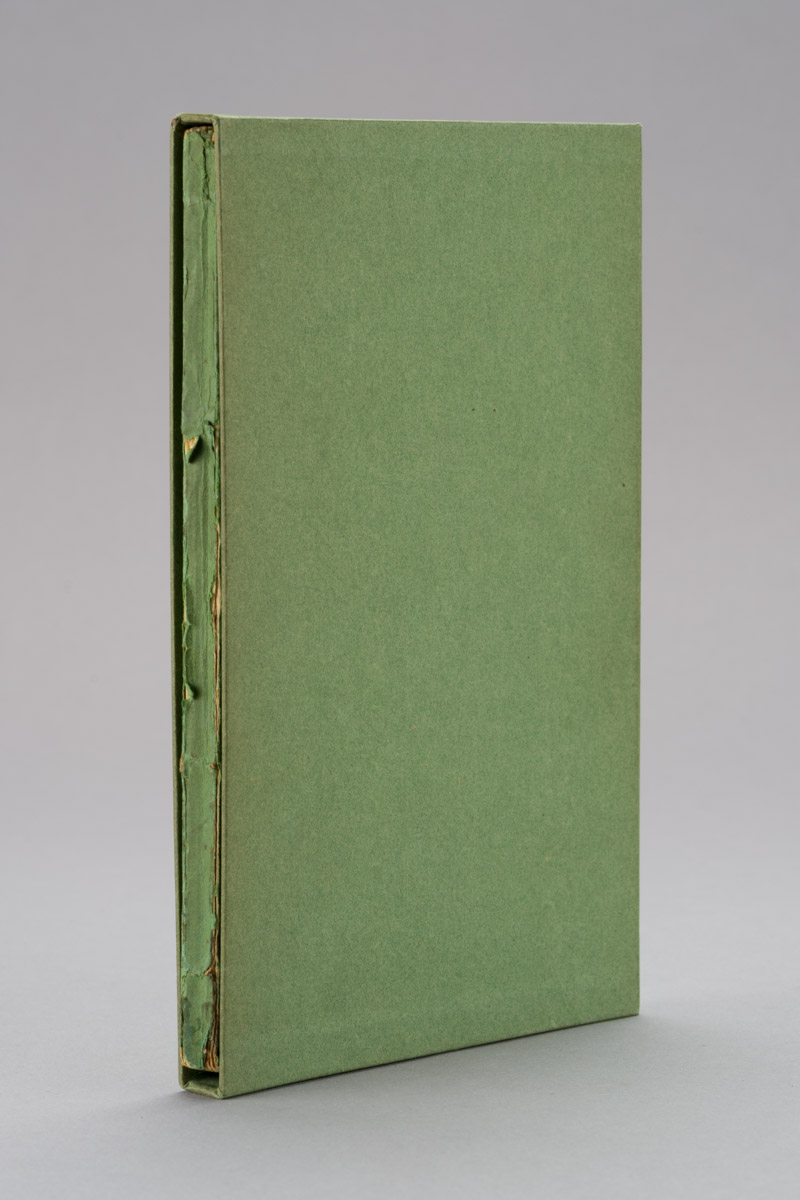
Occasional faint spotting and light finger-soiling, wrappers showing expected edge and spine wear, with a small loss to the upper corner of the rear wrapper. Housed in a later green protective slipcase.
An attractive example of a fragile mid-Victorian Dickens publication surviving in its original publisher’s wrappers.
Author: Charles Dickens (1812–1870)
Title: The Poor Traveller: Boots at the Holly-Tree Inn: and Mrs. Gamp
Year: 1858
Edition: First Edition in this form
Publisher: Bradbury & Evans, 11 Bouverie Street, London
Format: 8vo
Binding: Original green printed wrappers; housed in a later green protective slipcase
Original Price: One Shilling
Original green printed wrappers with light finger-soiling and expected handling wear; some wear along the spine and extremities, with small loss to the upper corner of the rear wrapper. Occasional faint spotting internally. Overall a very good survival considering the inherently fragile nature of the original paper wrappers.
Preserved in a later green protective slipcase.
1 in stock
By 1858, Charles Dickens was not merely Britain’s most famous novelist. He had become one of its most celebrated public performers.
That year marked an important change in his career: Dickens began the professional public reading tours that would occupy an increasingly significant part of the final decade of his life.
This little volume is intimately connected with that world.
Rather than presenting a new full-length novel, Bradbury & Evans brought together three pieces that demonstrated Dickens’s extraordinary ability to create memorable characters and scenes in concentrated form.
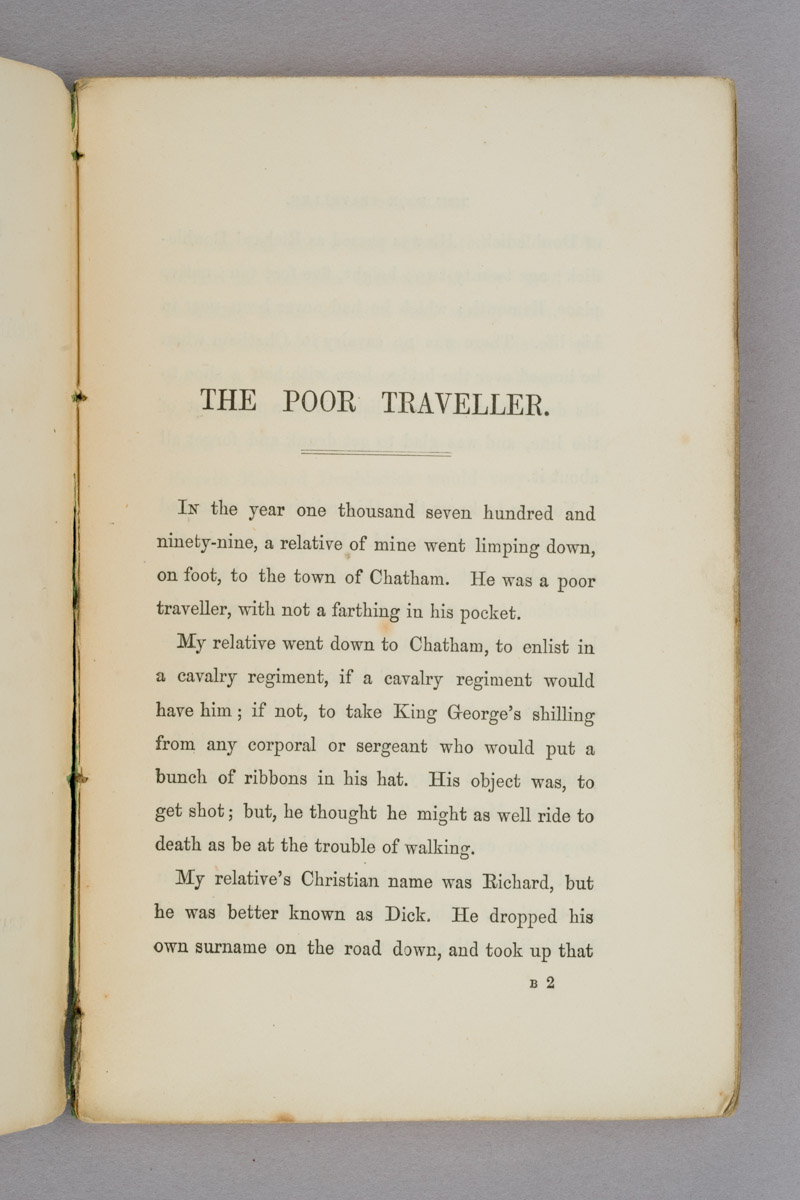
The Poor Traveller grew from Dickens’s knowledge of the charitable institution at Rochester established to provide a night’s lodging for impoverished travellers. Dickens knew Rochester and nearby Chatham intimately from childhood, and the landscape of the Medway remained deeply embedded in his imagination throughout his life.
Boots at the Holly-Tree Inn is one of Dickens’s most charming comic performances, recounting through the hotel servant known as Boots the wonderfully serious adventures of two children attempting to elope.
And then there is Mrs. Gamp.
Sarah Gamp, originally created for Martin Chuzzlewit, became one of Dickens’s most famous comic characters: the bibulous nurse and midwife with her battered umbrella and endless references to the conveniently invisible “Mrs. Harris.” Dickens himself recognised her theatrical potential and performed material involving Mrs. Gamp in connection with his readings.
Together the three pieces show Dickens in miniature: humour, sentiment, social observation, unforgettable characterisation and an instinctive understanding of the spoken voice.
The attraction of this copy lies particularly in its original 1858 green wrappers.
Cheap publications of this type were working books rather than luxury objects. They were sold for one shilling, carried about, read repeatedly and frequently discarded or rebound. Consequently, copies retaining their original printed wrappers possess an immediacy that conventional later bindings simply cannot reproduce.
The rear wrapper is especially appealing from a bibliographical perspective. It advertises Dickens’s other inexpensive editions—including A Christmas Carol—and therefore preserves not simply the text but a piece of the contemporary commercial world in which Dickens’s works were marketed.
The volume also belongs to an important moment in Dickens’s career, when his identity was expanding from novelist and editor to celebrated public reader and performer.
It is consequently a very accessible Dickens first edition: visually attractive, recognisably Victorian and still in the ephemeral format in which a nineteenth-century reader could have purchased it from a bookseller for a single shilling.