£1,295.00
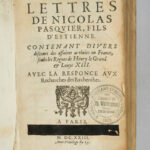
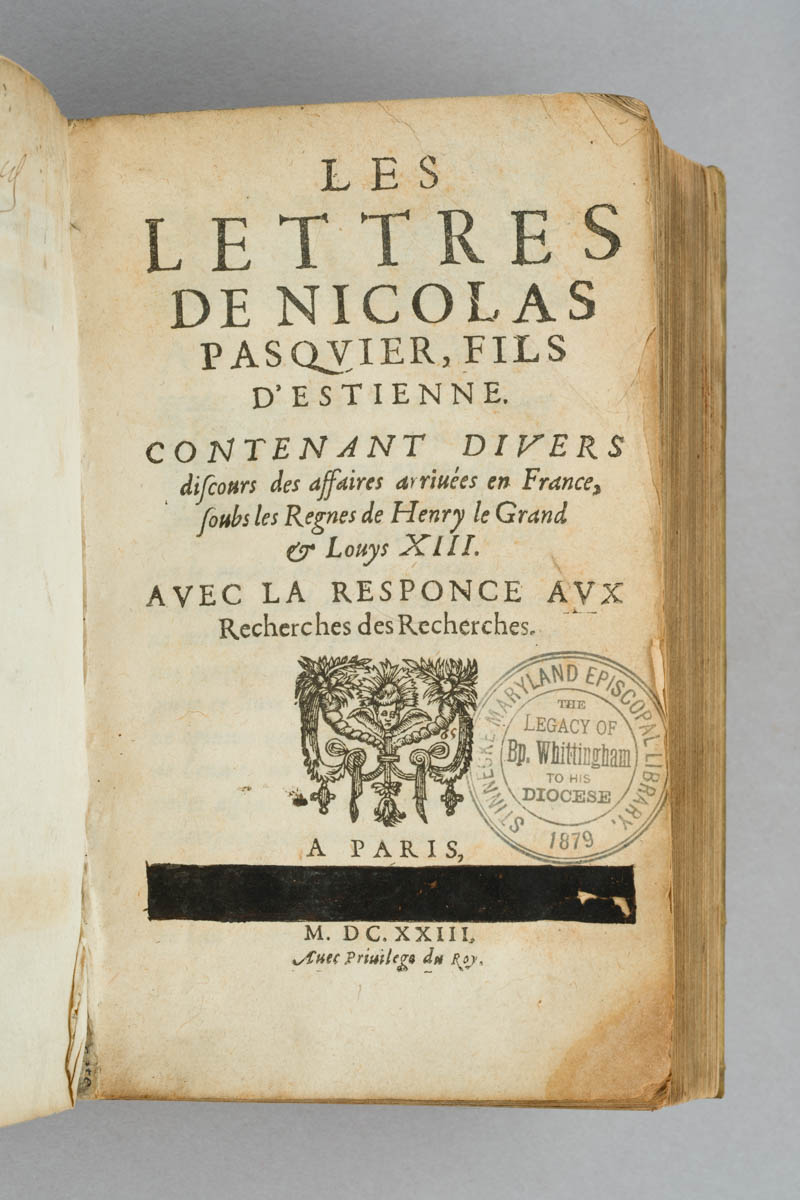
Pasquier, Nicolas. Les Lettres de Nicolas Pasquier, fils d’Estienne. Contenant divers discours des affaires arrivées en France, sous les Regnes de Henry le Grand & Louys XIII. Avec la Response aux Recherches des Recherches. Paris, 1623.
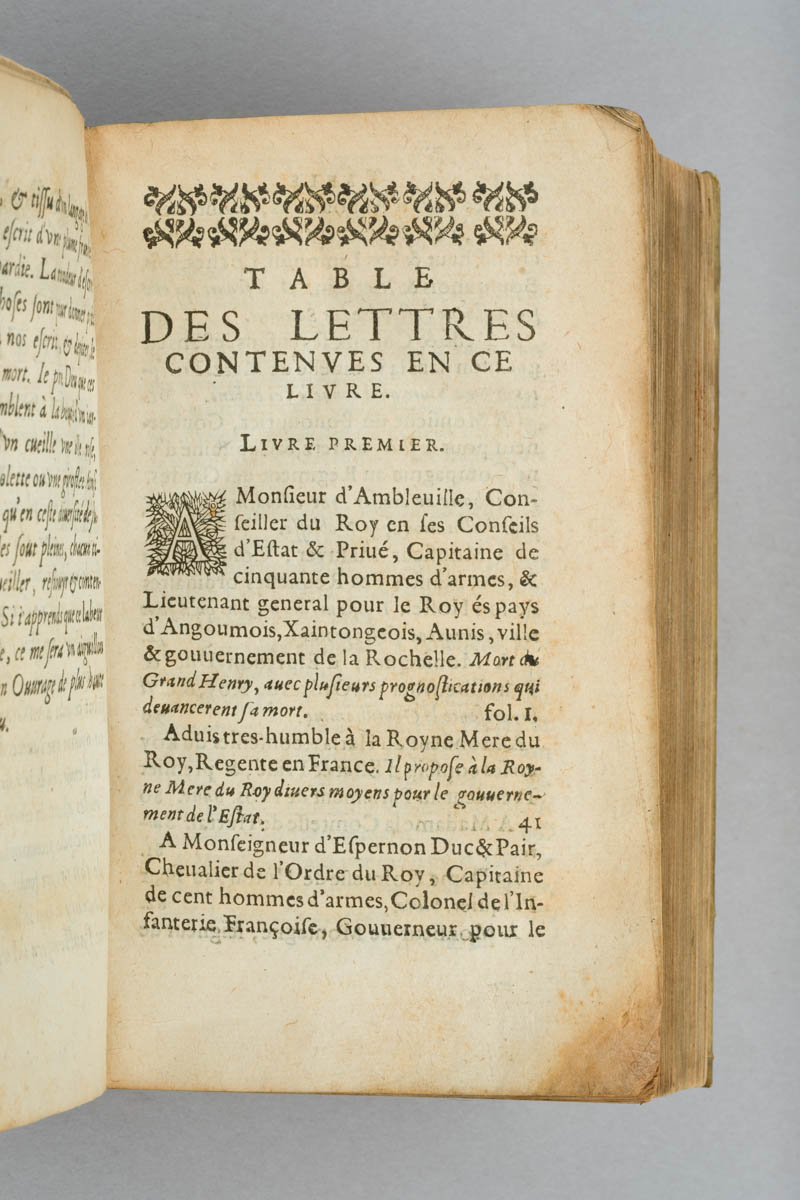
An early seventeenth-century collection of the letters and political observations of Nicolas Pasquier, son of the celebrated French jurist and historian Étienne Pasquier. The work contains discussions of events and personalities during the reigns of Henry IV of France (“Henry the Great”) and Louis XIII, providing a contemporary literary and political perspective on one of the most consequential periods in early modern French history.
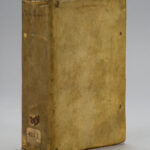
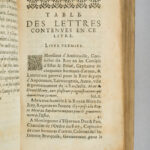
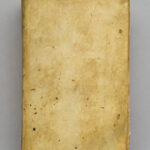
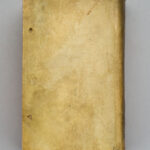
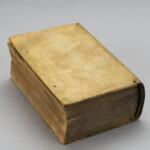
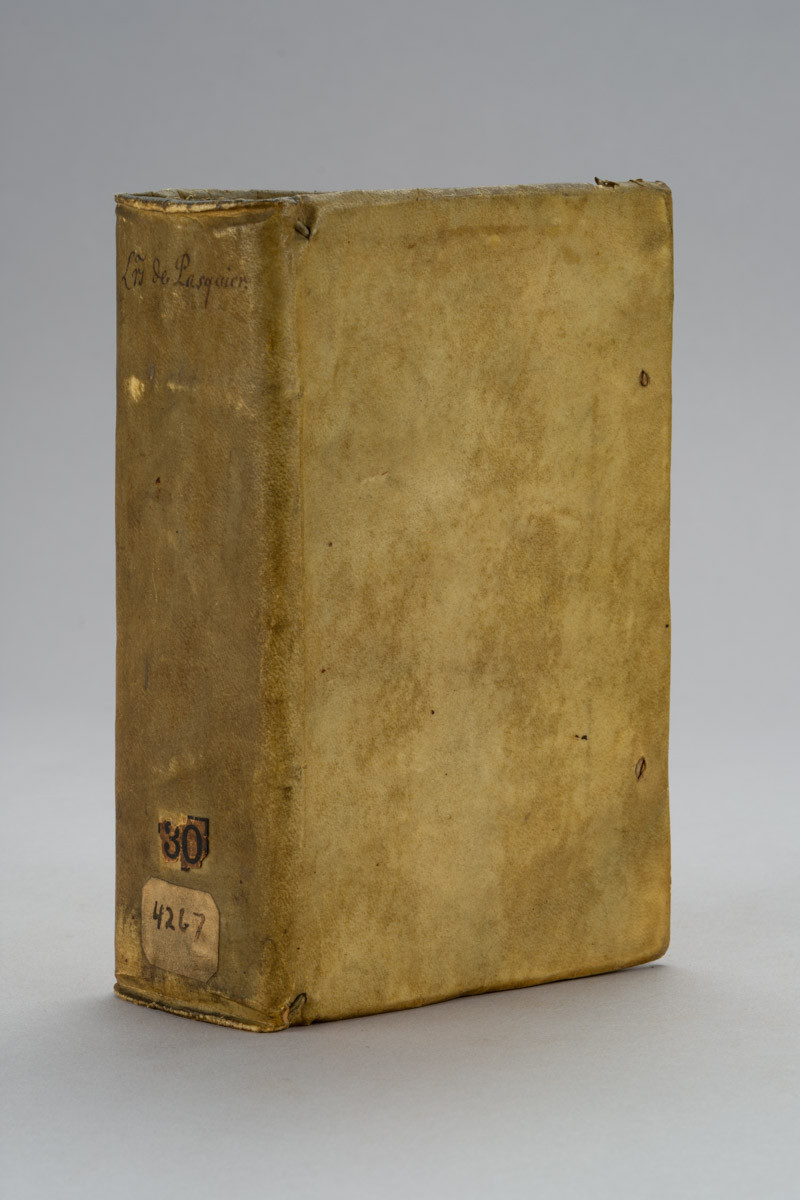
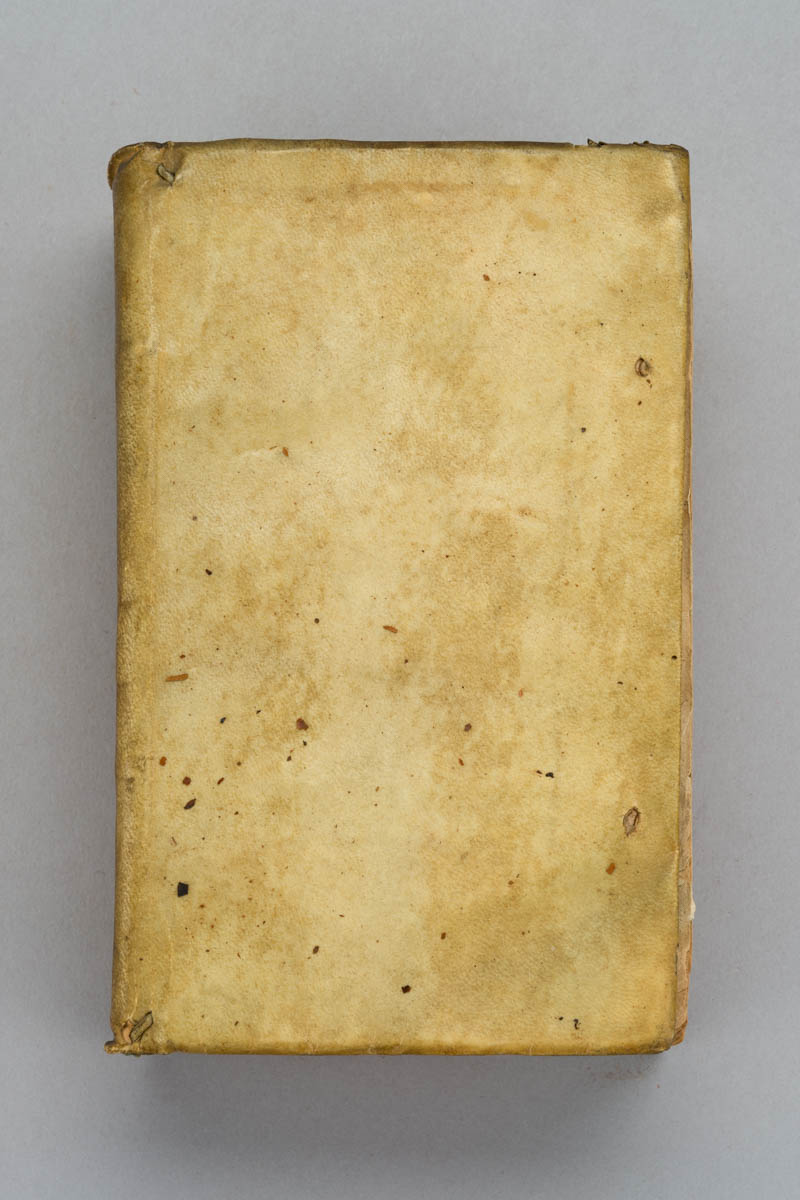
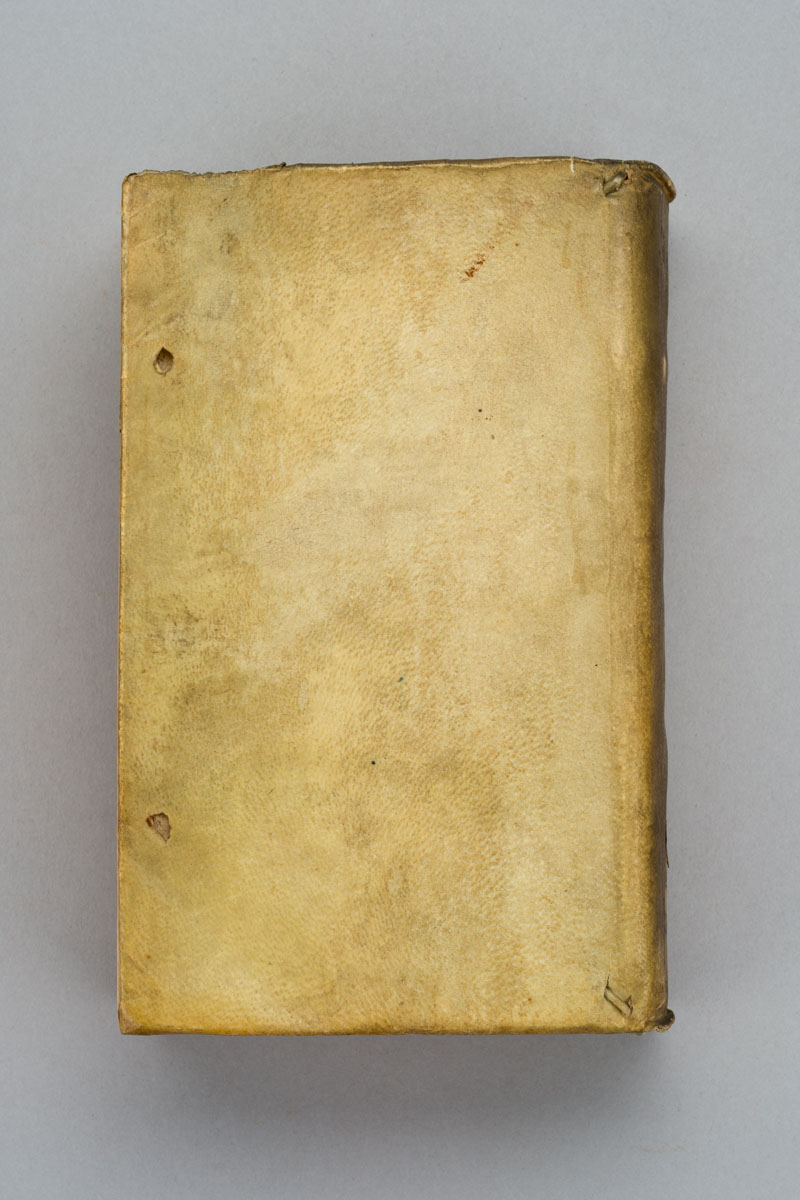
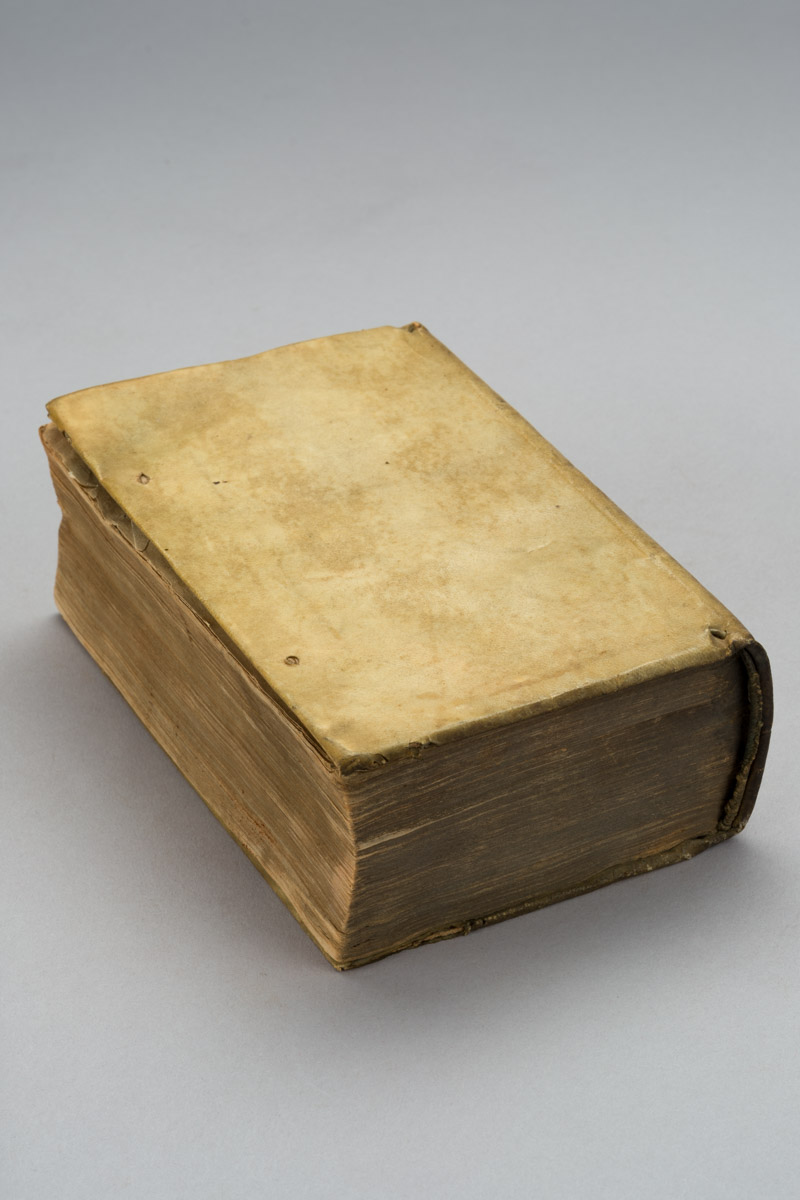
Printed title with ornamental device; typographical ornaments and decorated initials throughout. The volume retains its contemporary limp vellum binding, now attractively toned and showing the natural wear of four centuries. Early manuscript notation to the spine together with later shelf labels.
The title page bears the circular ownership stamp “General Theological Seminary, Maryland Episcopal Library — The Legacy of Bp. Whittingham to his Diocese, 1879.” The original publisher/imprint line beneath “A Paris” has been heavily inked over, apparently as an early act of cancellation or censorship; the Roman date M.DC.XXIII (1623) remains clearly visible.
Some age-toning, occasional spotting and staining, minor marginal wear and creasing, and institutional markings consistent with age and provenance. A substantial and appealing seventeenth-century volume in period vellum.
Of particular interest is the ecclesiastical provenance.
The title bears the stamp recording the 1879 legacy of Bishop Whittingham to his diocese, identifying the volume with the Maryland Episcopal Library collection. This refers to William Rollinson Whittingham (1805–1879), Episcopal Bishop of Maryland and a prominent nineteenth-century American churchman and bibliophile.
This provenance provides a documented transatlantic history: a French book printed in 1623, subsequently forming part of an important American episcopal library collection in the nineteenth century.
Author: Nicolas Pasquier (1561–1631)
Title: Les Lettres de Nicolas Pasquier, fils d’Estienne
Year: 1623
Edition: Early edition
Place: Paris
Language: French
Binding: Contemporary limp vellum
1 in stock
Nicolas Pasquier was born into one of the remarkable intellectual families of Renaissance and early Bourbon France. His father, Étienne Pasquier, was a distinguished lawyer, historian and man of letters whose writings became an important record of sixteenth-century France.
Nicolas continued that tradition.
His letters are not simply private correspondence. They discuss the political personalities, controversies and events of France under Henry IV and Louis XIII, a period that witnessed the recovery from the Wars of Religion, Henry IV’s assassination in 1610, the regency of Marie de’ Medici and the emergence of the Bourbon monarchy that would ultimately culminate in the age of Louis XIV.
The title itself announces this purpose: divers discours des affaires arrivées en France — various discussions of affairs that occurred in France.
There is also something particularly evocative about this copy. It survives in its plain contemporary vellum, rather than having been polished into a later collector’s binding. Its worn surfaces, manuscript spine notation, deliberately obscured imprint and nineteenth-century episcopal library stamp all record successive chapters in the life of a book now more than 400 years old.
This is exactly the sort of early book whose interest extends beyond its author.
It combines seventeenth-century French political history, Henry IV, Louis XIII, contemporary correspondence, period vellum and identifiable nineteenth-century provenance in one physical object.
The survival of the contemporary vellum binding is particularly desirable. Rather than disguisging its age, the binding gives the volume the unmistakable character of an early seventeenth-century book.
The Whittingham provenance adds another layer, tracing the volume into an important American ecclesiastical collection by the nineteenth century.
For a collector seeking an accessible book genuinely connected with the political world of Bourbon France more than four centuries ago, this is a compelling example.