£795.00
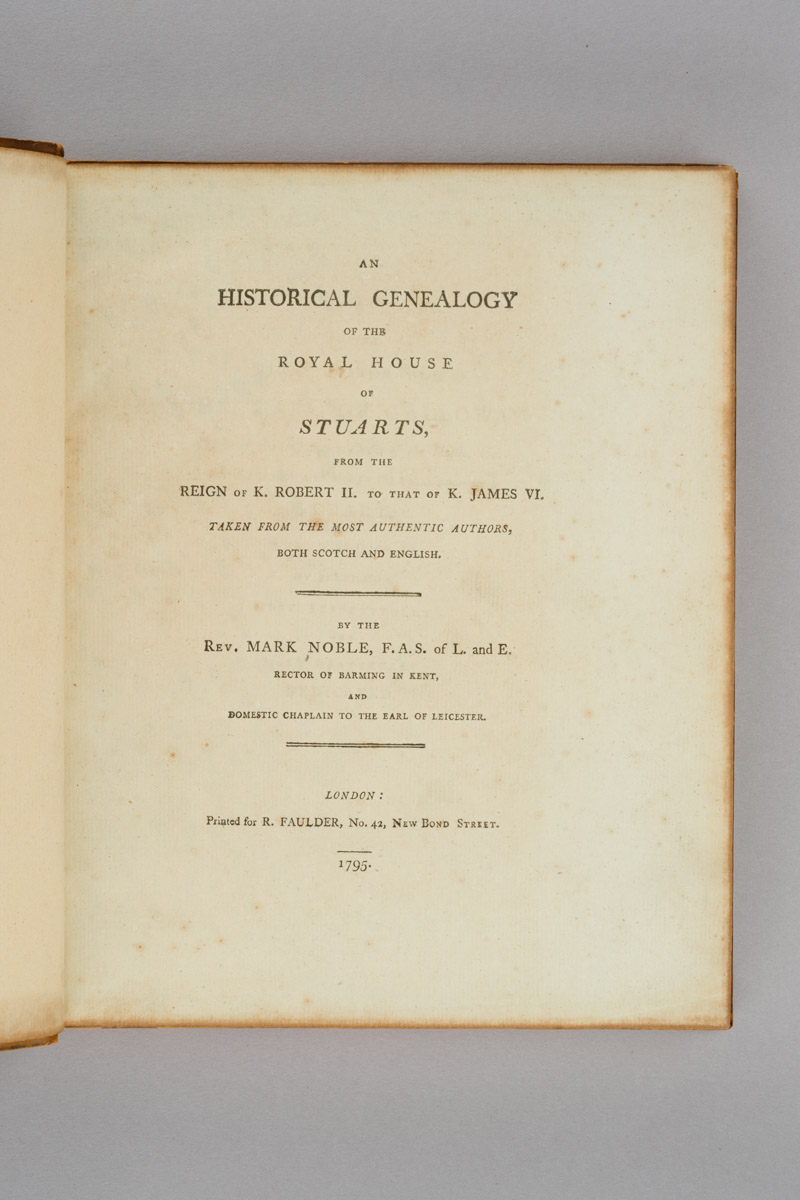
Noble (Mark). An Historical Genealogy of the Royal House of Stuarts, from the Reign of K. Robert II. to that of K. James VI. Taken from the Most Authentic Authors, both Scotch and English. London: printed for R. Faulder, No. 42, New Bond Street, 1795.
First edition of Mark Noble’s substantial genealogical history of the Royal House of Stuart, tracing the dynasty from the reign of Robert II, first Stewart King of Scotland, through to James VI, who would become James I of England following the Union of the Crowns in 1603.
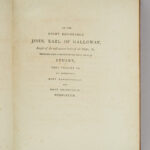
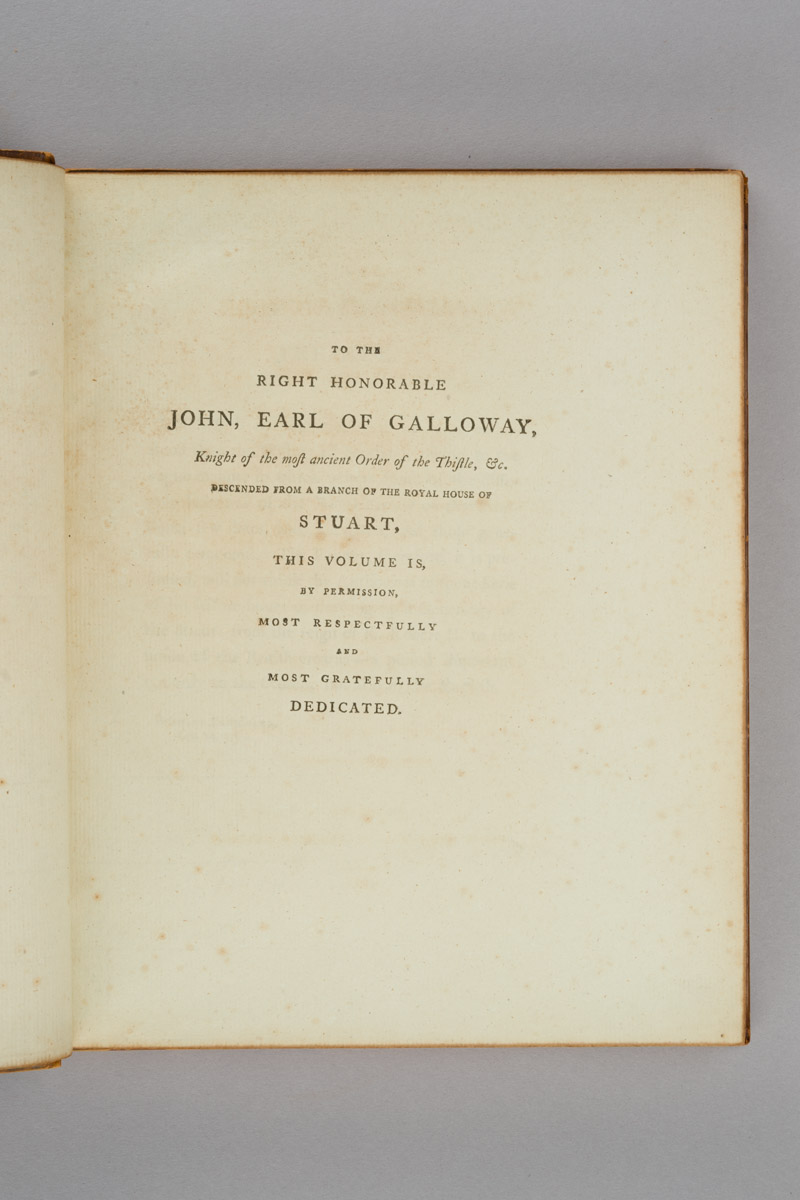
With folding genealogical table. Dedicated to John Stewart, Earl of Galloway, described on the dedication leaf as descended from a branch of the Royal House of Stuart.
With distinguished Scottish antiquarian provenance: bookplates of John Whitefoord Mackenzie and T. Dawson Brodie to the preliminary leaves.
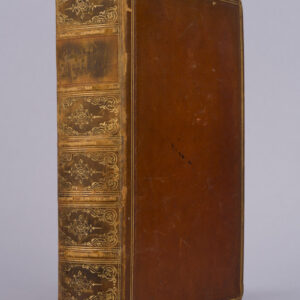
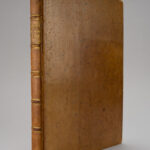
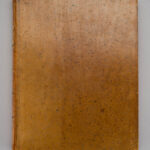
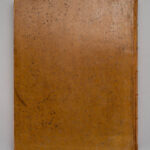
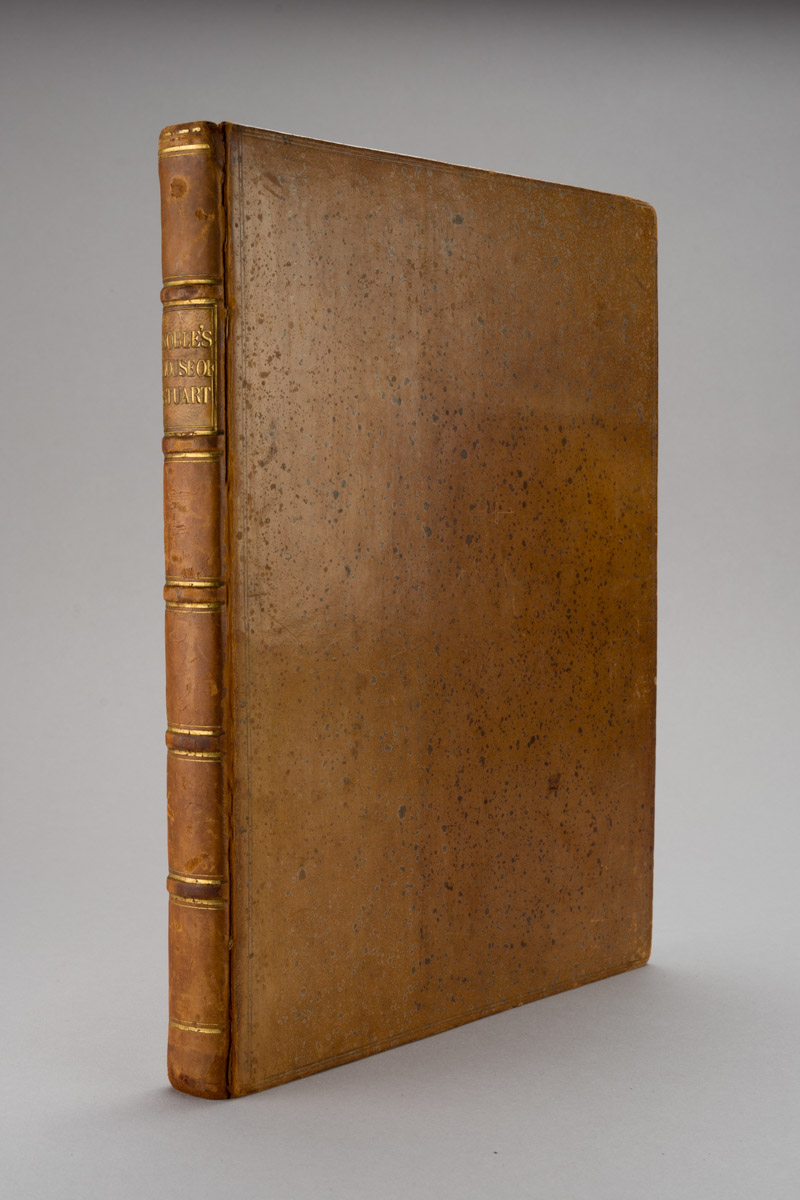
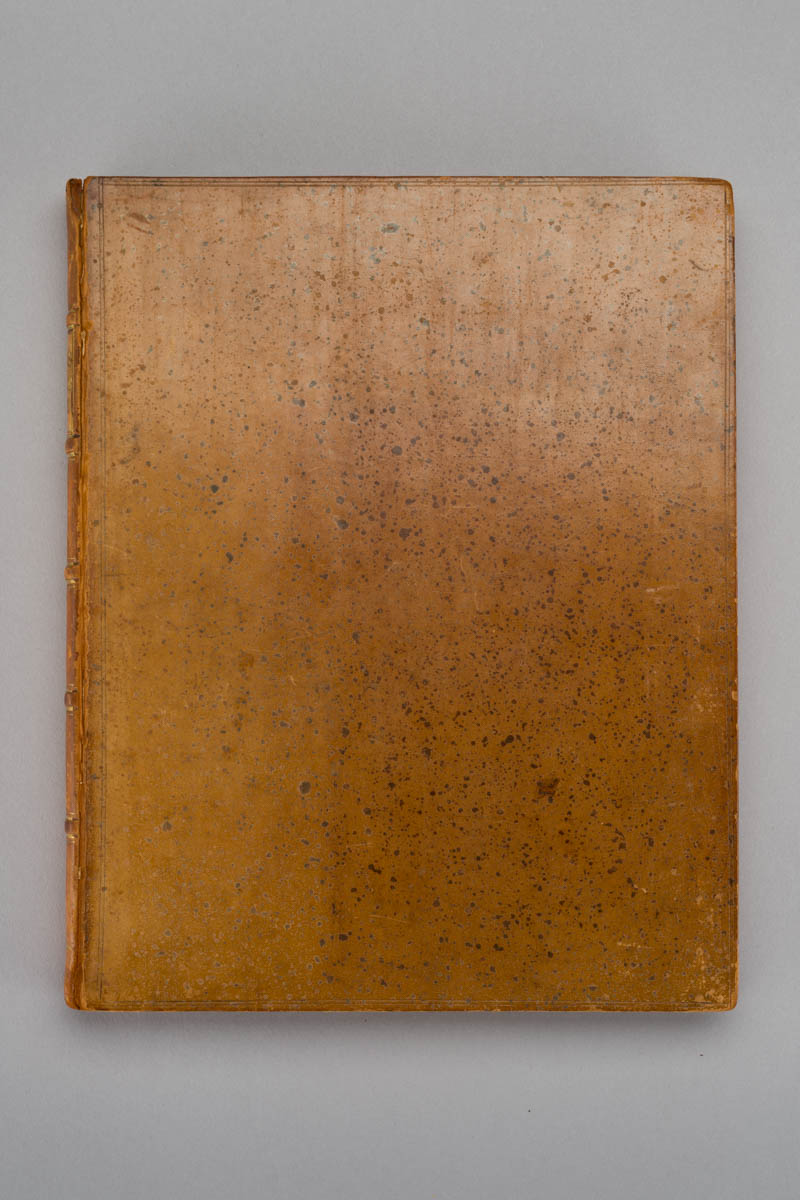
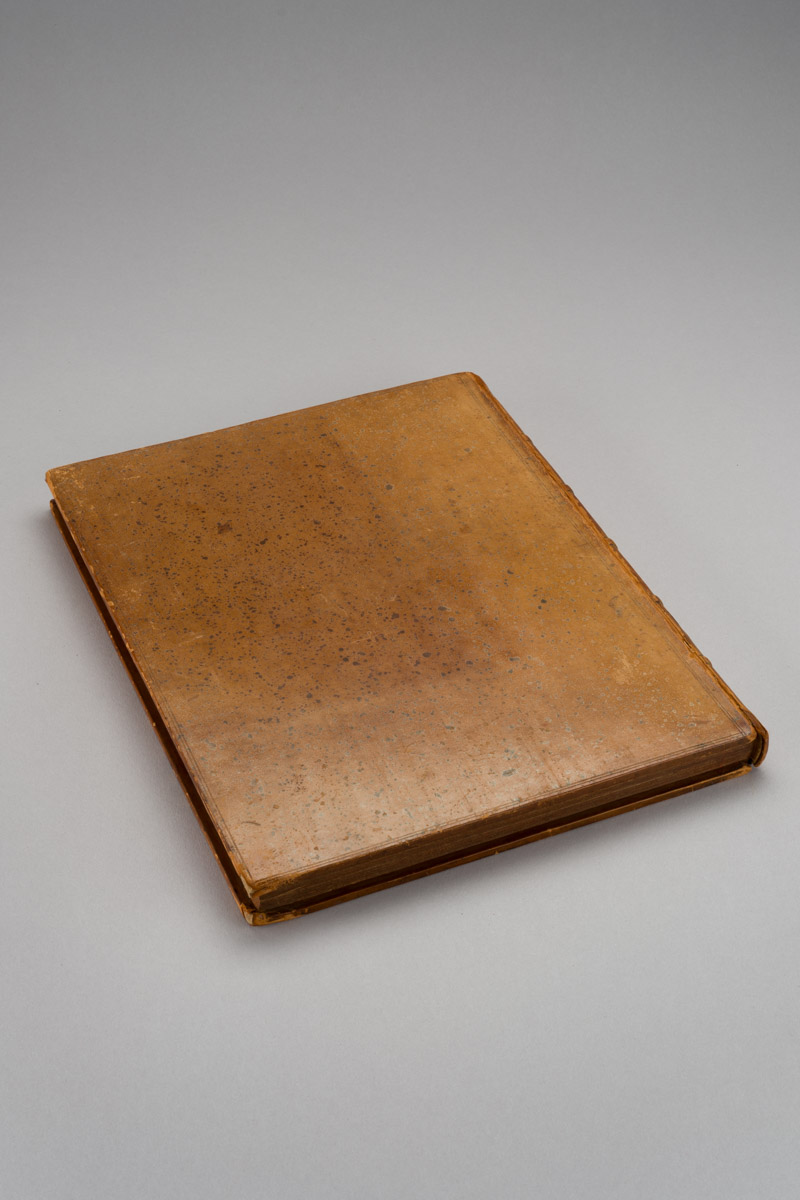
Contemporary speckled calf, ruled in blind, spine divided by raised bands and lettered in gilt. Lacking half-title; scattered foxing, with closed tears to S2 and H4 affecting text. Upper cover working loose but remaining attached; spine and joints somewhat rubbed and nicked.
A handsome and substantial eighteenth-century history of Scotland’s most celebrated royal dynasty.
Author: Rev. Mark Noble (1754–1827)
Title: An Historical Genealogy of the Royal House of Stuarts, from the Reign of K. Robert II. to that of K. James VI.
Year: 1795
Edition: First Edition
Publisher: R. Faulder, No. 42 New Bond Street
Place: London
Format: 4to
Illustration: Folding genealogical table
Provenance: Bookplates of John Whitefoord Mackenzie and T. Dawson Brodie
Reference: ESTC T135771
Contemporary speckled calf, covers ruled in blind, raised bands and gilt-lettered spine. Binding rubbed and marked, with wear and small nicks to spine and joints; upper cover working loose but still attached.
Lacking half-title. Folding genealogical table present. Scattered foxing and occasional age-toning; closed tears to S2 and H4 affecting text.
Bookplates of John Whitefoord Mackenzie and T. Dawson Brodie.
Overall, a characterful copy retaining its contemporary binding and important antiquarian provenance.
1 in stock
The House of Stuart produced one of the most extraordinary royal narratives in British history.
Its kings ruled Scotland for more than two centuries before James VI of Scotland inherited the English throne in 1603, bringing the crowns of Scotland and England together under one monarch. The dynasty would produce Mary, Queen of Scots, Charles I, Charles II and James II—and its deposition would ultimately give rise to the Jacobite cause that dominated generations of Scottish political history.
Mark Noble published this genealogy in 1795, beginning with Robert II, who became King of Scots in 1371 and established the Stewart dynasty upon the Scottish throne.
Noble was not simply a popular historian. A Fellow of the Society of Antiquaries and a prolific genealogist and biographer, he belonged to the eighteenth-century antiquarian tradition that increasingly attempted to reconstruct Britain’s aristocratic and royal past through documentary and historical sources.
There is an especially appropriate connection on the dedication leaf.
Noble dedicated the volume to John, Earl of Galloway, explicitly identifying him as:
“Descended from a branch of the Royal House of Stuart.”
The book was therefore presented not merely as an academic genealogy but to a living representative of one of the collateral branches of the dynasty whose history it records.
This copy subsequently entered significant Scottish antiquarian collections, carrying the bookplates of John Whitefoord Mackenzie and T. Dawson Brodie, giving the volume an additional history of serious nineteenth-century collecting.
Published only three years before Andrew Stuart’s Genealogical History of the Stewarts of 1798, Noble’s book belongs to the remarkable late-eighteenth-century scholarly debate surrounding the origins and descent of Scotland’s royal house.
This is an attractive combination of royal history, Scottish genealogy, first-edition status and antiquarian provenance.
Published in 1795, it predates Andrew Stuart’s major genealogy by three years and provides an excellent contemporary counterpart to the later Stewart genealogical controversy.
The subject has unusually broad collecting appeal: Robert II, the Stuart monarchy, Mary Queen of Scots, James VI & I, Scottish royal history and the genealogy of one of Europe’s great dynasties.
The dedication to the Earl of Galloway, himself identified in the book as descended from the Royal House of Stuart, gives the volume an appealing contemporary connection with the dynasty it documents.
Its provenance is another strength. John Whitefoord Mackenzie (1794–1884) was a notable Scottish antiquary and book collector, making his ownership particularly appropriate for a work of Scottish genealogical history.
Despite the binding faults, this remains a handsome large-format eighteenth-century book in contemporary calf, retaining considerable period character.