£3,495.00
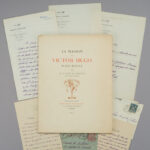
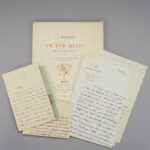
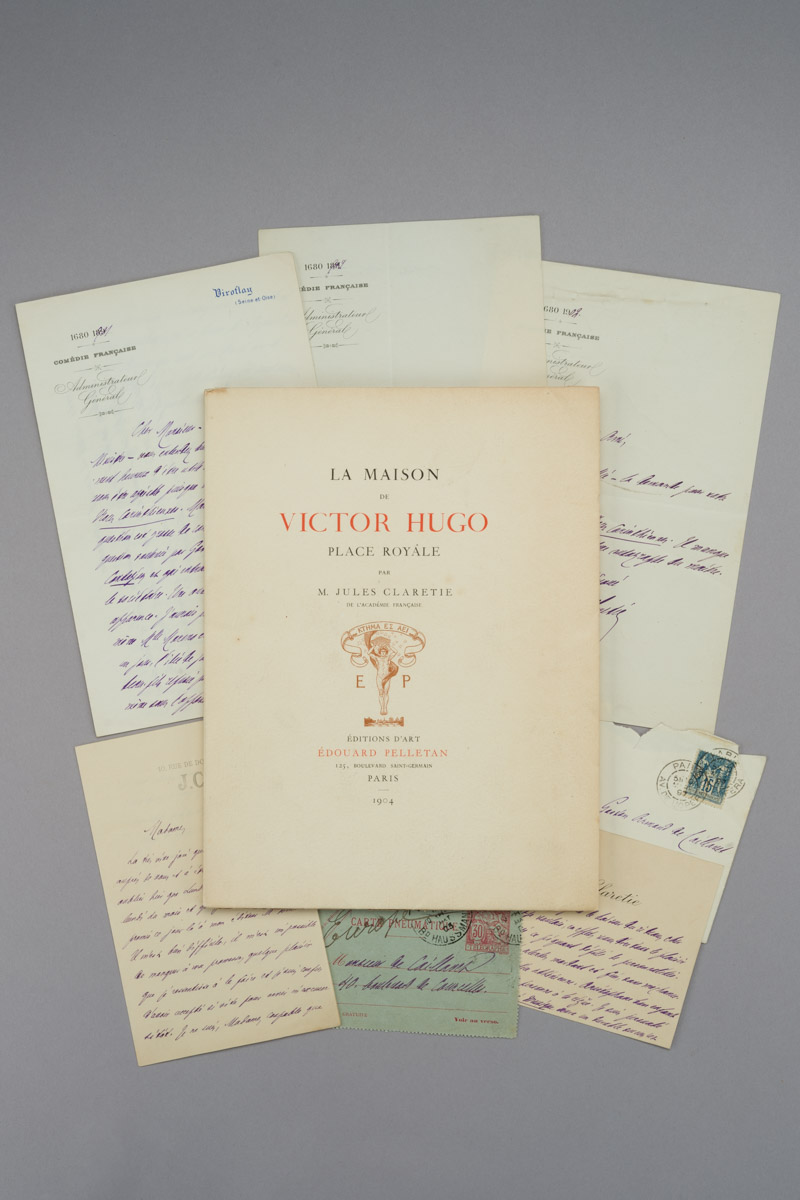
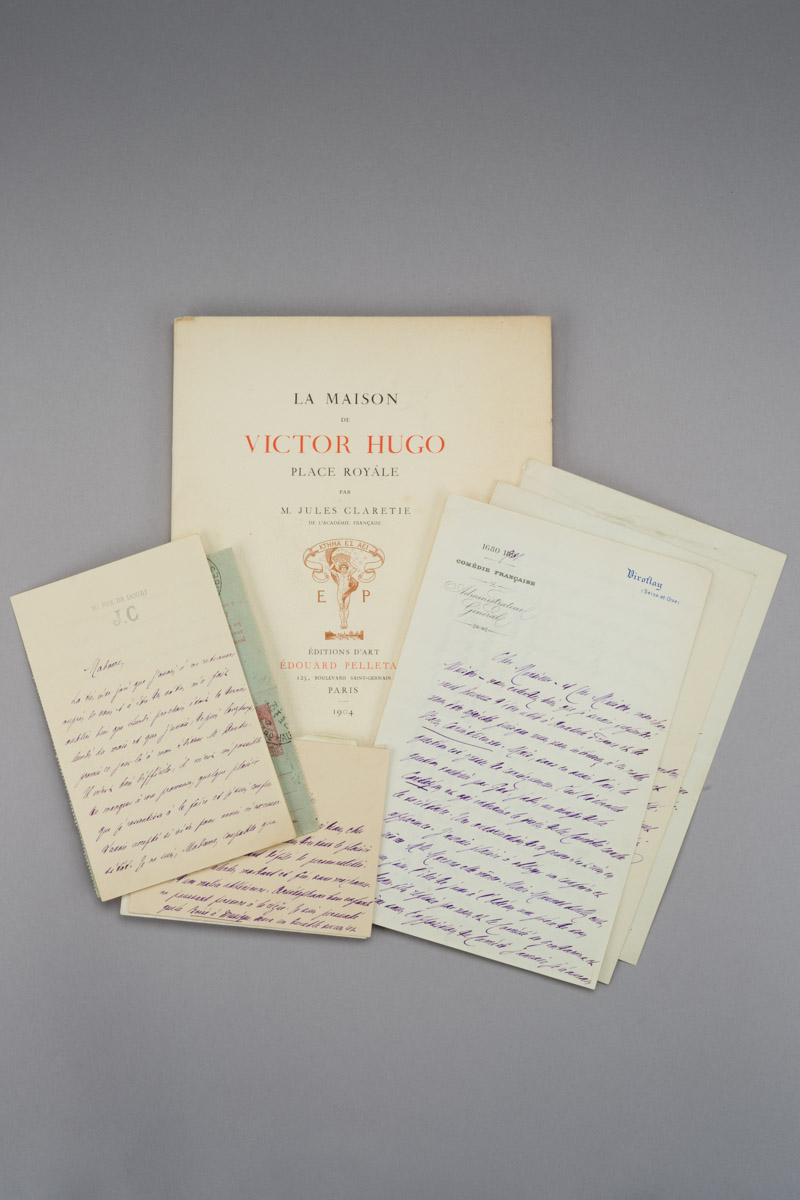
Paris, 1904. No. 8 of only 75 copies, specially printed for Madame Arman de Caillavet, of Jules Claretie’s commemorative address delivered at the inauguration of the Victor Hugo Museum at Place Royale, illustrated by Auguste Leroux. An exceptional association copy accompanied by six autograph letters signed by Claretie, five to playwright Gaston Arman de Caillavet and one to his wife, including three on Comédie-Française headed paper, together with associated postal material. A compelling combination of Victor Hugo, Belle Époque literary provenance and original manuscript correspondence.
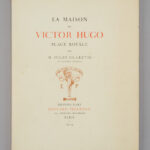
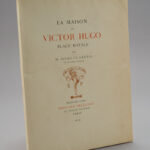
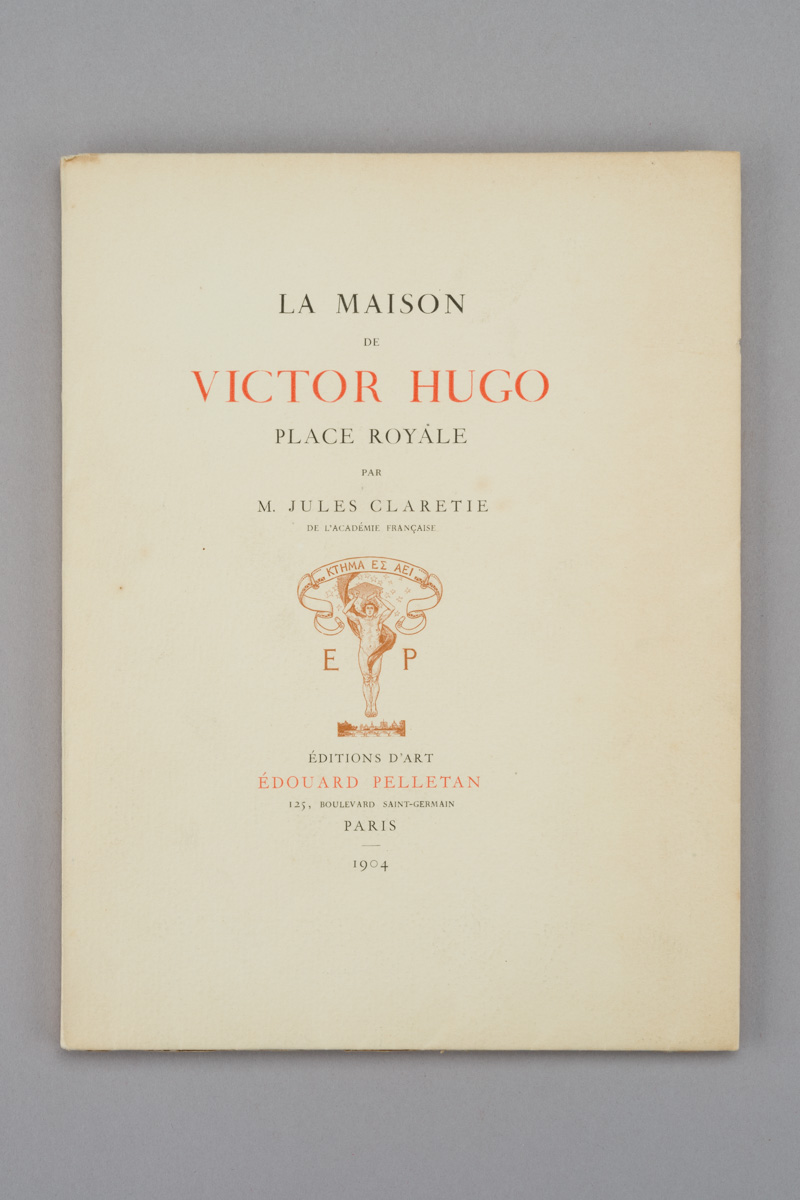
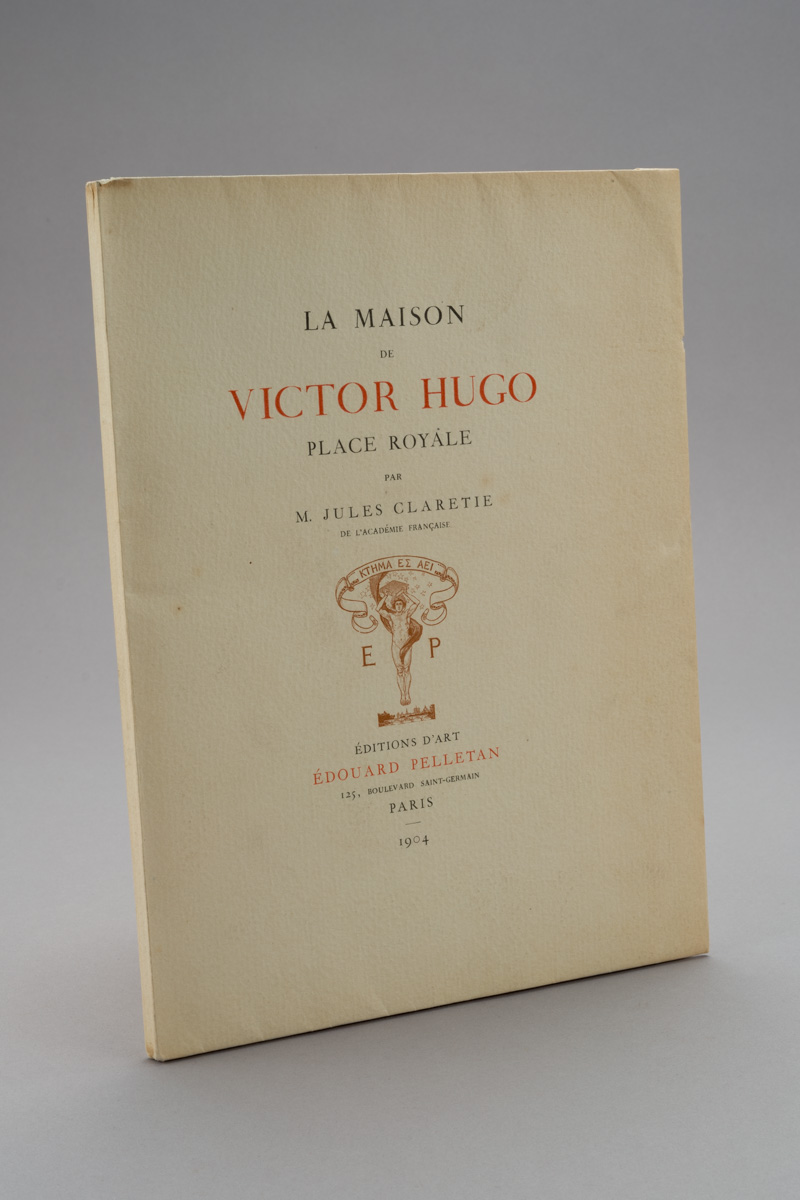
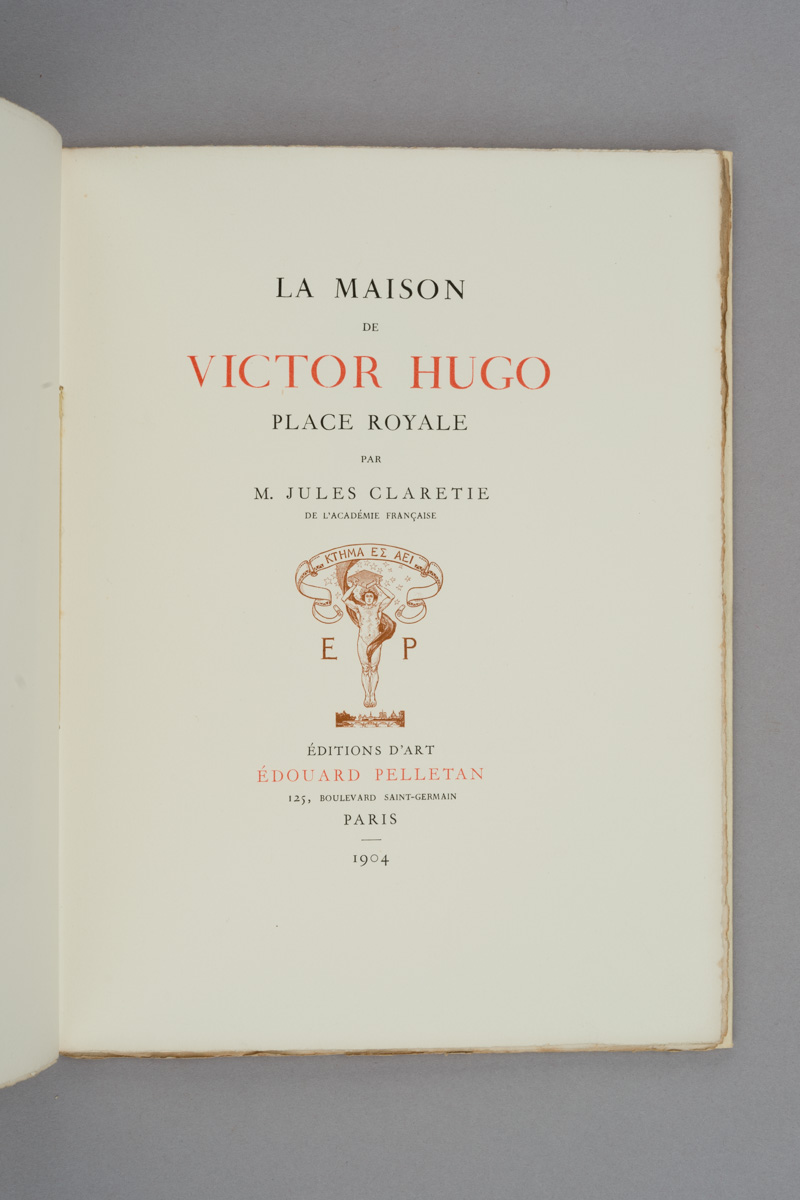
Hugo (Victor) — Claretie (Jules). La Maison de Victor Hugo, Place Royale. Paris: Éditions d’Art Édouard Pelletan, 1904. Number 8 of only 75 copies, this copy specially printed for Madame Arman de Caillavet, with illustrations by Auguste Leroux.
An exceptional association copy of Claretie’s address commemorating Victor Hugo and his celebrated Paris residence at the Place Royale — today the Place des Vosges and home of the Maison de Victor Hugo.
The work reproduces Claretie’s speech delivered at the inauguration of the Victor Hugo Museum on 30 June 1903, transforming the volume into a contemporary record of the creation of one of France’s most important literary museums.
Published the following year by the distinguished Parisian art publisher Édouard Pelletan, the edition was restricted to just 75 numbered copies. This is copy number 8, specially printed for Madame Arman de Caillavet, placing it firmly within the literary and cultural milieu from which the book emerged.
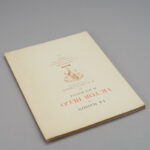
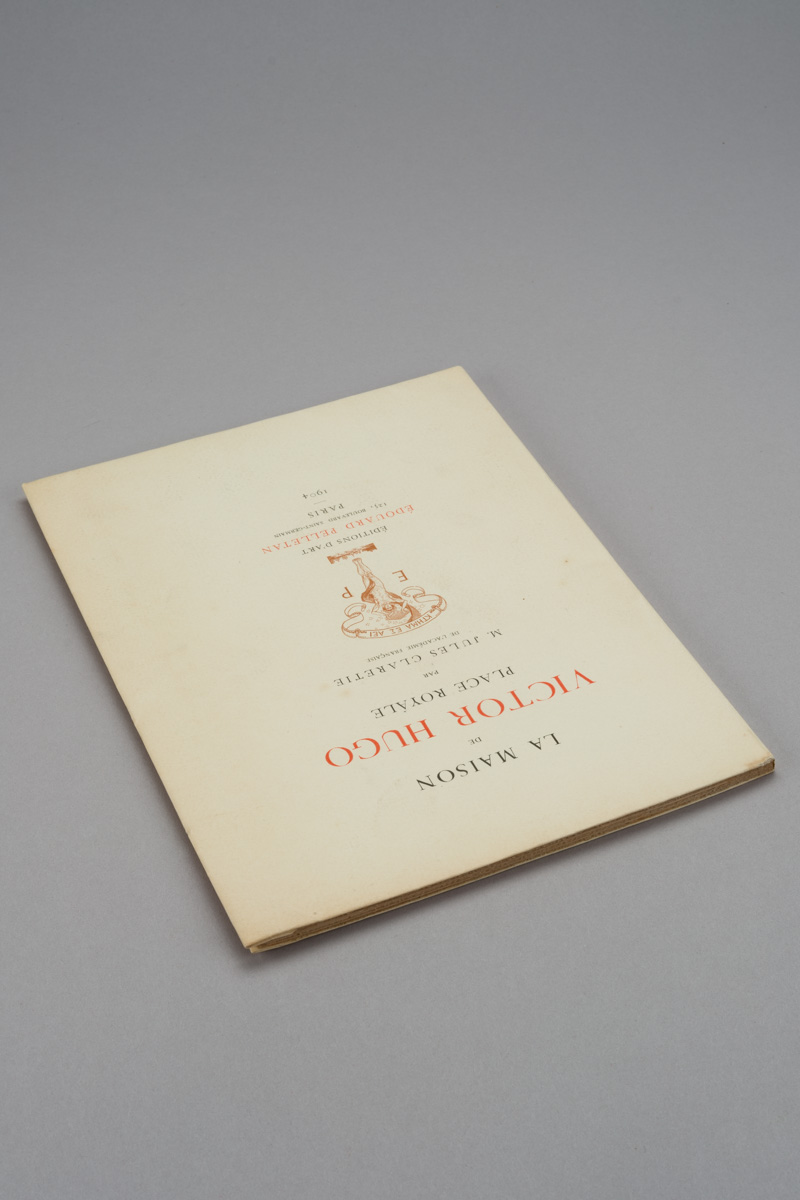
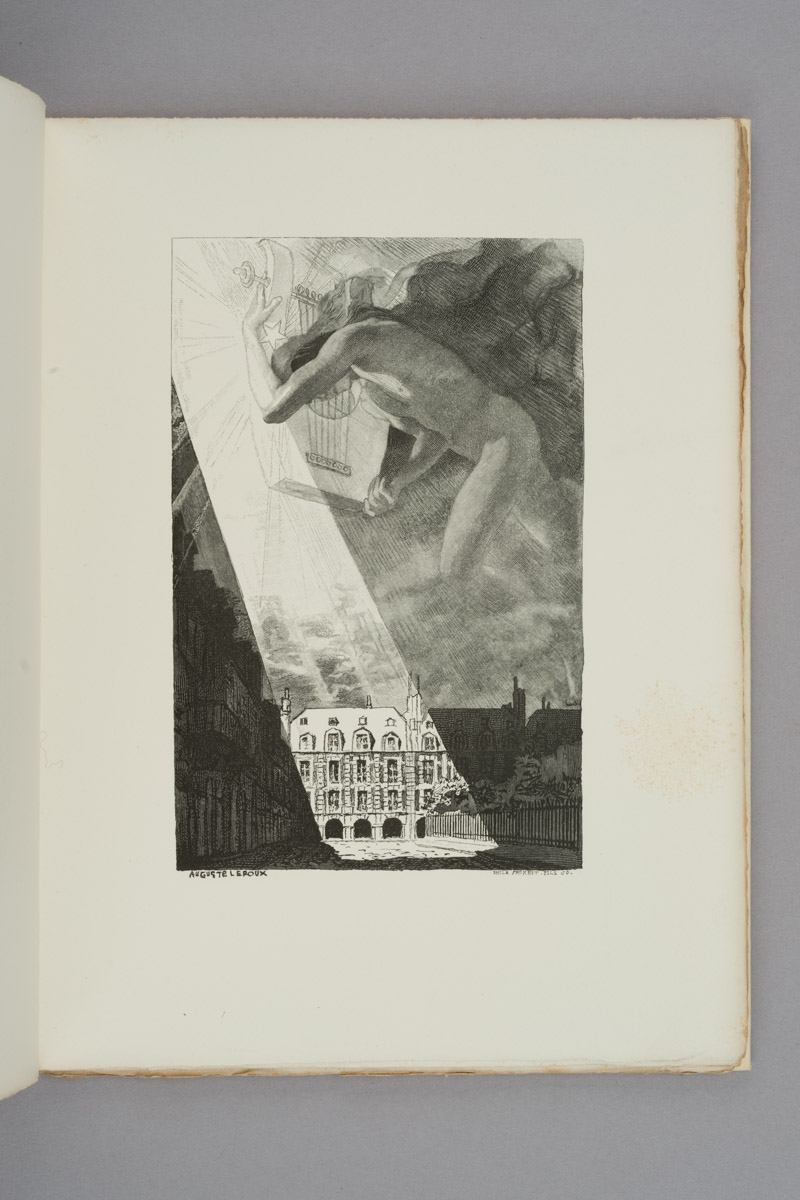
The volume is illustrated by Auguste Leroux, including a striking engraved composition depicting Hugo’s house beneath a monumental allegorical figure with lyre. Printed on fine paper with deckled edges and retaining its elegant original pictorial wrappers, the book is itself an attractive example of French livre d’artiste production at the beginning of the twentieth century.
What elevates this copy considerably beyond the ordinary limited edition is the accompanying archive of six autograph letters signed by Jules Claretie.
Five are addressed to the playwright Gaston Arman de Caillavet, while another is addressed to his wife. Three are written on official Comédie-Française stationery, reflecting Claretie’s long and important connection with that institution. Associated envelopes and postal material are also preserved.
The letters remain loosely inserted with the book, creating a remarkable combination of limited-edition publication, distinguished provenance, literary association and original manuscript material.
Original pictorial wrappers with minor spotting and light signs of age; overall a very good copy. The manuscript material shows the expected folds and handling associated with correspondence but survives as an impressive coherent group.
Author: Jules Claretie (1840–1913)
Subject: Victor Hugo (1802–1885)
Title: La Maison de Victor Hugo, Place Royale
Year: 1904
Edition: Limited Edition — No. 8 of only 75 copies
Special Copy: Specially printed for Madame Arman de Caillavet
Illustrator: Auguste Leroux (1871–1954)
Publisher: Éditions d’Art Édouard Pelletan, 125 Boulevard Saint-Germain
Place: Paris
Format: Small quarto
Additional Material: Six autograph letters signed by Jules Claretie, five addressed to Gaston Arman de Caillavet and one to his wife; three written on official Comédie-Française stationery, together with associated postal material/envelopes
1 in stock
On 30 June 1903, Paris formally opened a museum dedicated to one of the greatest figures in French literature.
The location could hardly have been more appropriate.
At 6 Place des Vosges, then historically known as the Place Royale, stood the house in which Victor Hugo lived from 1832 until 1848 — years encompassing some of the most important periods of his literary and political life.
Among those marking the inauguration was Jules Claretie, novelist, critic, member of the Académie française and administrator of the Comédie-Française.
His commemorative speech became this book.
Édouard Pelletan issued it in Paris the following year as an exceptionally restricted edition of only 75 copies, illustrated by Auguste Leroux.
But this is not simply one of those seventy-five.
It is No. 8, specially printed for Madame Arman de Caillavet.
That name leads directly into another important Parisian literary circle.
Madame de Caillavet belonged to the celebrated intellectual and literary society of Belle Époque Paris, while her son Gaston Arman de Caillavet became a successful dramatist and collaborator of Robert de Flers. Their world intersected naturally with the theatre, the Académie française and the Comédie-Française — precisely the cultural environment occupied by Jules Claretie.
And with this copy survive the documents that make that connection tangible.
Six original handwritten letters signed by Claretie accompany the volume. Five were sent to Gaston de Caillavet and another to his wife. Three were written on Comédie-Française headed paper, and associated envelopes and postal pieces have also survived.
The result is something much more compelling than a numbered book.
It is a small literary archive.
The printed volume commemorates the preservation of Victor Hugo’s home. Its special recipient connects it to one of the notable literary families of Belle Époque Paris. The accompanying letters then document Claretie’s personal correspondence with that same circle.
Book, provenance and manuscripts all belong to the same cultural world.
More than a century later, they remain together.
This is an unusually strong association copy because several independent collecting qualities converge in one object.
The first is Victor Hugo. The volume records the inauguration of the museum established in Hugo’s former Paris home and therefore has a direct connection with the preservation of his literary legacy.
The second is rarity: only 75 numbered copies were produced, with this being the particularly low No. 8.
The third is provenance. It was specially printed for Madame Arman de Caillavet, rather than being merely an unidentified numbered copy.
The fourth — and perhaps most commercially important — is the accompanying manuscript material: six autograph letters signed by Jules Claretie, principally addressed to Gaston Arman de Caillavet and retaining the direct connection between author and recipient. The presence of letters on Comédie-Française stationery strengthens the theatrical and institutional association.
Finally, the volume itself remains an attractive piece of French fine printing, with illustrations by Auguste Leroux, original wrappers and elegant typography by Édouard Pelletan.
For collectors of Victor Hugo, French literature, literary manuscripts, the Comédie-Française, Belle Époque Paris or important association copies, this is a genuinely distinctive ensemble.