£1,495.00
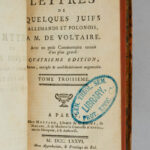
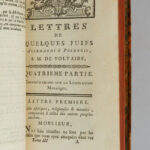
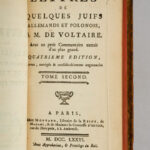
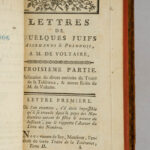
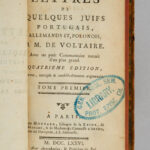
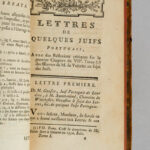
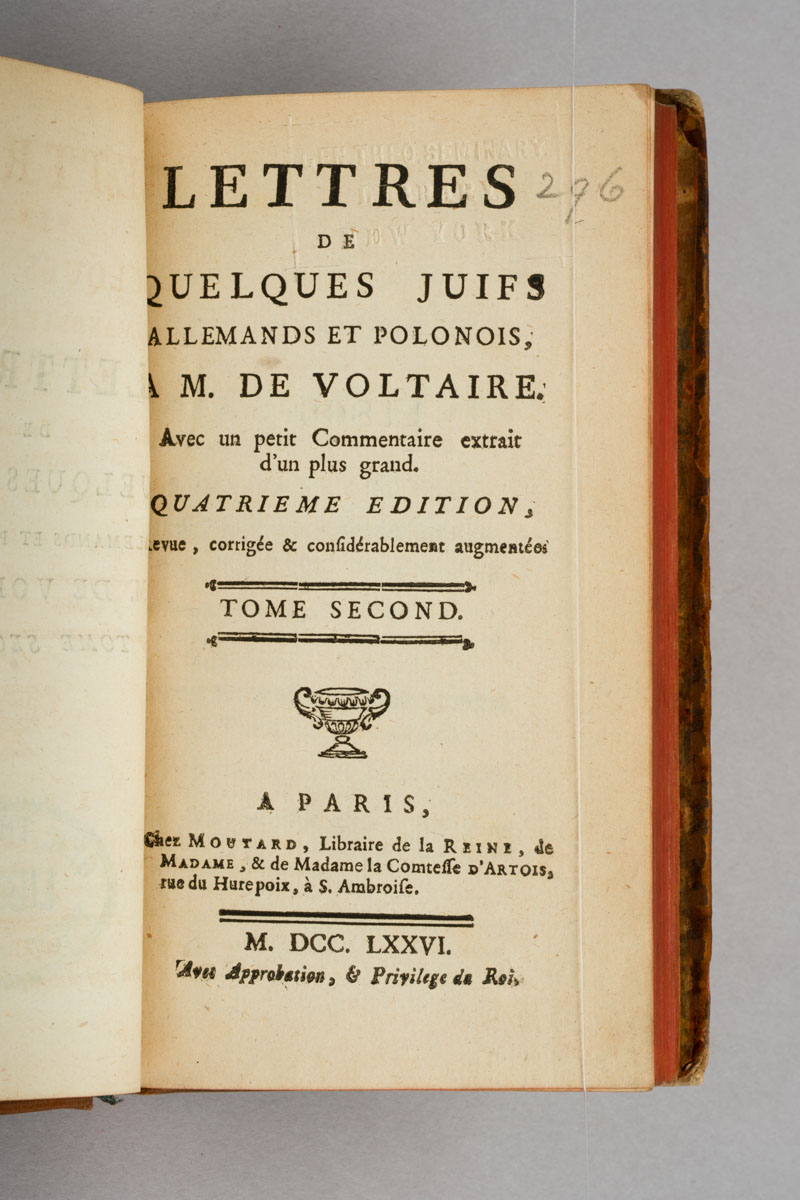
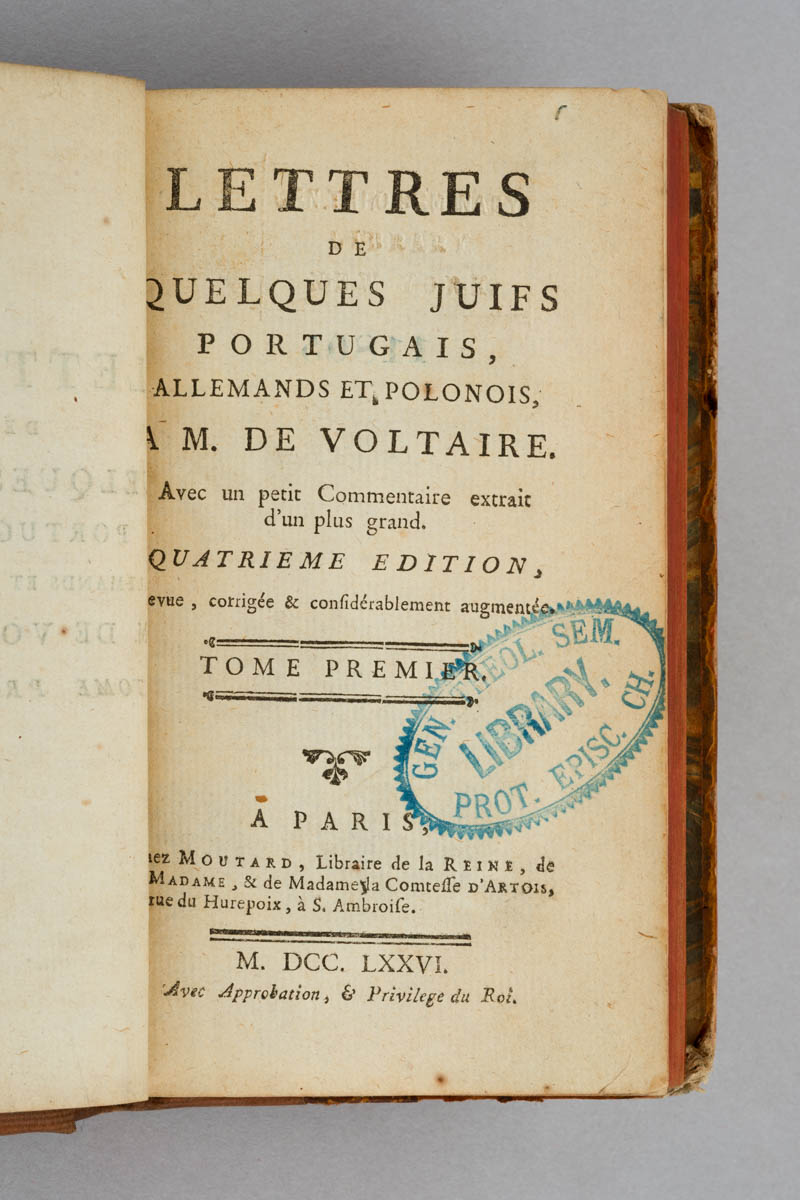
Guénée, Antoine. Lettres de Quelques Juifs Portugais, Allemands et Polonois, à M. de Voltaire. Avec un petit Commentaire extrait d’un plus grand. Quatrième édition, revue, corrigée & considérablement augmentée. Paris: Chez Moutard, Libraire de la Reine, de Madame, & de Madame la Comtesse d’Artois, rue du Hurepoix, à S. Ambroise, 1776. Three volumes, complete.
An important Enlightenment-era response to Voltaire’s writings on Judaism and the Jewish people, composed by the French Catholic scholar and controversialist Antoine Guénée.
Written through the literary device of letters ostensibly addressed to Voltaire by Portuguese, German and Polish Jews, Guénée challenges Voltaire’s historical, biblical and philosophical arguments concerning Judaism. The work became one of the better-known contemporary refutations of Voltaire and passed through numerous editions.
This complete three-volume fourth edition of 1776 is expressly described on the title pages as “revue, corrigée & considérablement augmentée” — revised, corrected and considerably enlarged.
The contents extend well beyond simple theological controversy. Guénée engages directly with questions of Jewish history, Mosaic legislation, biblical criticism, religious toleration and Enlightenment philosophy, frequently taking Voltaire’s published assertions as the starting point for detailed rebuttal.
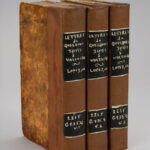
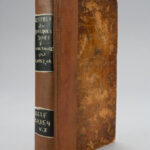
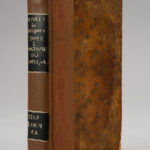
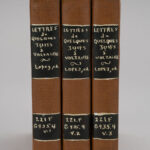
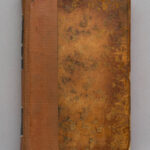
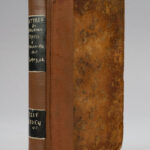
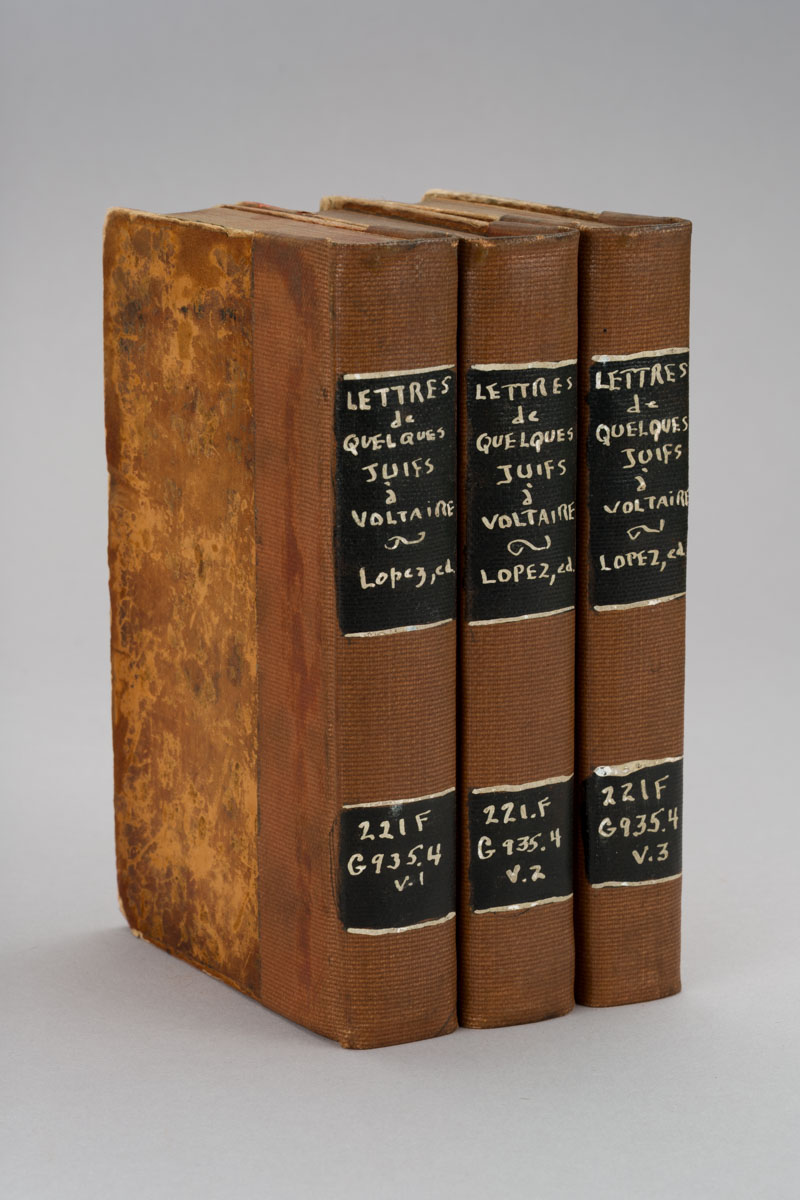
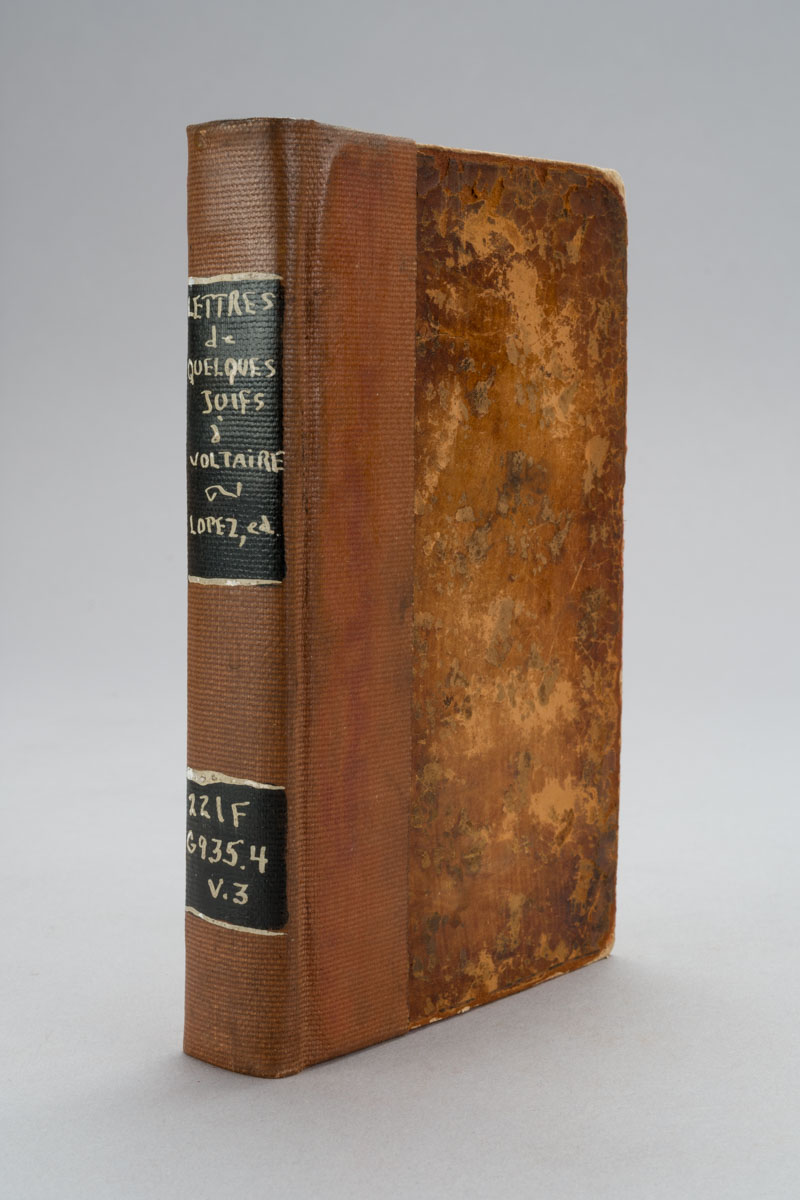
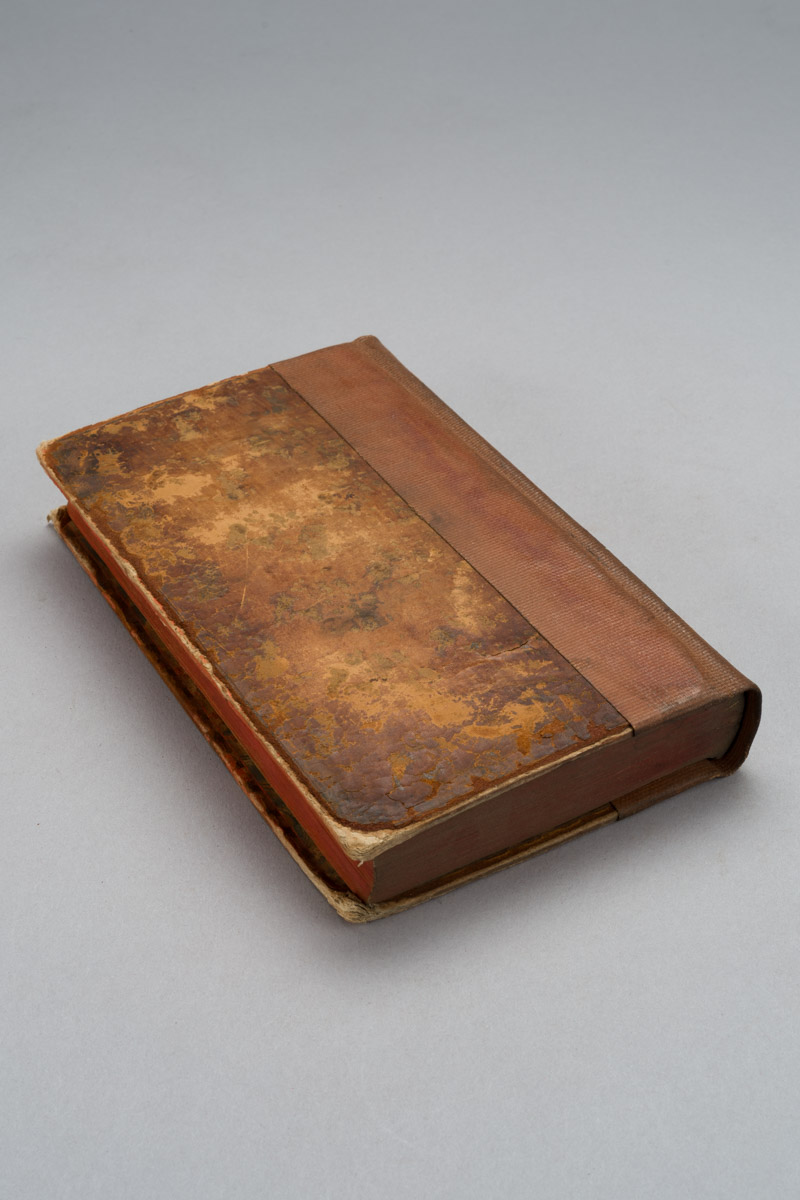
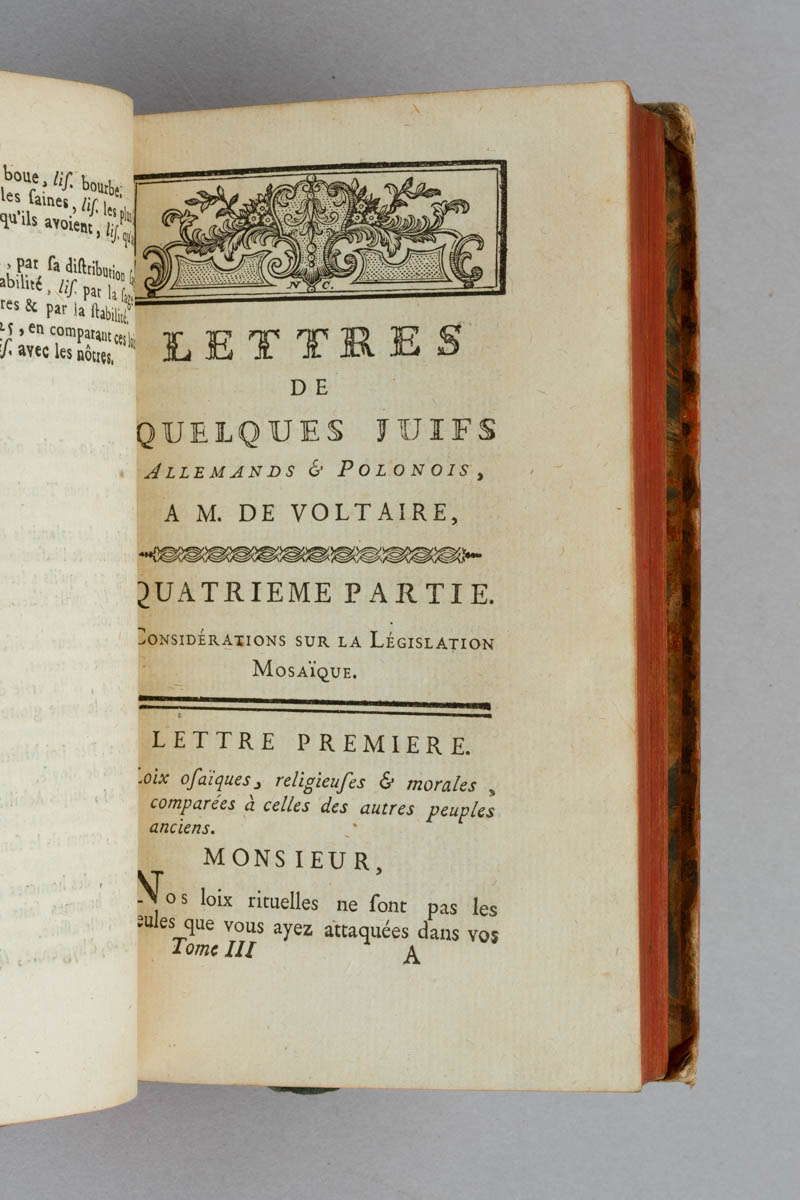
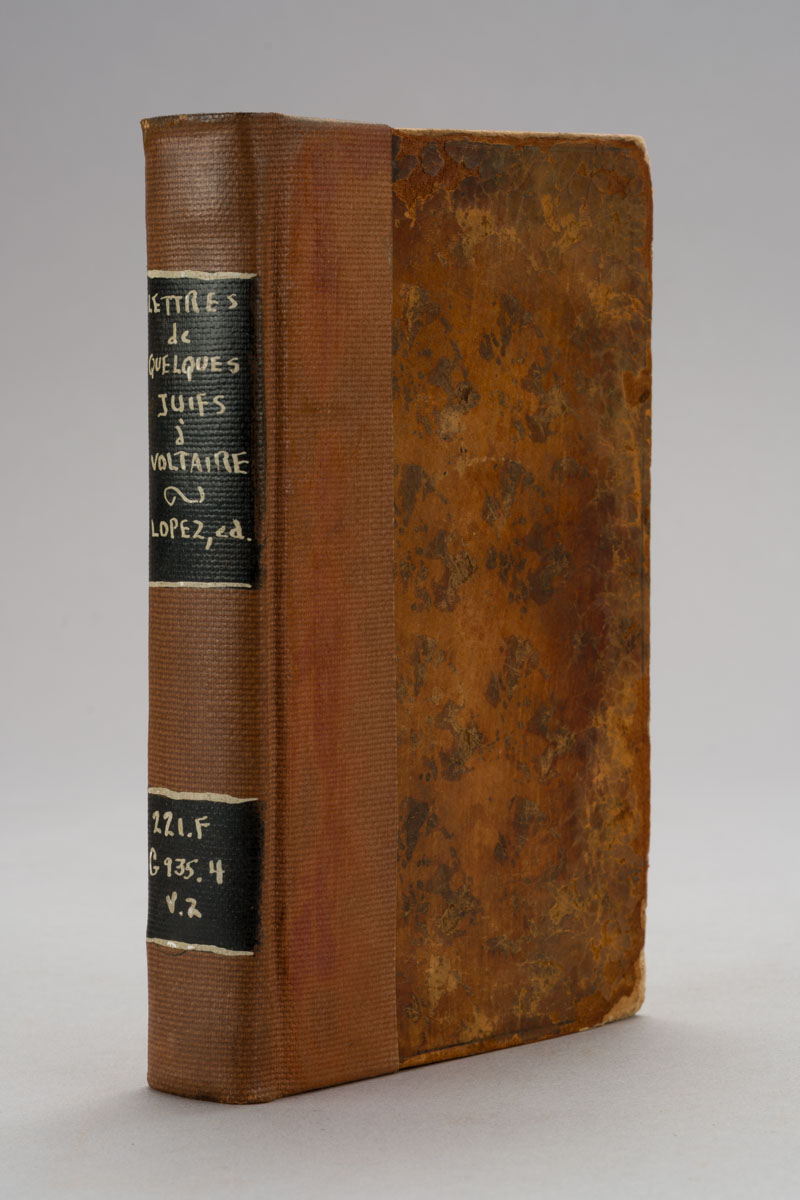
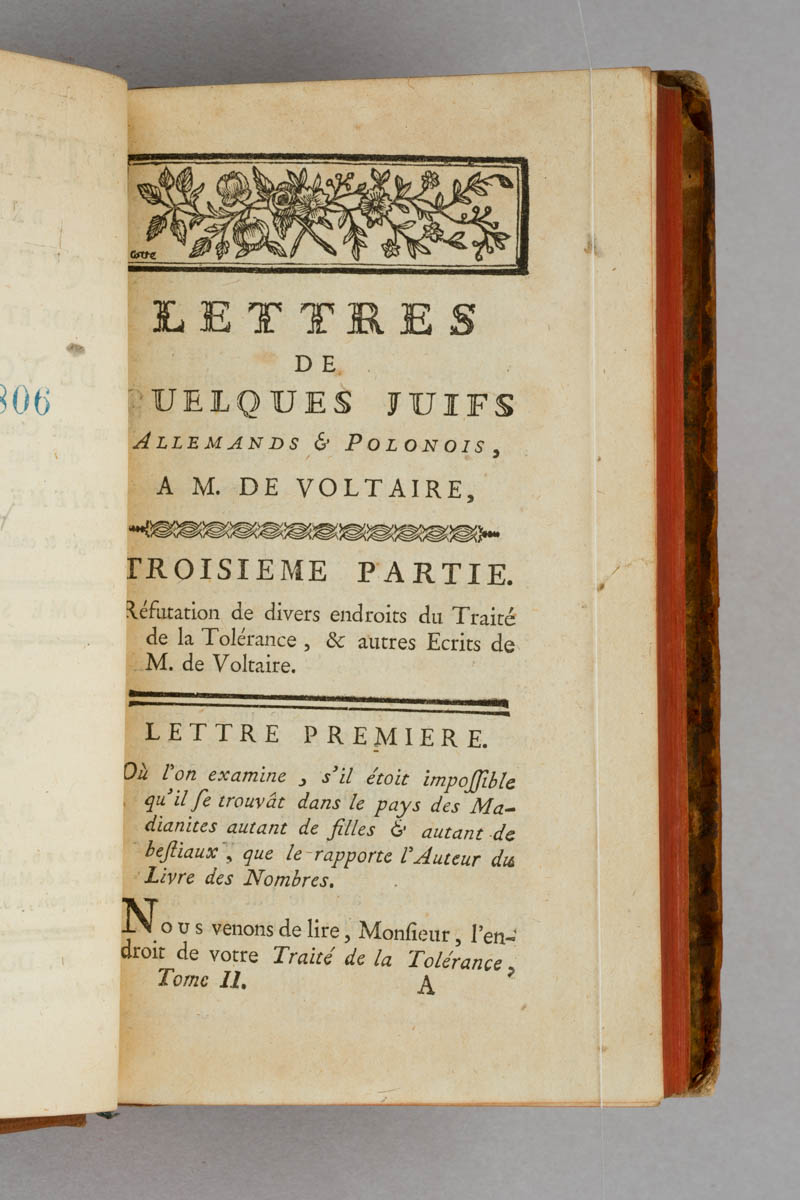
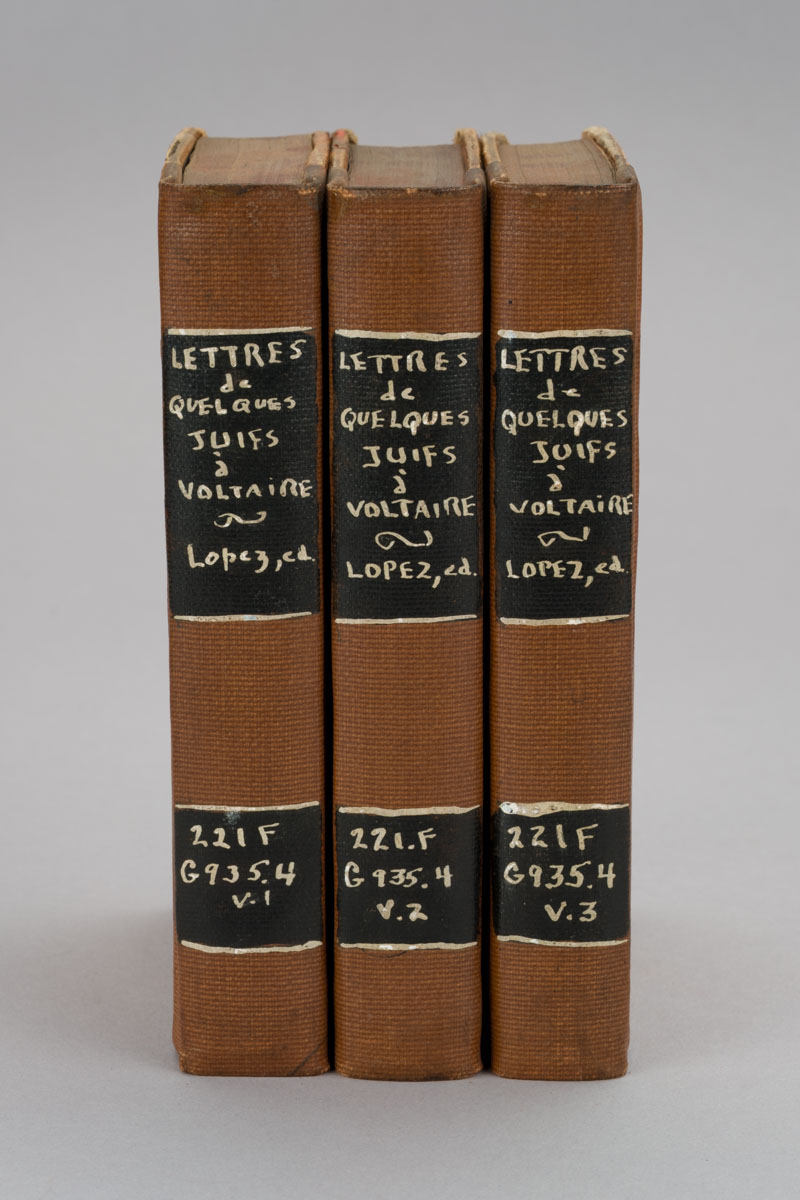
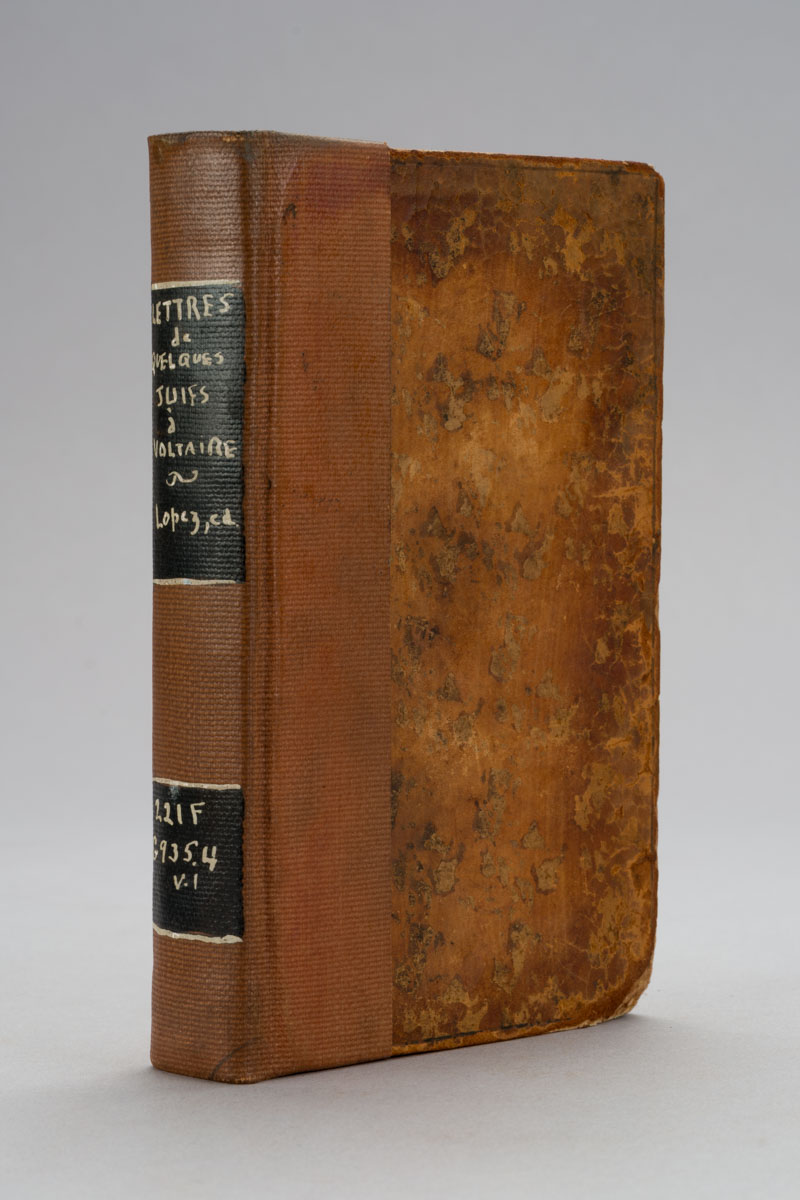
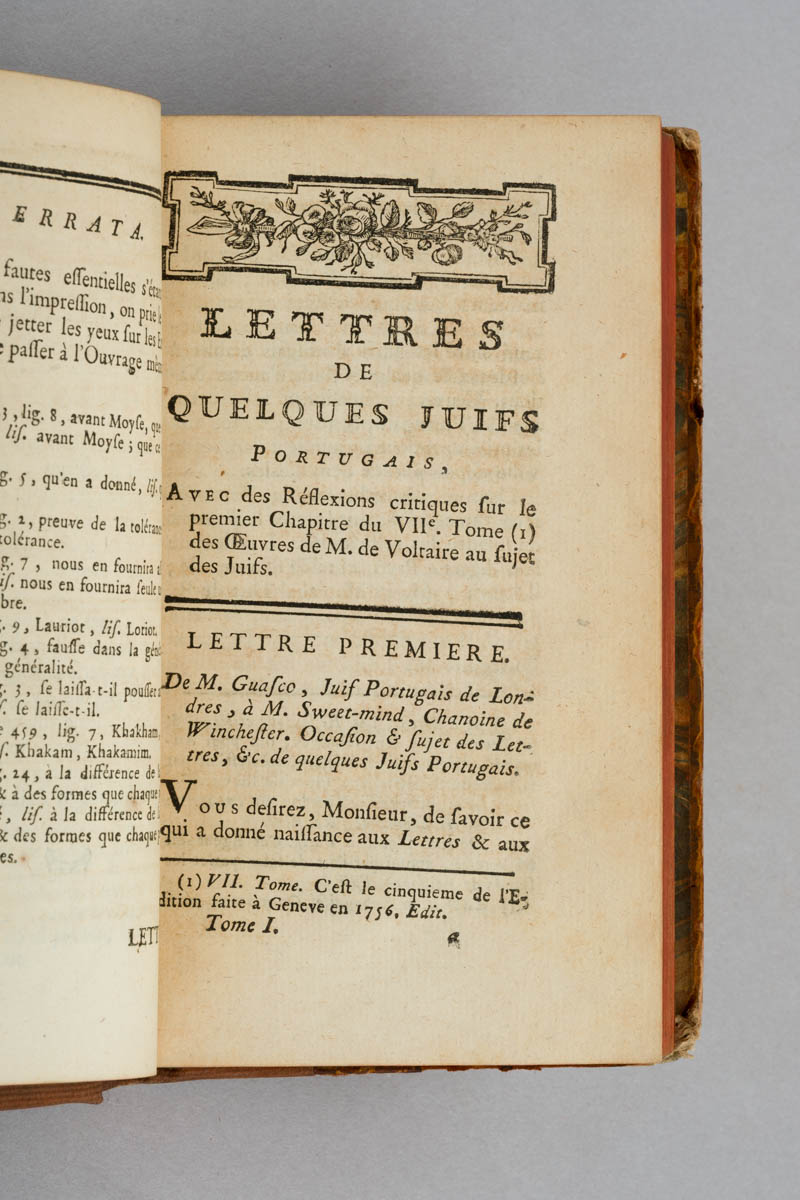
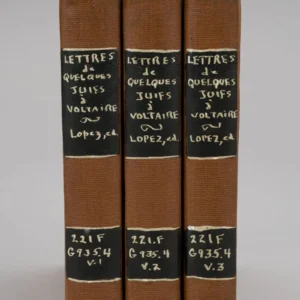
The volumes retain decorative typographical ornaments and headpieces. Bound uniformly in brown cloth with manuscript-style black spine labels identifying the work, volume numbers and former library shelf marks.
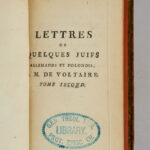
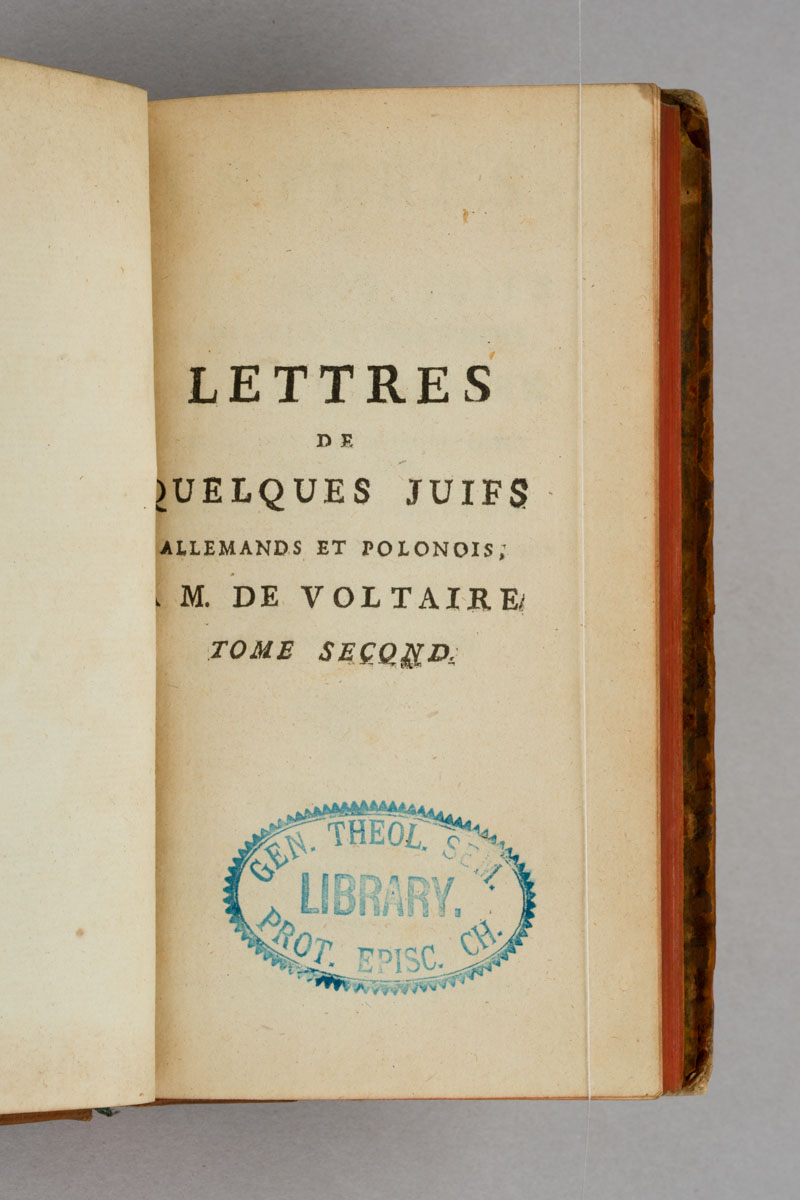
Each volume bears the prominent blue oval institutional stamp of the General Theological Seminary Library of the Protestant Episcopal Church, providing clear provenance from one of America’s historically significant theological libraries.
Provenance:
From the library of the General Theological Seminary of the Protestant Episcopal Church, New York, with its large blue oval library stamps to the title pages and associated former shelf markings.
The provenance should definitely be retained in the ARB description rather than treated merely as an ex-library defect. In this case it forms a meaningful part of the set’s history.
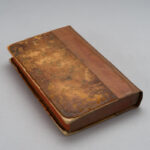
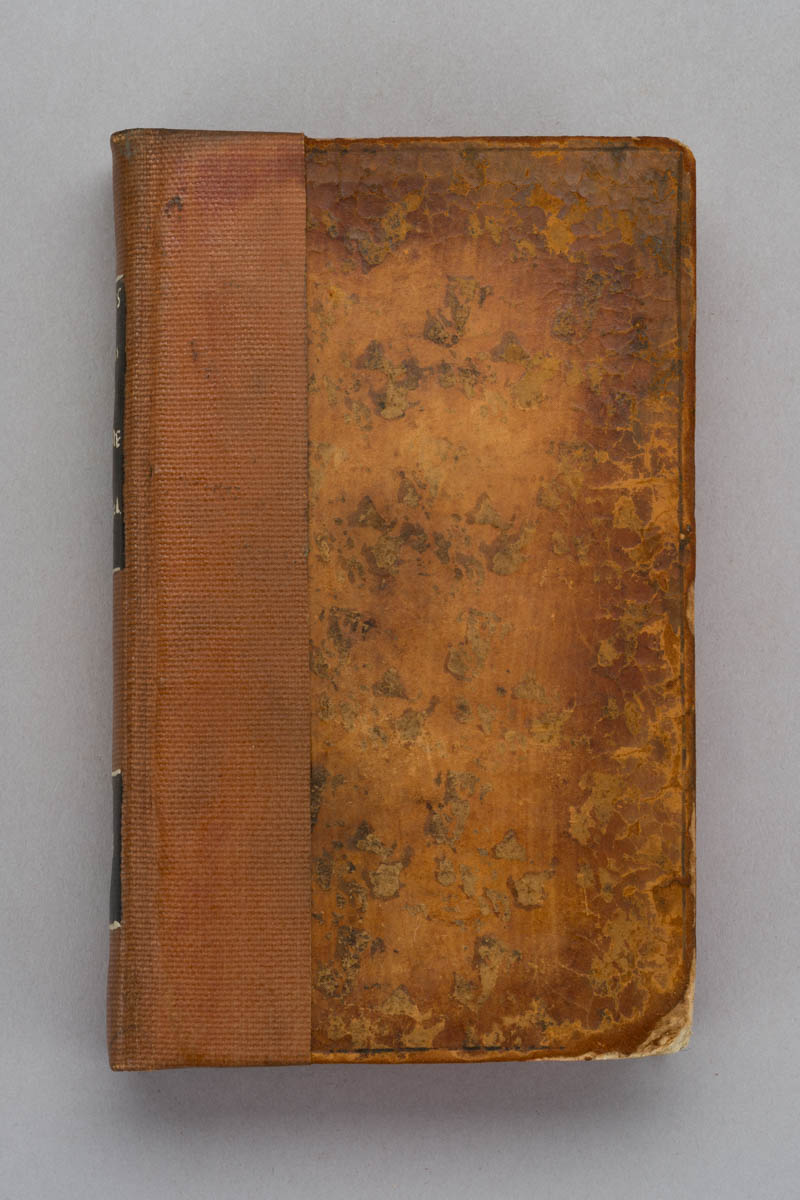
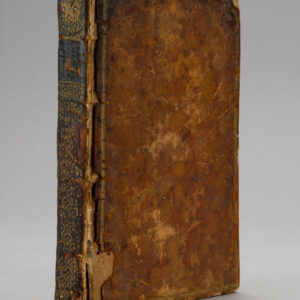
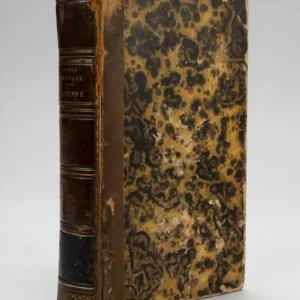
Good antiquarian condition. Three volumes uniformly bound in later brown cloth, with black manuscript-lettered spine labels and former library shelf markings. Expected light age-toning and occasional spotting internally. Institutional library stamps to title pages and associated library markings. Some wear and minor fraying to bindings, particularly at extremities, consistent with age and institutional use. Complete in three volumes.
1 in stock
Few intellectual figures embodied the European Enlightenment more completely—or more controversially—than Voltaire.
His attacks upon religious authority, superstition and established doctrine made him one of the defining voices of eighteenth-century Europe. But his writings on Judaism and Jewish history were frequently hostile and became the subject of vigorous contemporary criticism.
Among those who answered him was Antoine Guénée, a French priest, scholar and member of the Académie des Inscriptions et Belles-Lettres.
Rather than produce a conventional theological treatise, Guénée adopted a clever literary device: a series of letters supposedly written by learned Portuguese, German and Polish Jews directly to Voltaire.
The result became Lettres de Quelques Juifs.
Guénée turned Voltaire’s own methods against him. Passages from Voltaire’s works were examined alongside biblical texts, ancient history and contemporary scholarship. The tone could be learned, ironic and pointed, making the work not merely an exercise in theology but part of the larger intellectual combat of the Age of Enlightenment.
The present edition appeared in Paris in 1776, only two years before Voltaire’s death. By then the controversy had grown sufficiently important for the work to reach this substantially expanded fourth edition.
One section explicitly identifies itself as “Considérations sur la Législation Mosaïque”—considerations on Mosaic law—while another addresses critical reflections on Voltaire’s writings concerning the Jews. The set therefore records an unusually direct printed confrontation between Enlightenment scepticism, biblical scholarship and eighteenth-century arguments surrounding Jewish history.
These particular volumes subsequently crossed the Atlantic and entered the library of the General Theological Seminary in New York, whose distinctive institutional stamps remain on the title pages.
The result is a complete three-volume survival of an eighteenth-century intellectual controversy with a documented later American theological provenance.
This is considerably more interesting than an ordinary eighteenth-century theological work.
At its centre stands Voltaire and the debate surrounding one of the most important thinkers of the Enlightenment. Guénée’s work represents a substantial contemporary attempt to challenge Voltaire’s interpretation of Judaism, Jewish history and the Hebrew Bible.
The complete three-volume format is important. Individual and incomplete volumes frequently become separated over two and a half centuries; here the entire 1776 edition survives together.
The set also has strong institutional provenance through the General Theological Seminary Library, adding another layer to its history and demonstrating its later use within American theological scholarship.
For collections concerned with Voltaire, the Enlightenment, Jewish history, religious toleration, biblical criticism, eighteenth-century France or the history of religious controversy, this is a particularly evocative primary-source set.