£395.00
A scarce first edition, complete in two volumes, of Charles Webb Le Bas’s substantial biography of Thomas Fanshaw Middleton, the first Anglican Bishop of Calcutta, and an important contemporary account of the development of the Church of England in British India.
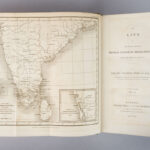
Published in London in 1831, the work comprises xvi, 502 pages in Volume I and 459 pages in Volume II. The complete edition was issued with a portrait frontispiece to the first volume and a large folding engraved map to the second; bibliographical comparison confirms these illustrations as called for.
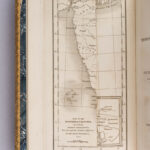
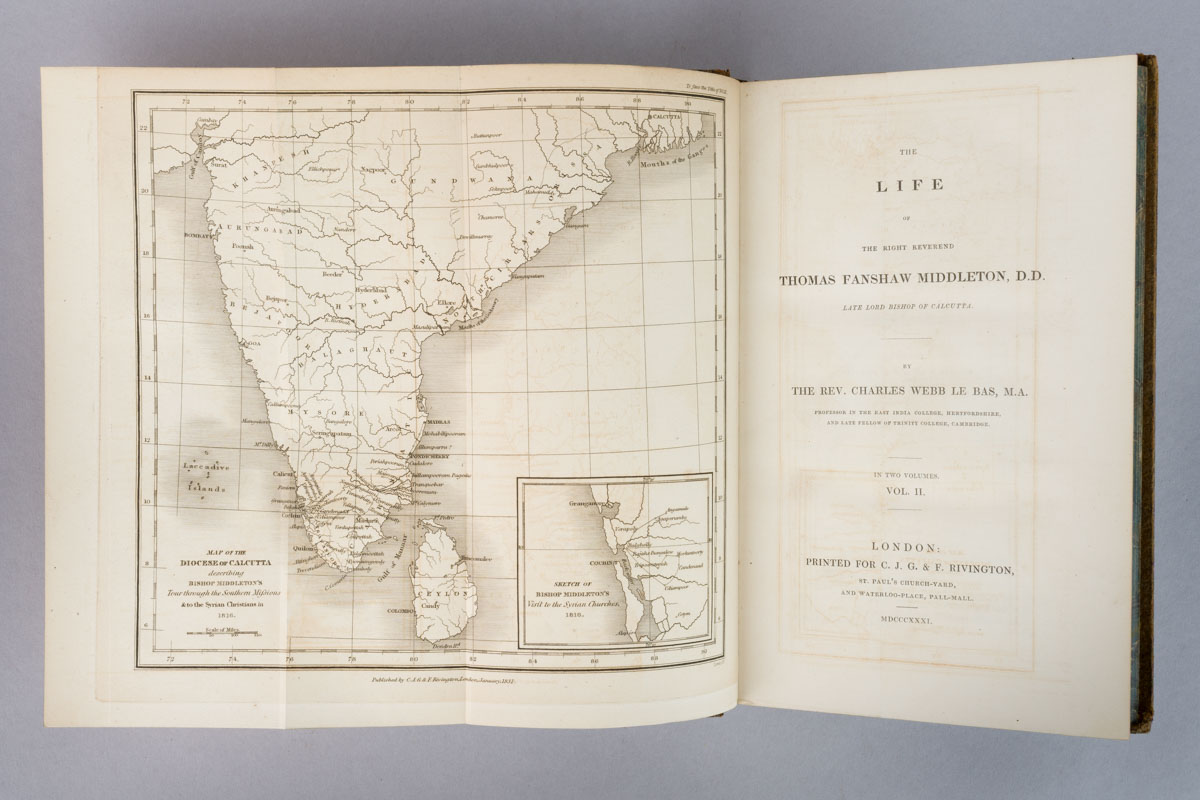
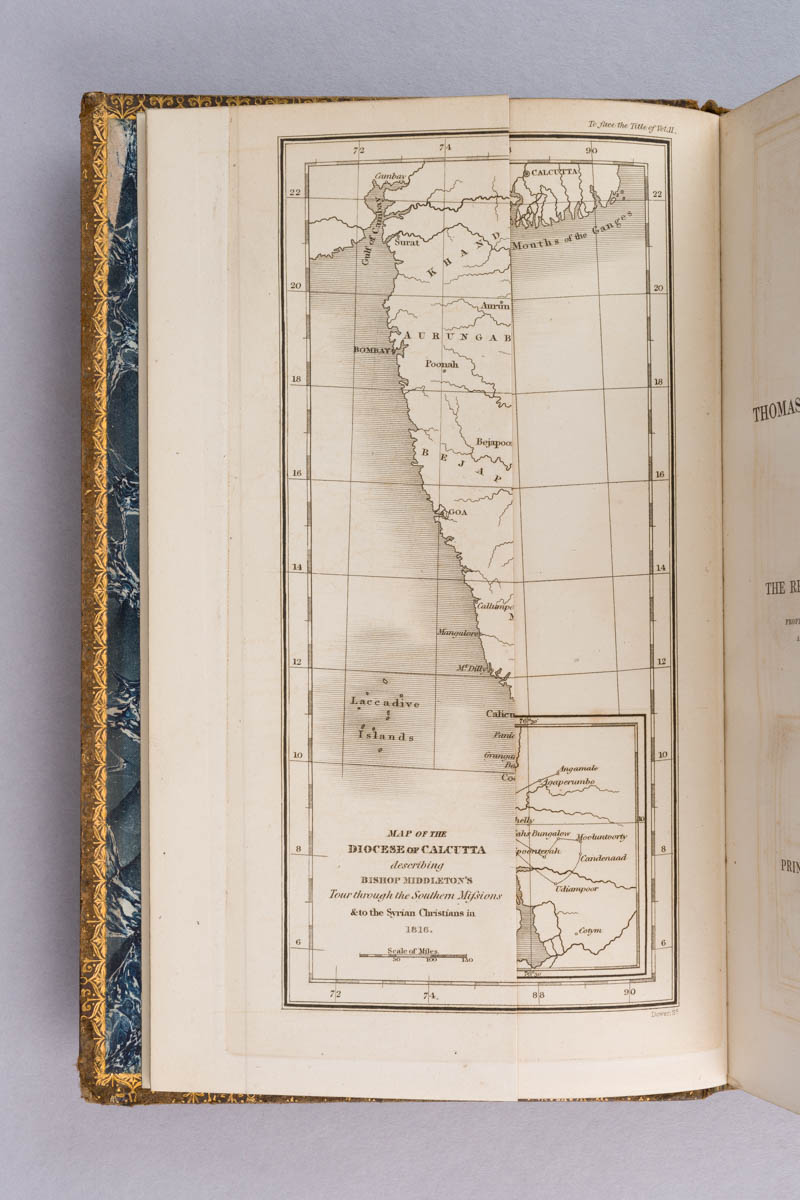
The folding map is particularly attractive, entitled Map of the Diocese of Calcutta describing Bishop Middleton’s Tour through the Southern Missions & to the Syrian Christians in 1816, with an inset showing the bishop’s visit to the Syrian churches. It charts a vast ecclesiastical jurisdiction extending across much of the Indian subcontinent and provides a tangible geographical record of Middleton’s travels.
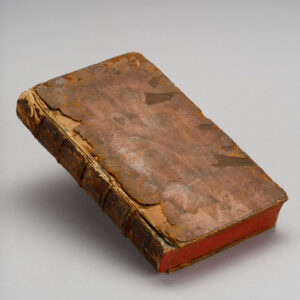
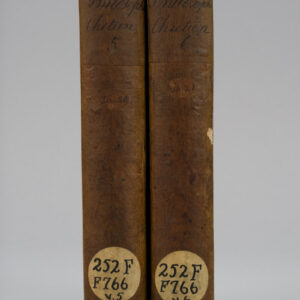
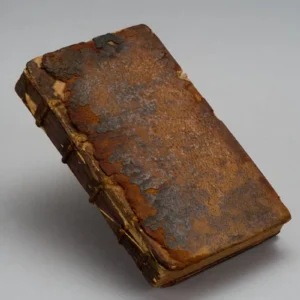
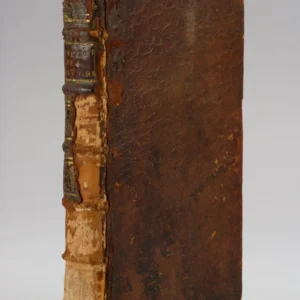
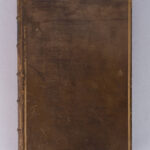
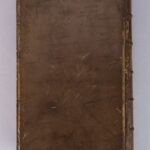
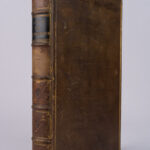
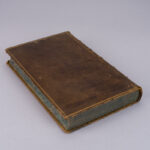
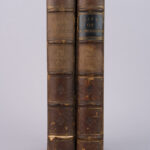
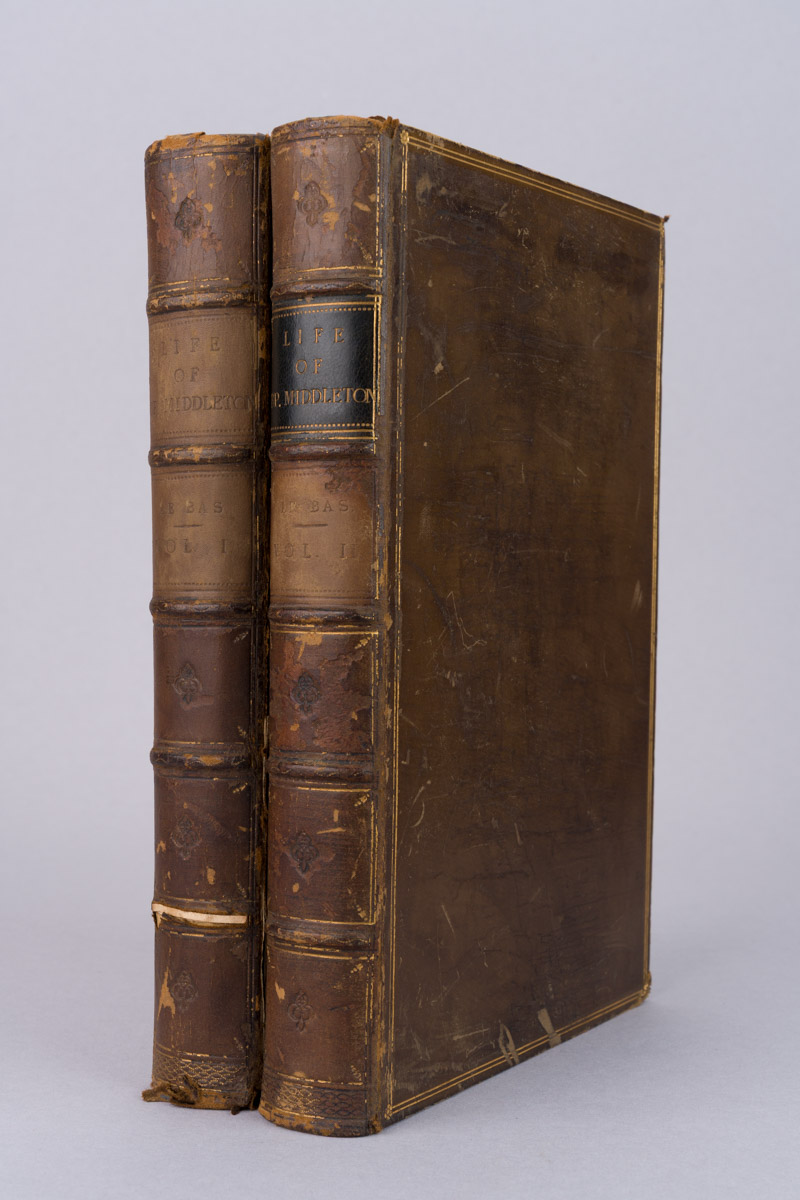
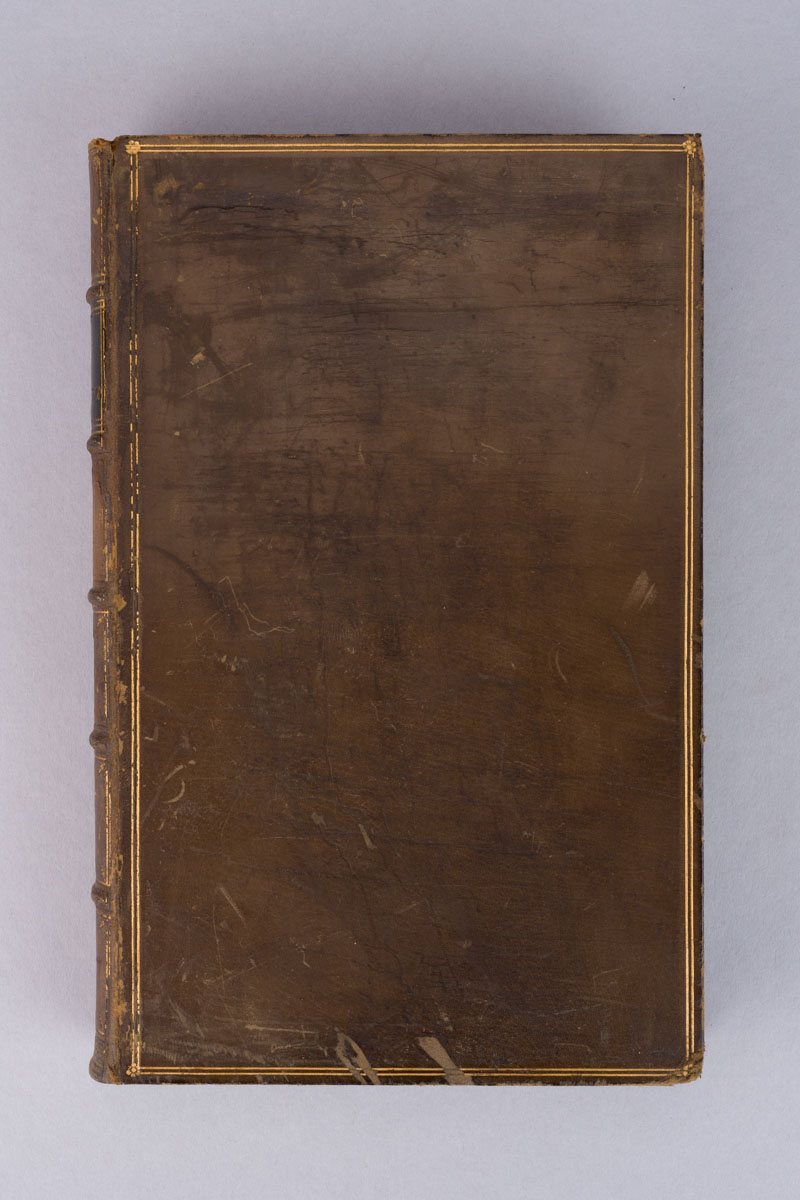
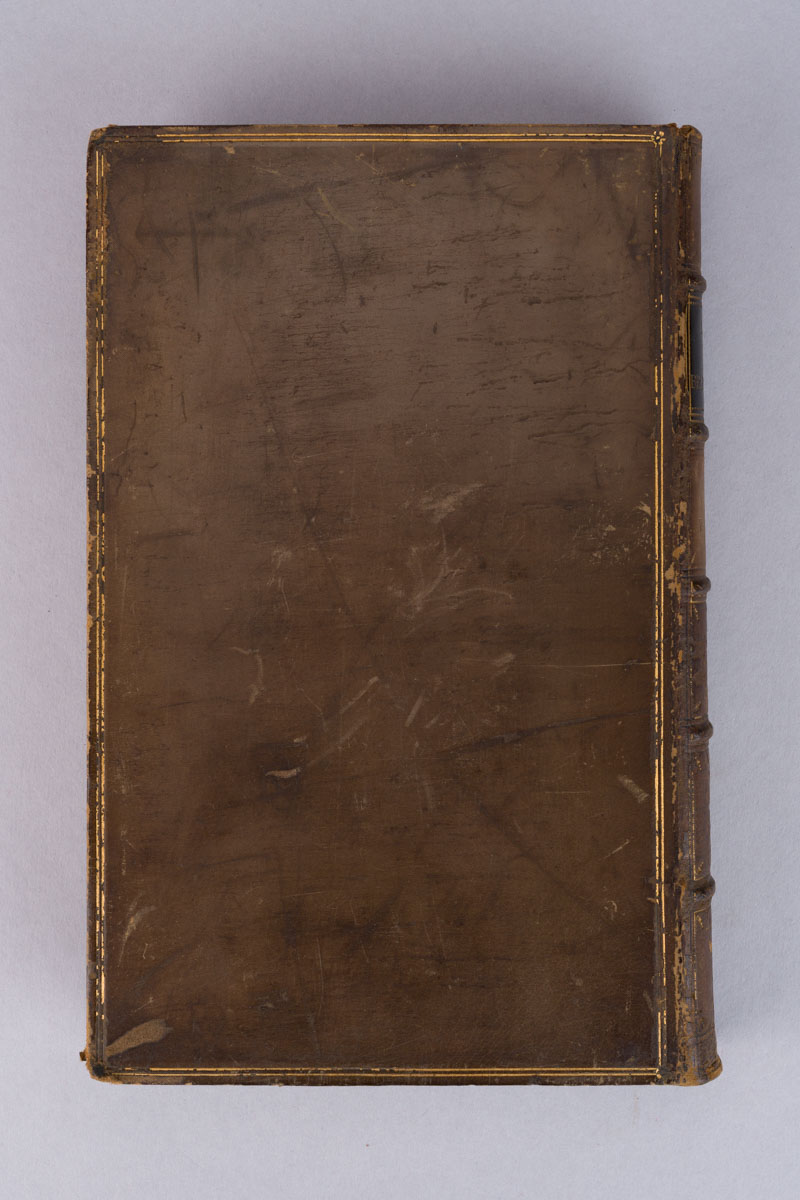
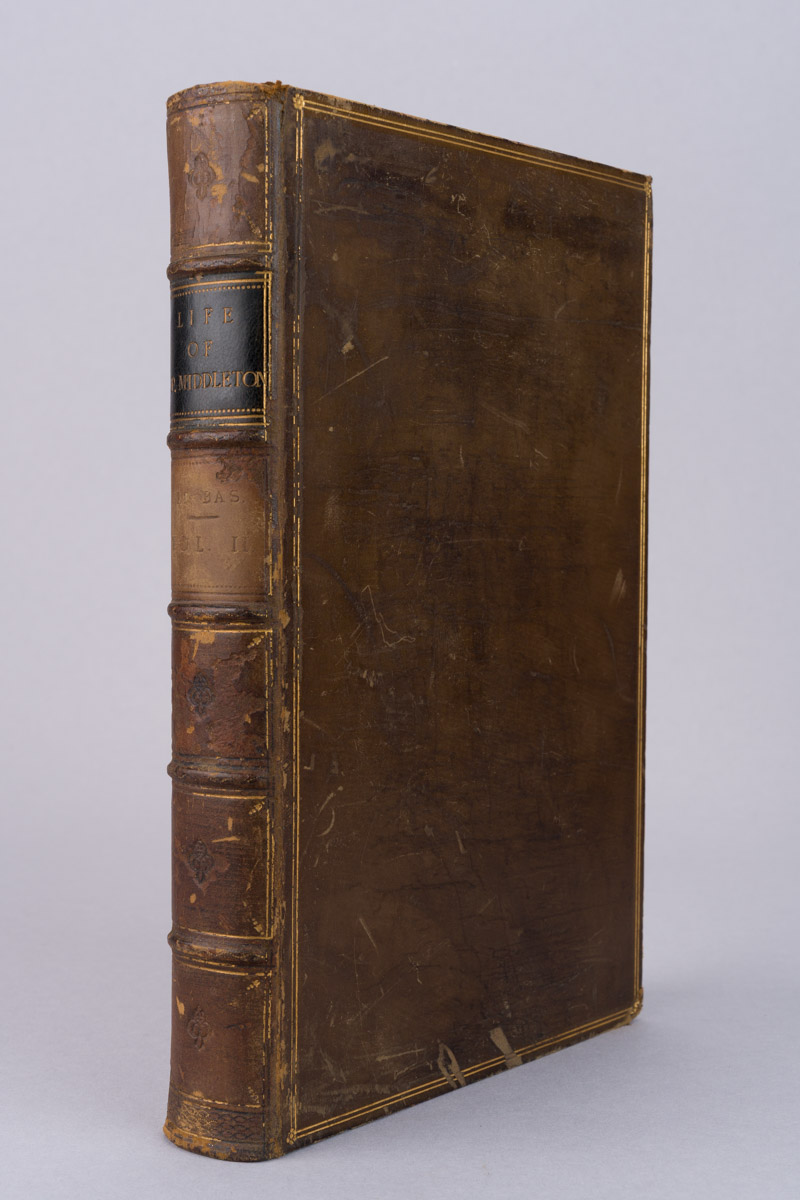
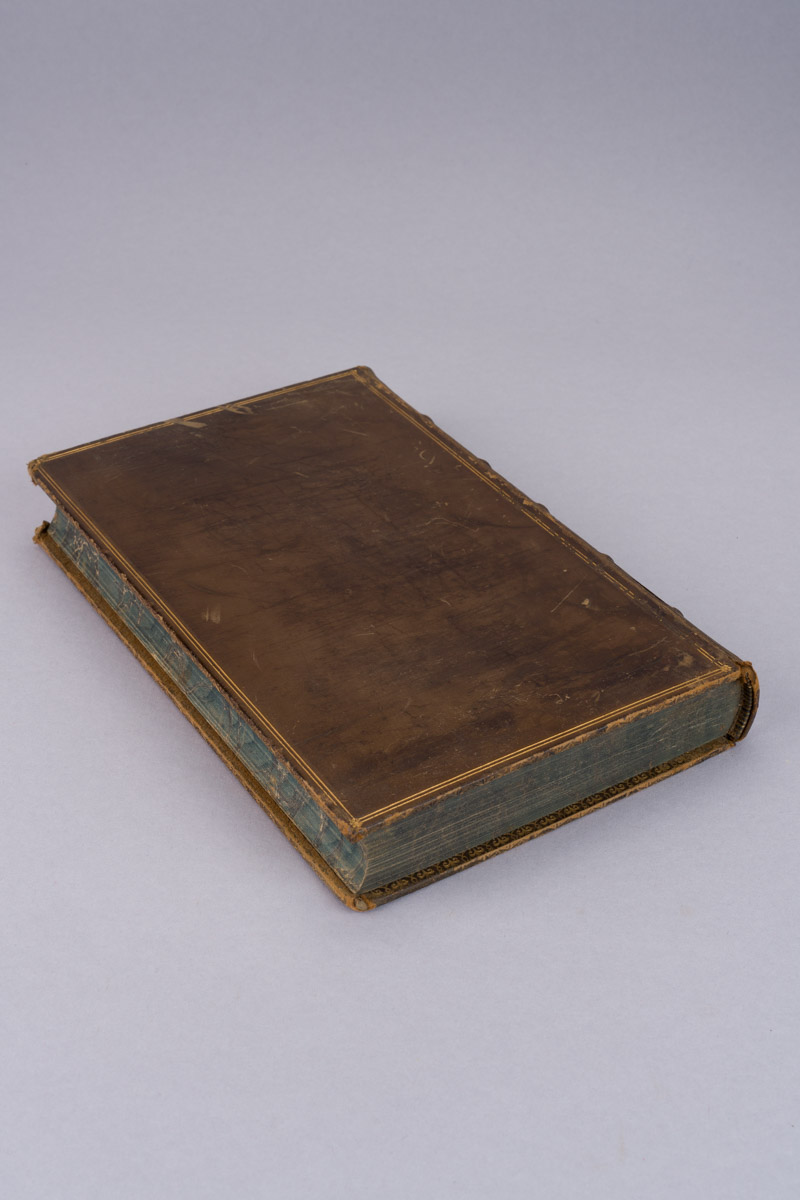
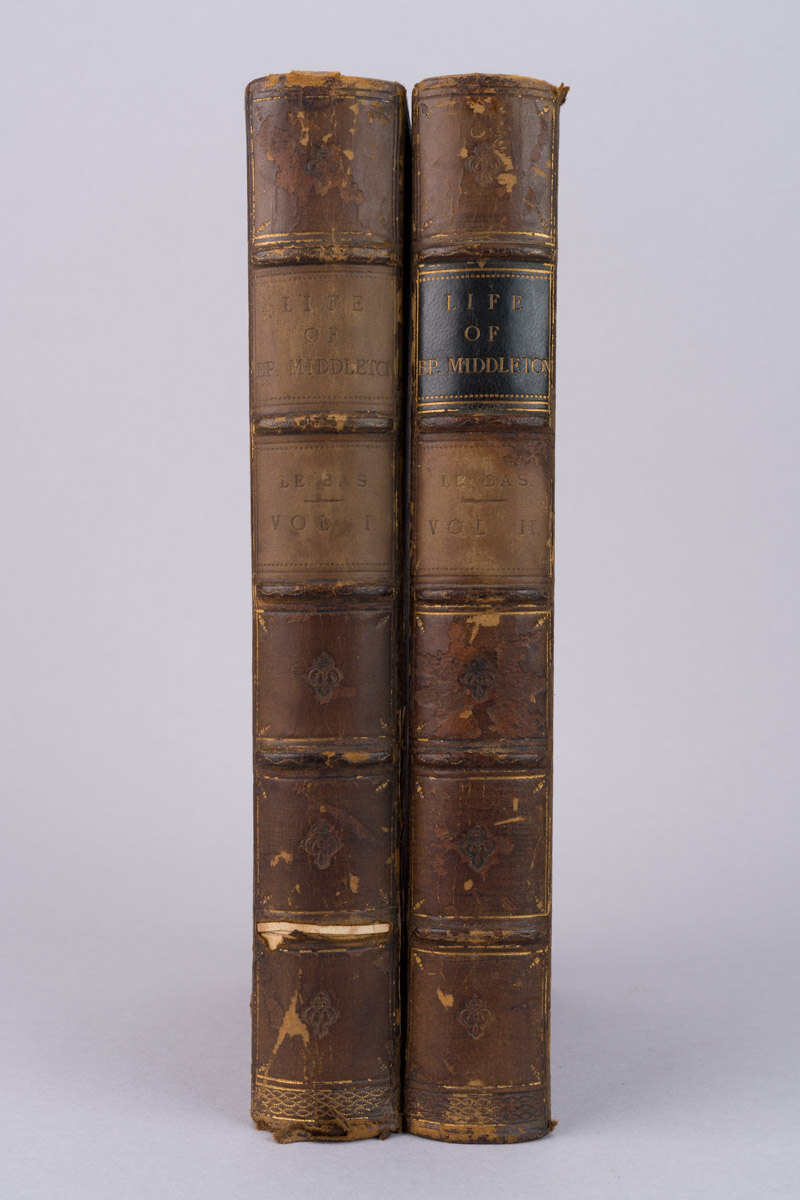
The volumes are bound uniformly in contemporary full calf, boards ruled in gilt, spines divided into compartments by raised bands with decorative tooling and contrasting title labels. Marbled endpapers with decorative gilt turn-ins.
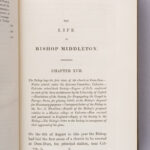
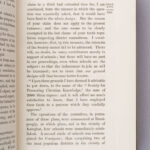
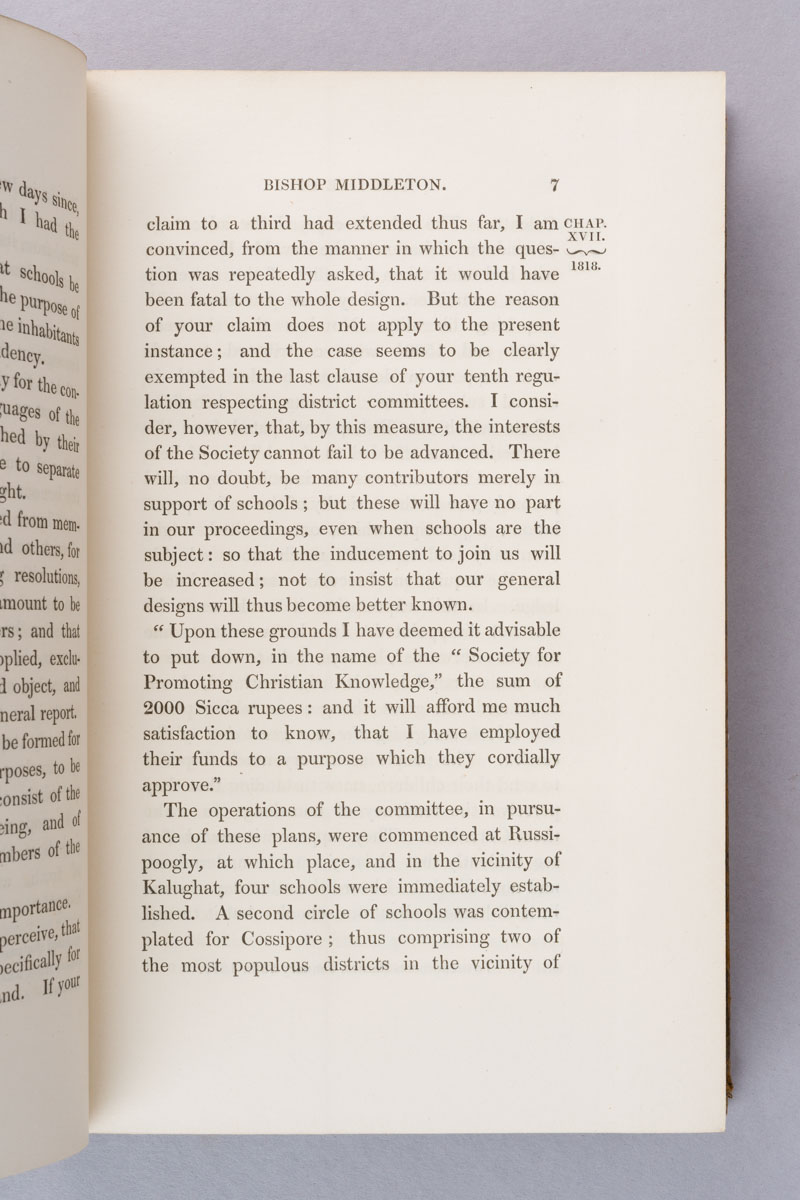
The bindings show considerable age-related rubbing and surface wear, with loss to the leather, particularly at the spines and extremities; one spine compartment has a small area of loss. Nevertheless, the set retains considerable period character. Internally the photographs show a generally clean and attractive copy, with the important folding map surviving in particularly pleasing condition.
Author: Rev. Charles Webb Le Bas (1779–1861)
Subject: Thomas Fanshaw Middleton (1769–1822), First Bishop of Calcutta
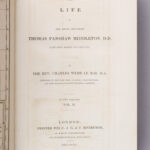
Title: The Life of the Right Reverend Thomas Fanshaw Middleton, D.D., Late Lord Bishop of Calcutta
Year: 1831
Edition: First Edition
Publisher: London: C. J. G. & F. Rivington, St. Paul’s Church-Yard and Waterloo-Place, Pall-Mall
Volumes: Two volumes, complete
Illustrations: Portrait frontispiece and large folding engraved map
Binding: Contemporary full calf, gilt
1 in stock
When Thomas Fanshaw Middleton arrived in India in 1814, he did so as the first Bishop of Calcutta — effectively becoming the first Anglican bishop appointed to oversee the rapidly expanding British presence in India.
His diocese was extraordinary in scale.
From Calcutta, Middleton travelled extensively through India, visiting churches, schools and missionary communities and attempting to establish an organised Anglican ecclesiastical structure across territories separated by enormous distances.
The magnificent folding map preserved in this set brings that story vividly to life. It traces Middleton’s 1816 journey through the southern missions and his visit to the Syrian Christians of India, extending down the eastern coast through Madras and into southern India, with an inset documenting his movements among the Syrian churches.
Middleton also played a central role in establishing Bishop’s College at Calcutta, conceived as an institution for the education of clergy and missionaries working throughout Asia. His biography consequently encompasses far more than the life of an individual churchman: it records the institutional development of Christianity, education and missionary activity in early nineteenth-century British India.
The author, Charles Webb Le Bas, was himself closely connected with the administrative world of British India. He became Professor of Mathematics and later Principal of the East India Company College at Haileybury, the institution responsible for educating many of the civil servants who administered British India.
The biography appeared less than a decade after Middleton’s death and draws extensively upon correspondence, reports and contemporary records. It therefore remains an important near-contemporary source for the ecclesiastical and cultural history of British India.
This is a strong Anglo-Indian association set combining biography, missionary history, cartography and the early institutional history of British India.
The principal attractions are the scarce 1831 first edition, completeness in the original two volumes, and especially the large folding map documenting Middleton’s travels through India and his contact with the Syrian Christian communities.
The map gives the set considerably greater visual and historical interest than a conventional nineteenth-century clerical biography.
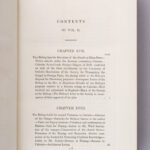
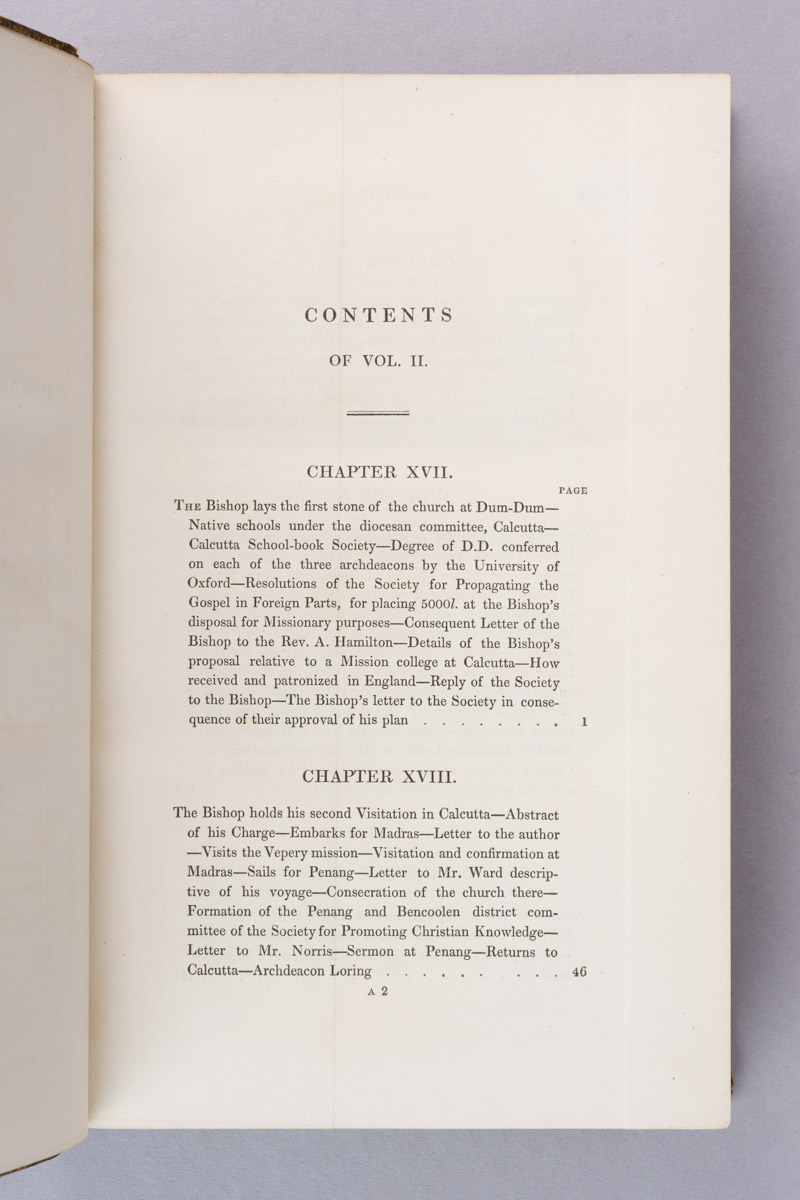
Middleton himself is significant as the first Bishop of Calcutta, placing the work at the beginning of the formal Anglican episcopate in India. The contents range across Calcutta, Bombay, Madras, Penang, missionary schools, Bishop’s College and the Syrian Christians, making it relevant to several areas of collecting.
The survival of both volumes in matching period calf adds further appeal. Although worn, the bindings retain the character of a set that has survived for nearly two centuries.
For a collection devoted to British India, colonial history, Christianity in Asia, missionary history or early nineteenth-century cartography, this is a substantial primary-period work.