Few questions were more persistent during British rule in India than the proper relationship between government and Christianity.
The East India Company had initially approached missionary activity with considerable caution. Commercial interests, political stability and respect—or strategic accommodation—for India’s existing religious structures frequently conflicted with evangelical demands that Britain use its growing influence to promote Christianity.
By the nineteenth century that tension had become inseparable from debates about education, governance and Britain’s supposed responsibilities towards its Indian subjects.
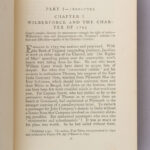
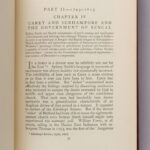
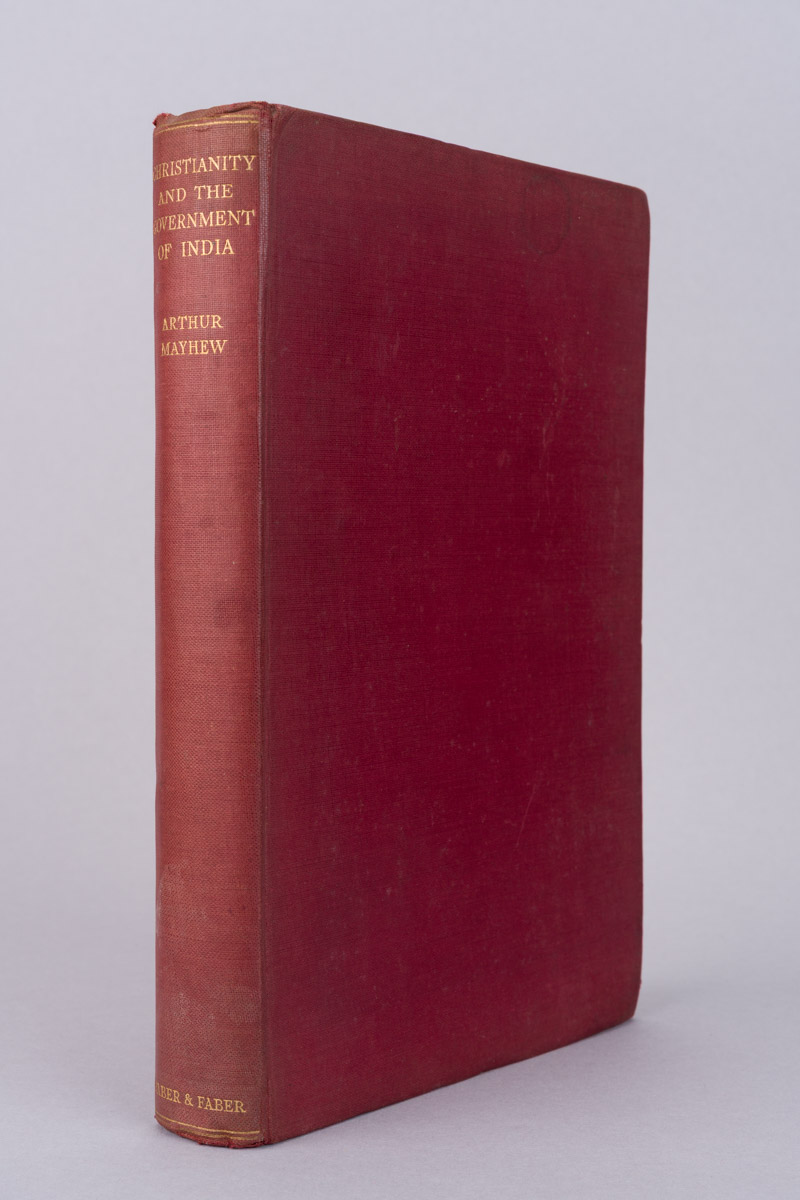
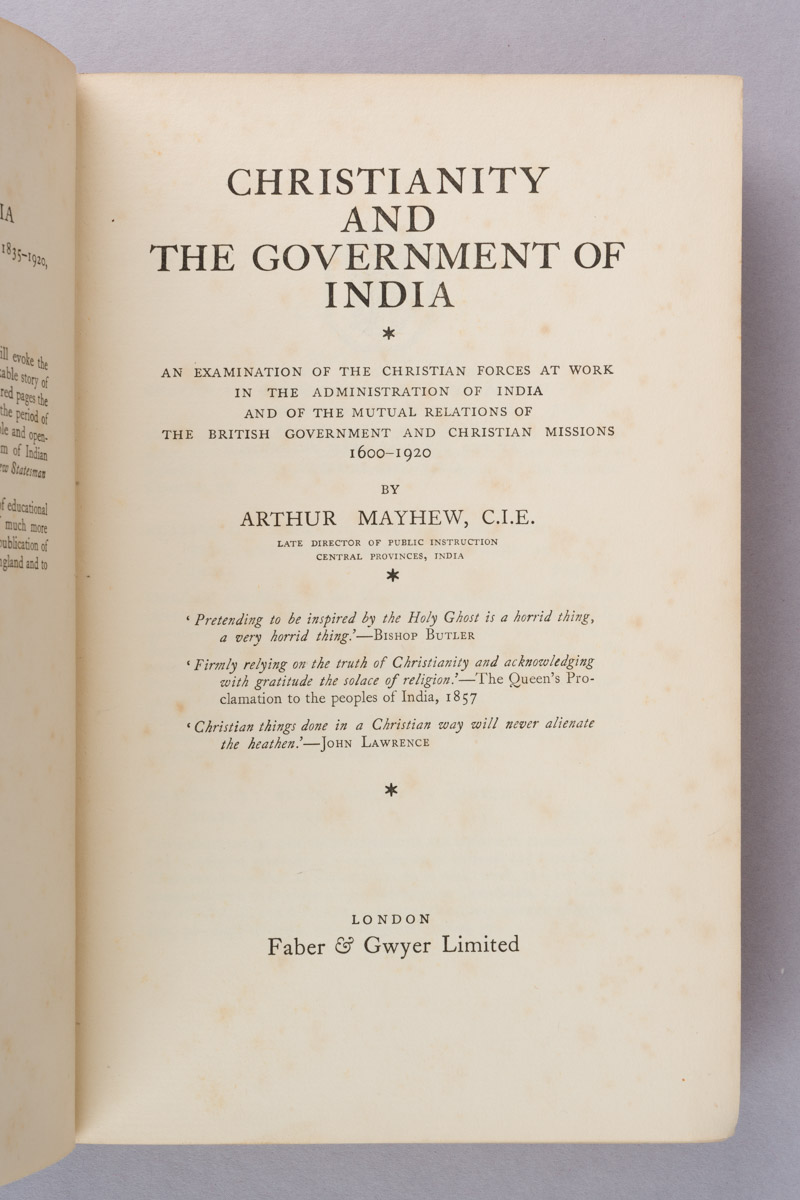
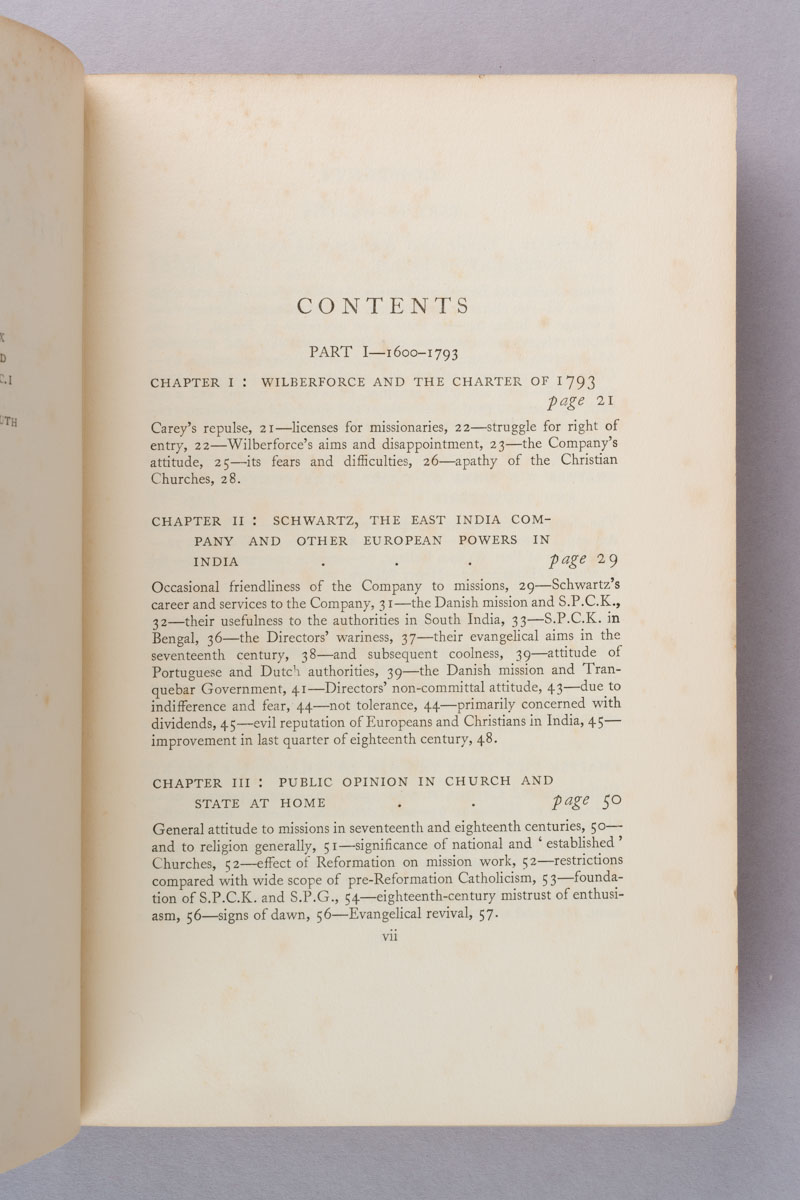
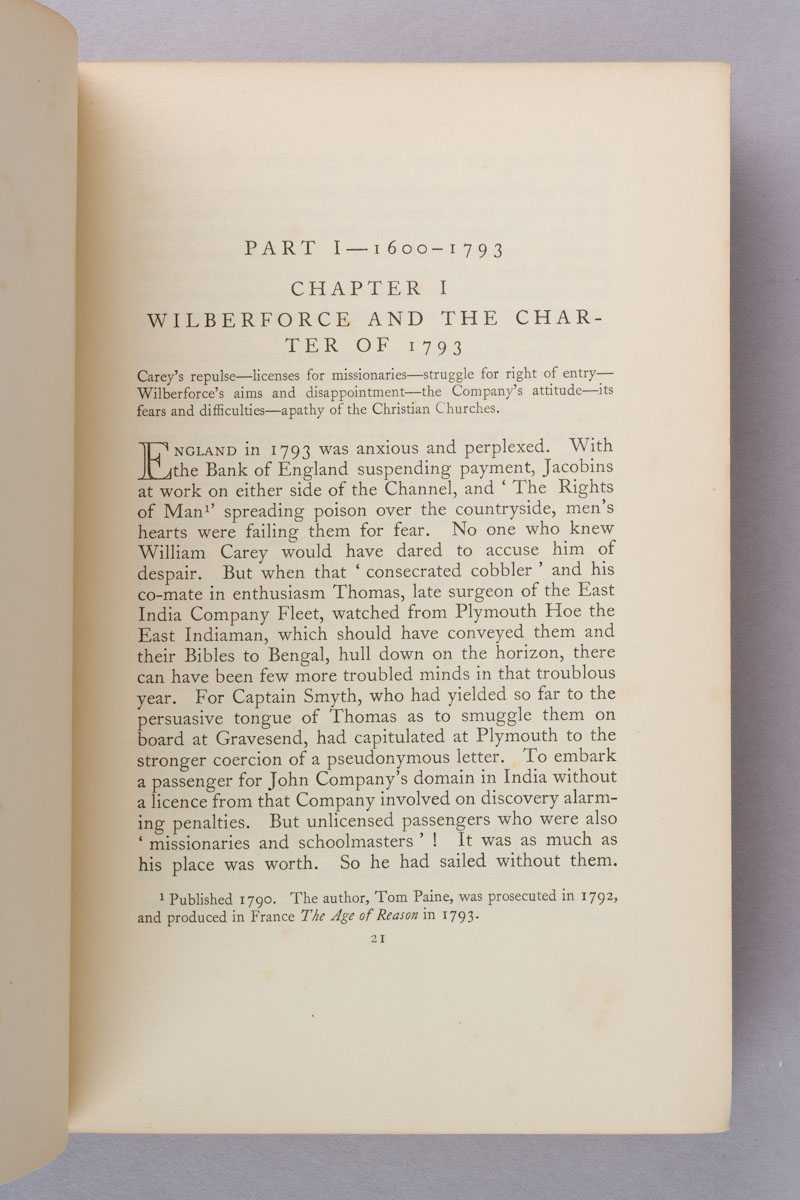
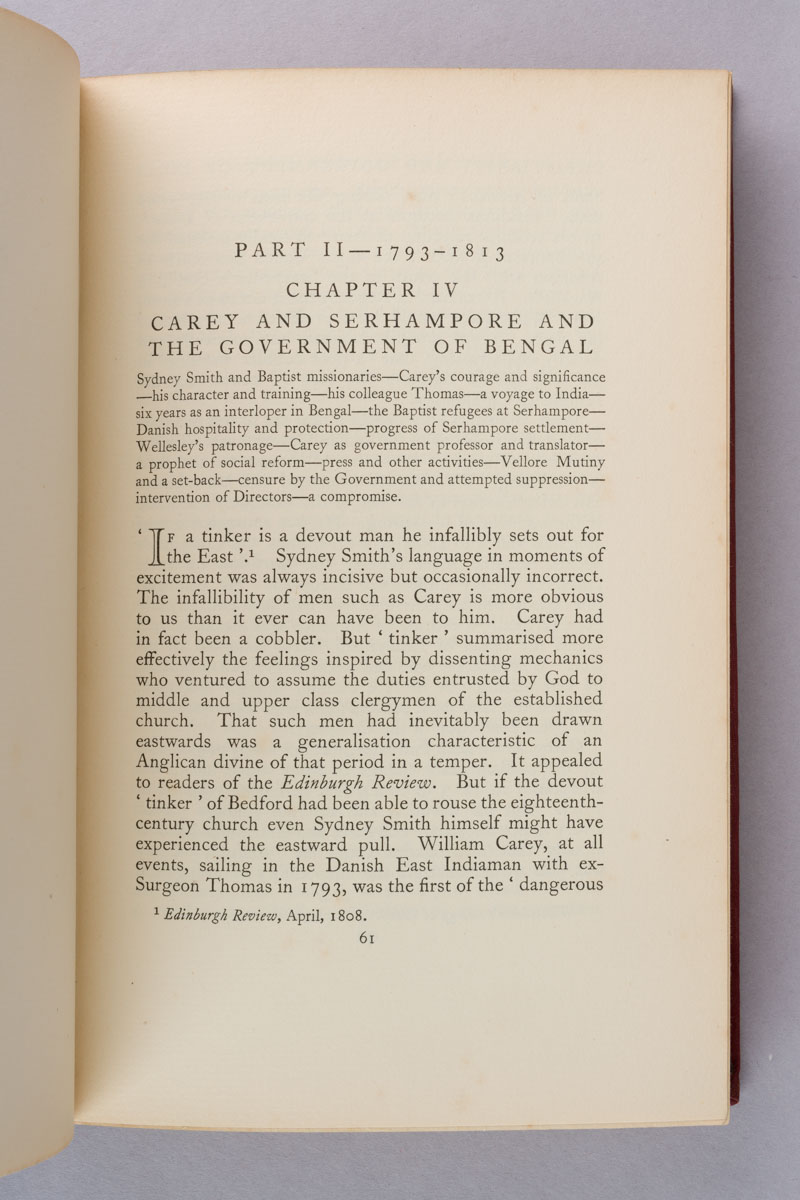
Arthur Mayhew examines this complicated relationship across an unusually broad period, beginning around 1600 and continuing to 1920. The book therefore follows the story from the establishment of the East India Company through the expansion of British territorial power, the great missionary movements of the nineteenth century and the mature administration of the Raj.
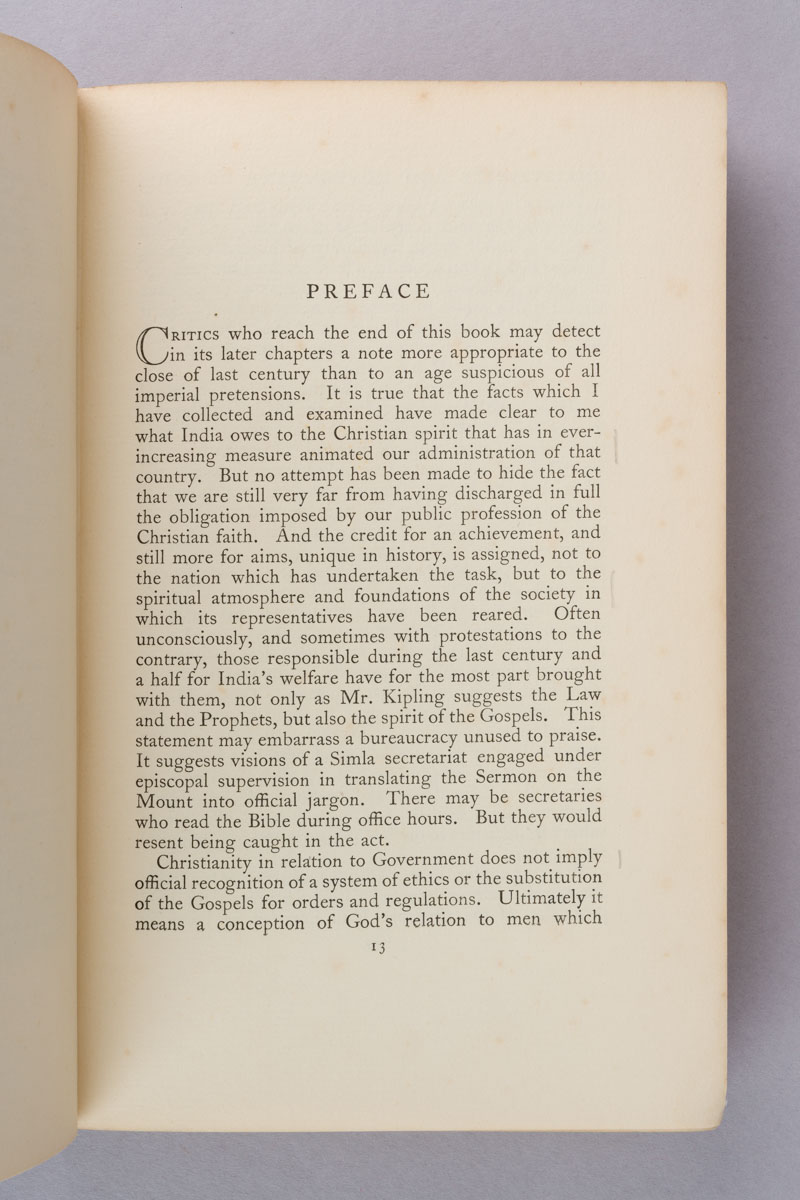
Mayhew was not writing merely as a distant historian. As a former Director of Public Instruction in India, he had direct experience of one of the areas in which religion and colonial government most frequently intersected: education.
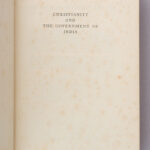
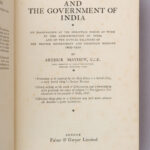
The title page itself captures some of the contradictions of the subject. Alongside quotations from Bishop Butler and John Lawrence appears a passage from Queen Victoria’s 1858 Proclamation, issued following the Indian Rebellion and the transfer of government from the East India Company to the Crown, acknowledging Christianity while addressing a population characterised by profound religious diversity.
The result is a substantial contemporary examination of how religion, education and imperial administration interacted throughout the history of British India.
This work offers an unusually broad examination of Christianity’s relationship with British power in India, spanning more than three centuries.
Its particular value lies in the author’s administrative background. Mayhew had served within India’s educational establishment, giving the work the perspective of someone intimately familiar with the machinery of colonial government rather than that of a missionary historian alone.
It also complements earlier nineteenth-century works advocating missionary activity in India. By looking retrospectively at the period 1600–1920, Mayhew was able to assess how the relationship between missionaries and the colonial state actually developed over time.
For collections concerned with the British Raj, East India Company, missionary history, colonial education or Christianity in South Asia, it provides an important early twentieth-century interpretation of one of the central ideological questions of British rule.