£1,495.00
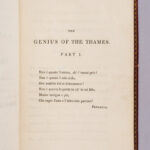
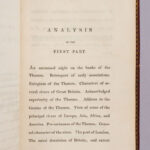
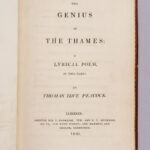
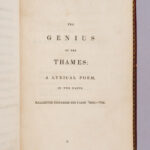
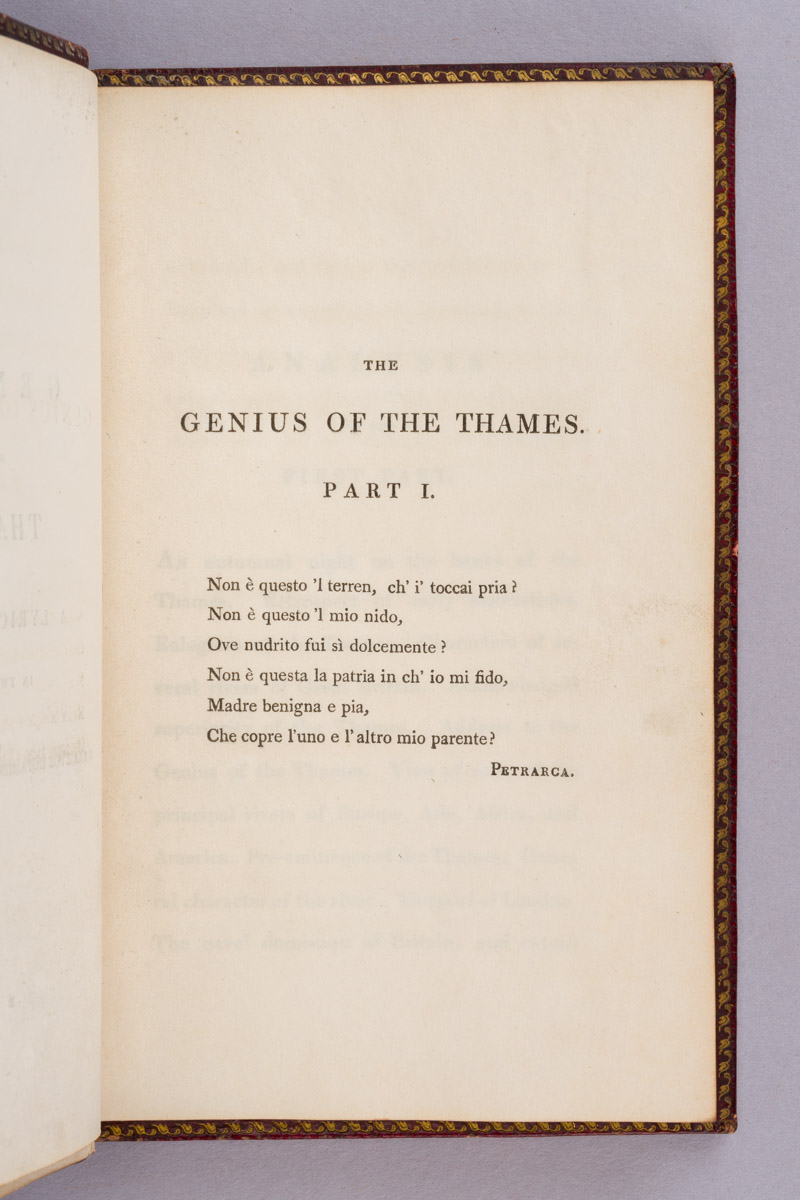
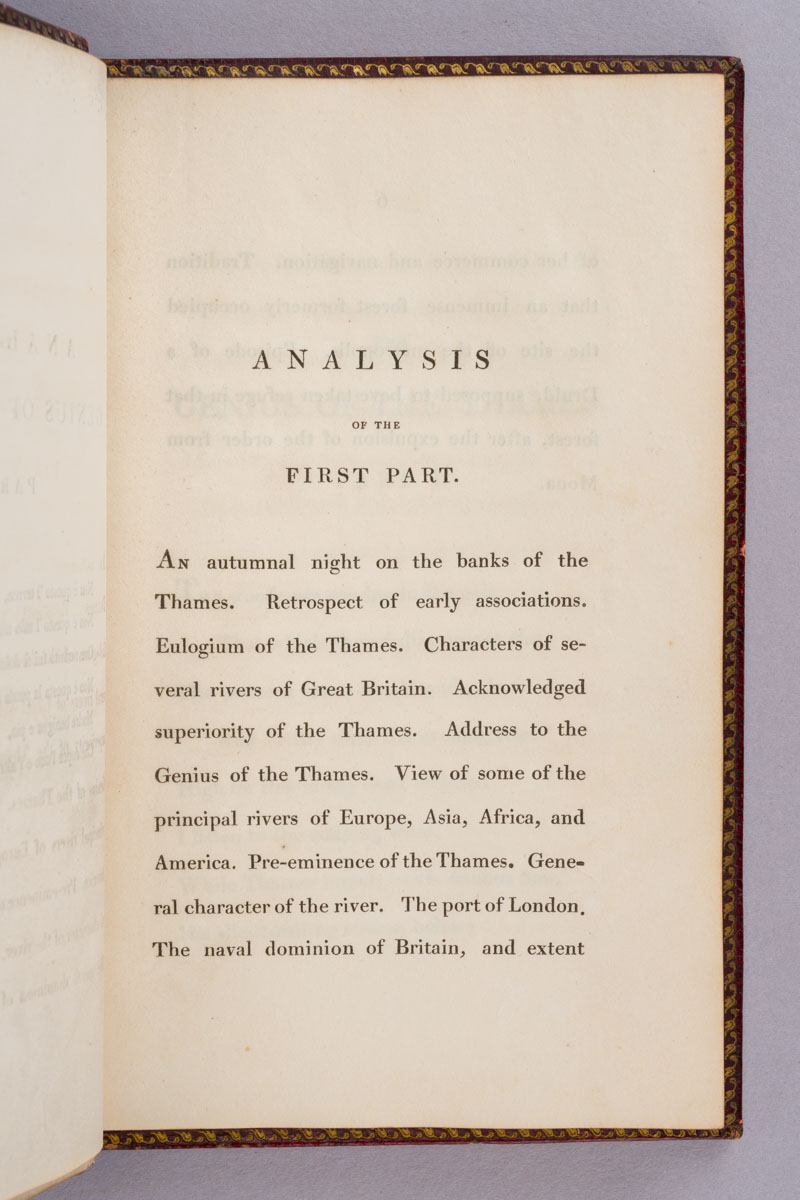
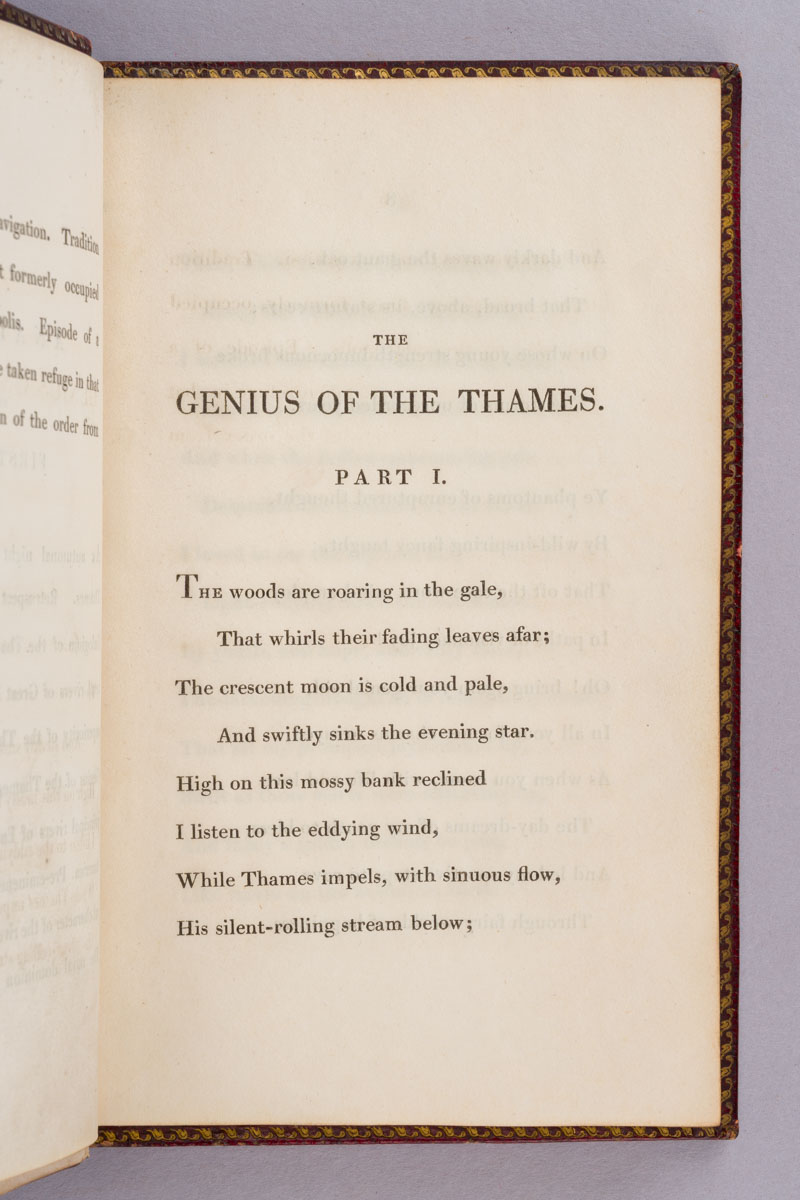
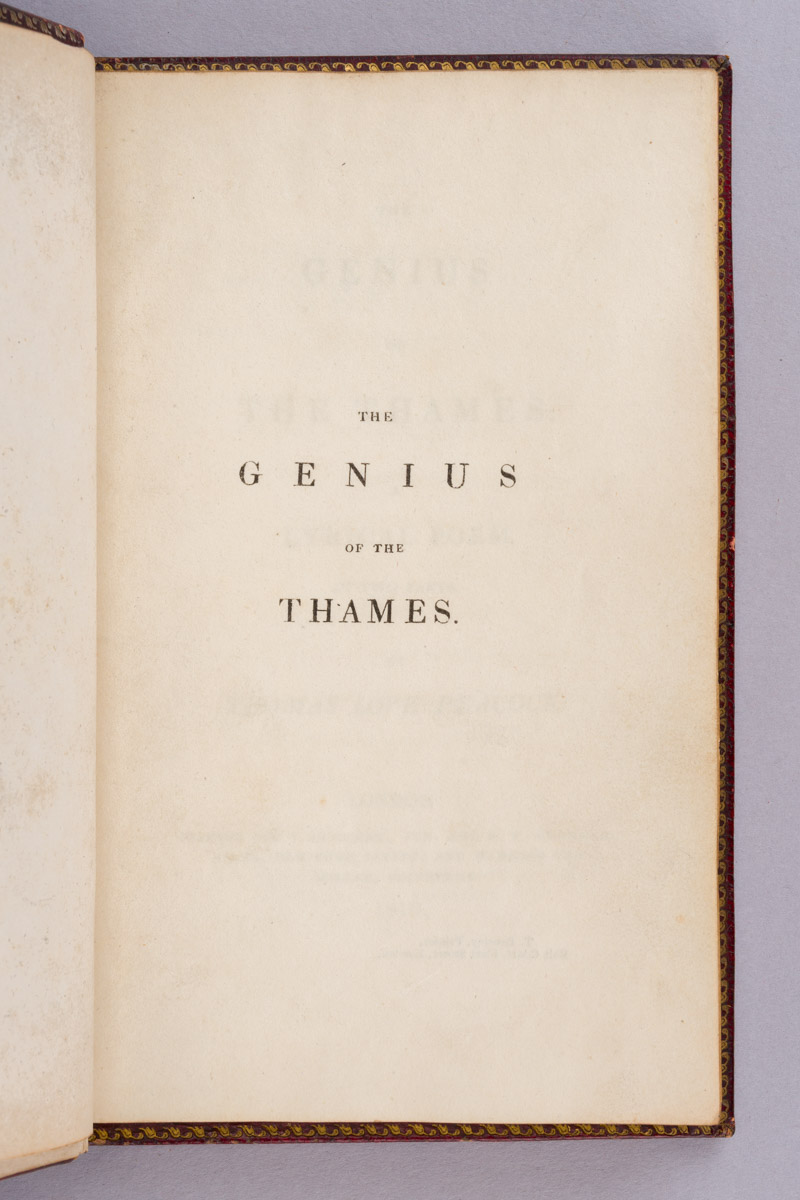
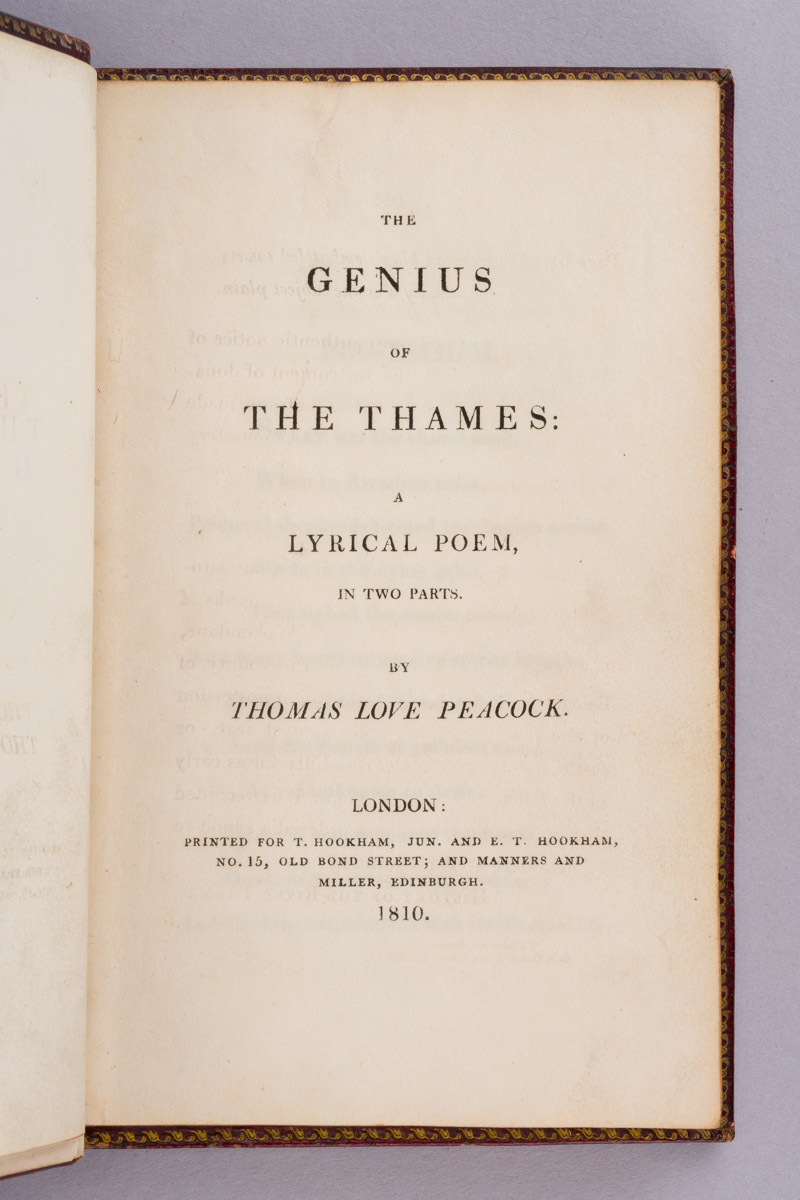
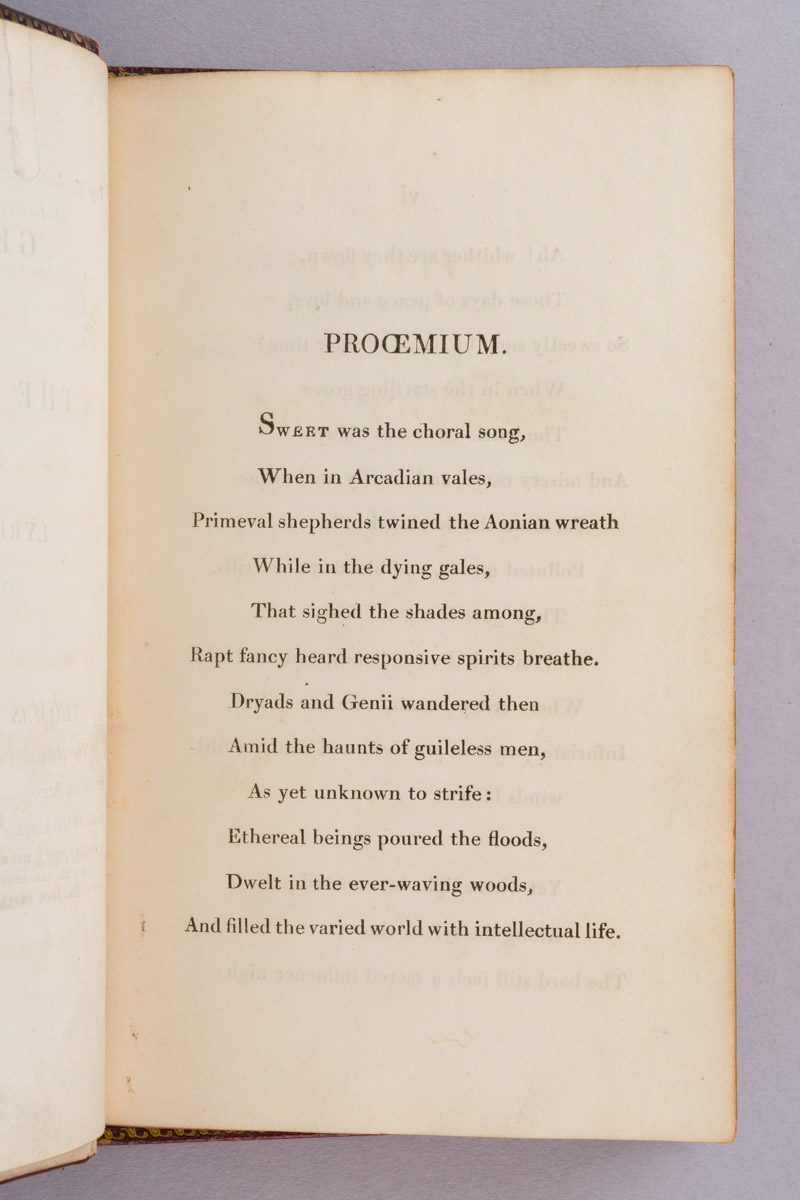
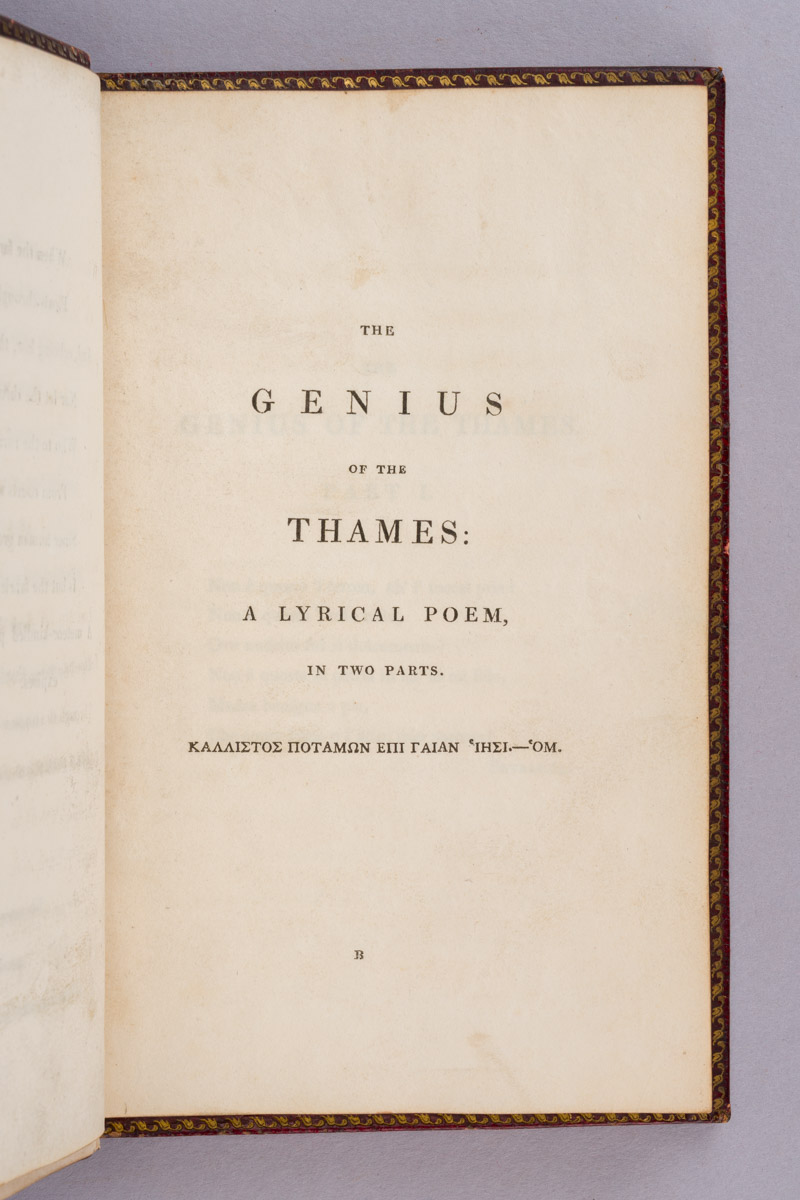
Peacock (Thomas Love). The Genius of the Thames: A Lyrical Poem, in Two Parts. London: Printed for T. Hookham, Jun. and E. T. Hookham, No. 15, Old Bond Street; and Manners and Miller, Edinburgh, 1810. First edition.
An exceptional association copy of one of Thomas Love Peacock’s earliest published works, with family provenance connecting the volume directly to the author and his only son, Edward Gryffydh Peacock.
The Genius of the Thames was composed following Peacock’s journey along the river in 1809, when he undertook a two-week expedition tracing the Thames from its source towards his home at Chertsey. The poem was published in June 1810, two years before Peacock first met Percy Bysshe Shelley, who would become his intimate friend and literary associate.
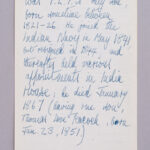
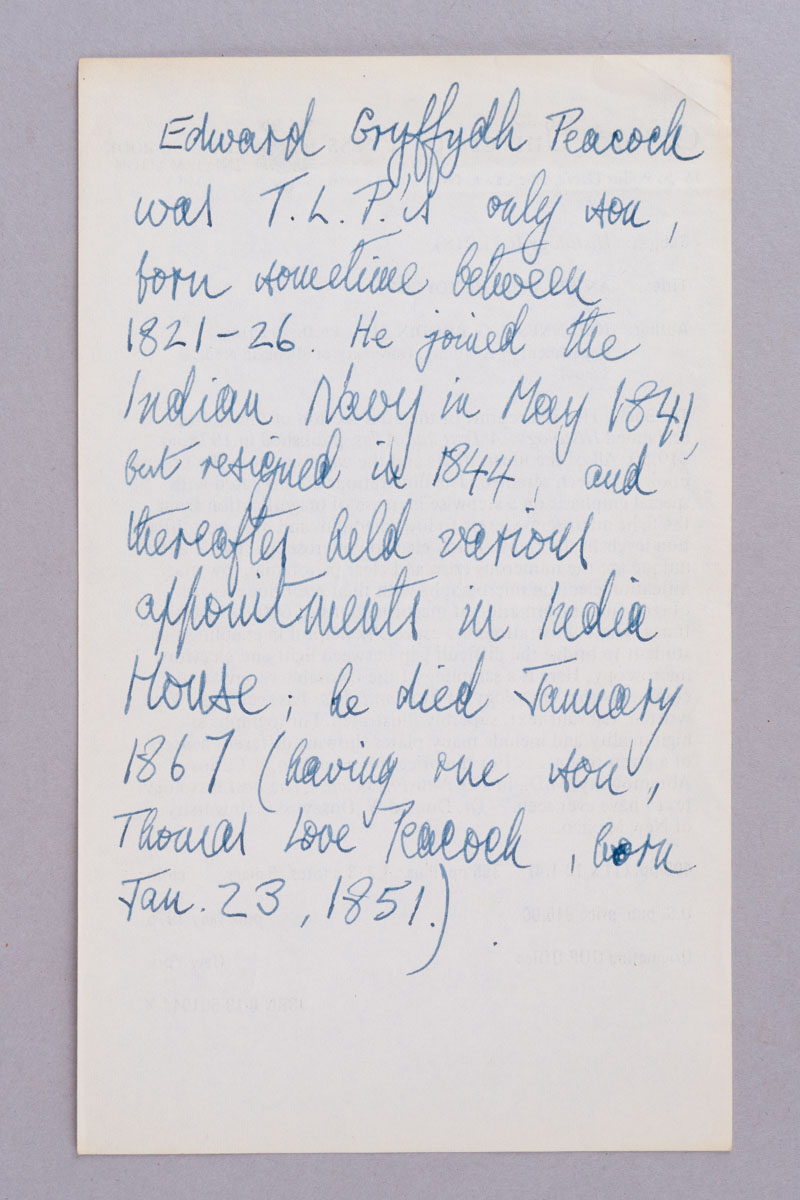
This copy is particularly distinguished by its provenance. Accompanying the volume is a manuscript note recording:
“Edward Gryffydh Peacock was T.L.P.’s only son, born sometime between 1821–26. He joined the Indian Navy in May 1841, but resigned in 1844, and thereafter held various appointments in India House; he died January 1867 (having one son, Thomas Love Peacock, born Jan. 23, 1851.)”
The biographical substance of the note accords with the historical record: Edward Gryffydh Peacock was Thomas Love Peacock’s son, was born in 1825, entered the Indian Navy in 1841 and subsequently worked at East India House.
The significance of this copy is therefore its direct Peacock family association: an author’s copy subsequently associated with his only son.
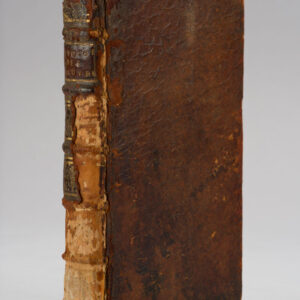
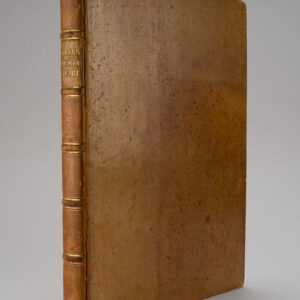
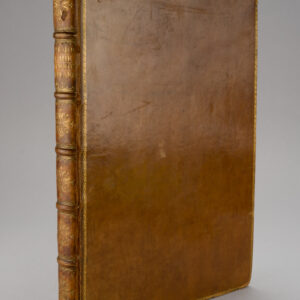
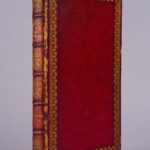
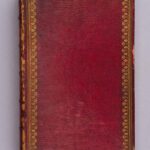
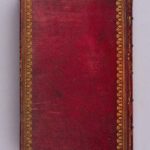
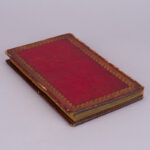
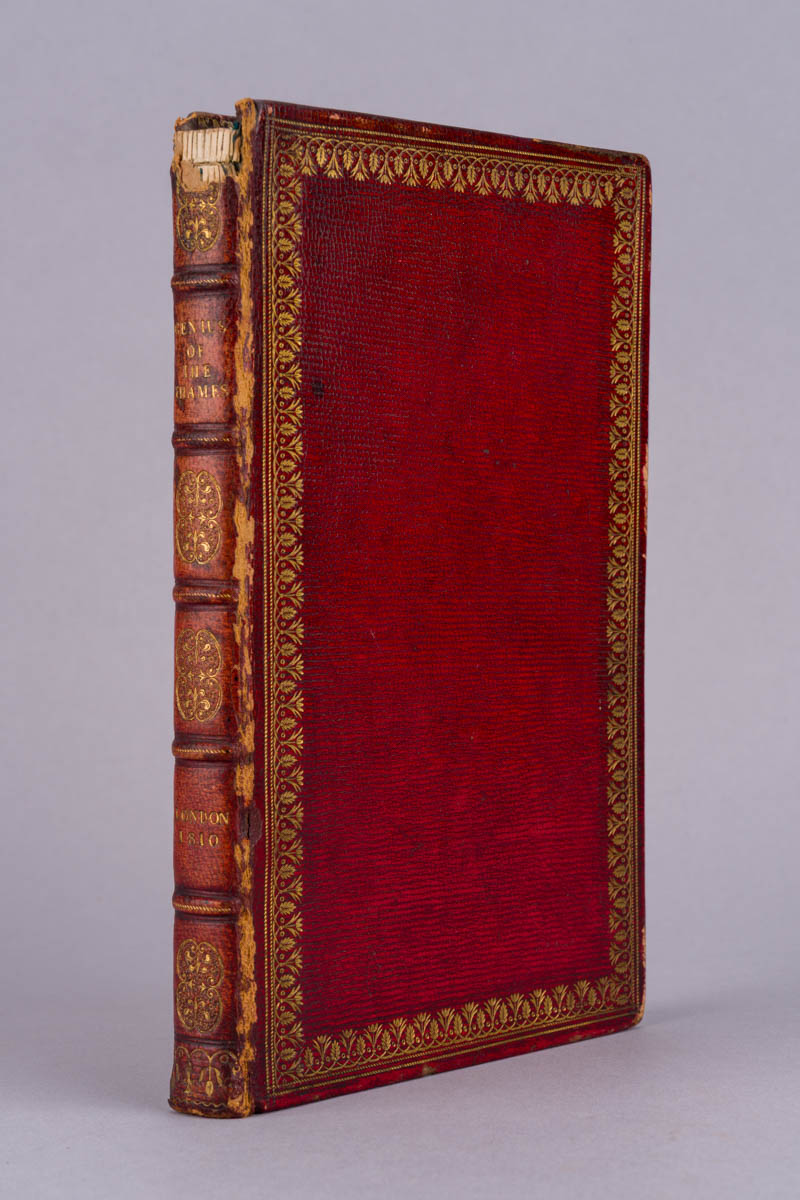
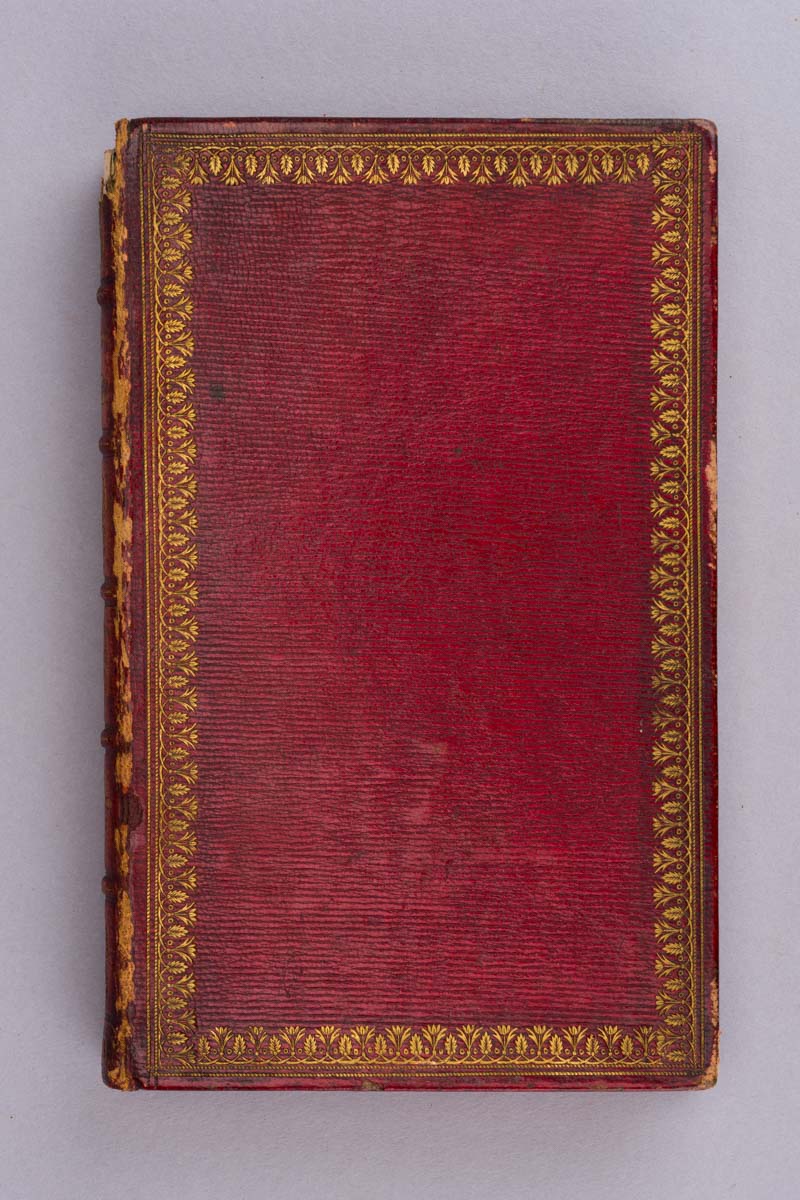
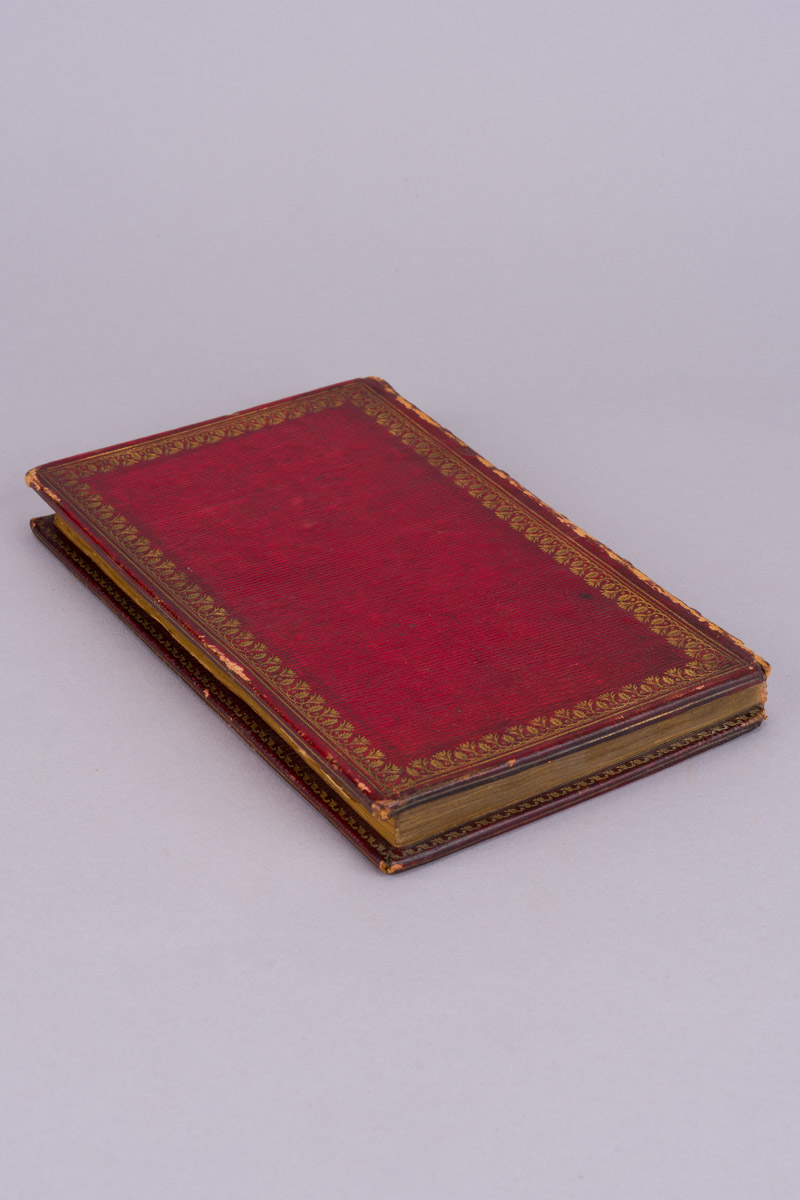
Elegantly bound in red straight-grain morocco, the covers surrounded by an elaborate gilt foliate border, the spine gilt in compartments and lettered “Genius of the Thames” and “London 1810.” Decorative gilt turn-ins.
The binding shows age and wear, including loss at the head of the spine and wear along the joints, but remains visually striking.
Thomas Love Peacock (1785–1866) — author of the work.
Edward Gryffydh Peacock (1825–1867) — Peacock’s only son; Indian Navy officer, East India Company official, publisher and distinguished oarsman.
Accompanied by a manuscript provenance note identifying Edward Gryffydh Peacock as T. L. Peacock’s only son and recording details of his career and family.
Important catalogue qualification: the accompanying note strongly records the Peacock family association, but unless there is an inscription in Peacock’s hand elsewhere in the volume or documentary evidence accompanying the book, I would not describe this as an “author’s presentation copy” or say unequivocally that Peacock personally presented it to his son. For ARB, “Thomas Love Peacock’s copy, subsequently associated with his son Edward Gryffydh Peacock” is the safer formulation until the precise chain of provenance is documented.
Bound in handsome red straight-grain morocco, covers elaborately bordered in gilt, spine divided into gilt-decorated compartments and lettered in gilt. Binding rubbed and worn, with loss at the head of the spine and wear to joints and extremities; some surface loss along the spine. Gilt decoration nevertheless remains strong and attractive.
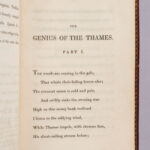
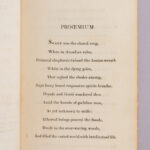
Internally generally clean and well preserved for a book of this age, with occasional spotting, toning and minor age-related marking. Accompanied by later manuscript provenance material concerning Edward Gryffydh Peacock.
Year: 1810
Edition: First Edition
Publisher: T. Hookham, Jun. and E. T. Hookham, London; Manners and Miller, Edinburgh
1 in stock
Before Nightmare Abbey, before Crotchet Castle, and even before his celebrated friendship with Percy Bysshe Shelley, Thomas Love Peacock walked the Thames.
In May 1809, the young Peacock set out on a two-week expedition following the river from its source towards Chertsey. From that journey emerged The Genius of the Thames, published in 1810 — an ambitious lyrical celebration of the river as landscape, history, mythology and symbol of England.
The book therefore belongs to a formative period in Peacock’s life.
His friendship with Percy Bysshe Shelley did not begin until 1812. The satirical novels for which Peacock became famous were still years away: Headlong Hall appeared in 1816 and Nightmare Abbey in 1818. The Genius of the Thames captures the twenty-four-year-old writer before those defining relationships and works had emerged.
But this particular copy carries the story further.
Peacock married Jane Gryffydh in 1820. Their only son, Edward Gryffydh Peacock, was born in 1825. Edward would lead a remarkable life of his own: he entered the Indian Navy, later worked at East India House and became an accomplished sportsman, winning the Diamond Challenge Sculls at Henley and the Wingfield Sculls.
Thus an early book written by Peacock about the Thames became associated with a son who would himself become a celebrated Thames oarsman.
That connection is particularly evocative.
The father walked the river and made it the subject of one of his earliest books.
The son would later race upon it.
The importance of this copy lies in the combination of edition, association and physical presentation.
It is the first edition of 1810, published when Peacock was still at the beginning of his literary career. The second edition followed in 1812.
More importantly, this is an association copy with direct Peacock family provenance, linking Thomas Love Peacock with his only son, Edward Gryffydh Peacock.
Association copies occupy a distinct position in rare-book collecting because they preserve not merely a text but a relationship between a particular physical book and the people connected with its creation.
Here that relationship is especially appealing: Peacock’s youthful celebration of the Thames preserved within his own family and associated with the son who later became a distinguished competitive oarsman on that same river.
The handsome red straight-grain morocco binding adds considerable visual appeal, making this both a significant literary association copy and an attractive object in its own right.
A particularly desirable copy for collections devoted to Thomas Love Peacock, Romantic literature, Percy Bysshe Shelley and his circle, association copies, Thames literature or nineteenth-century literary history.