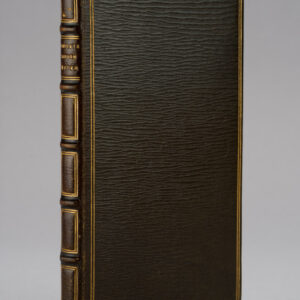
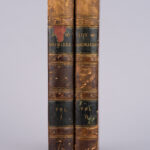
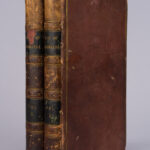
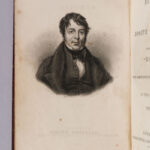
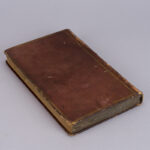
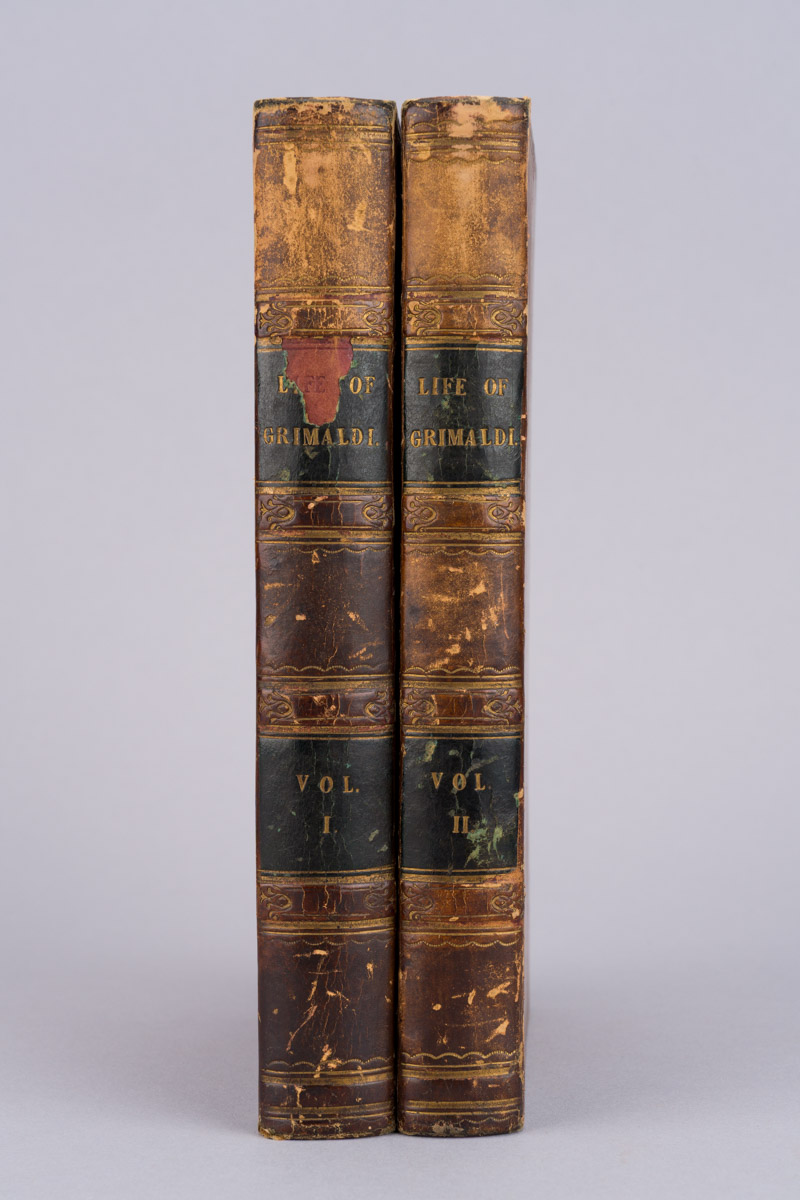
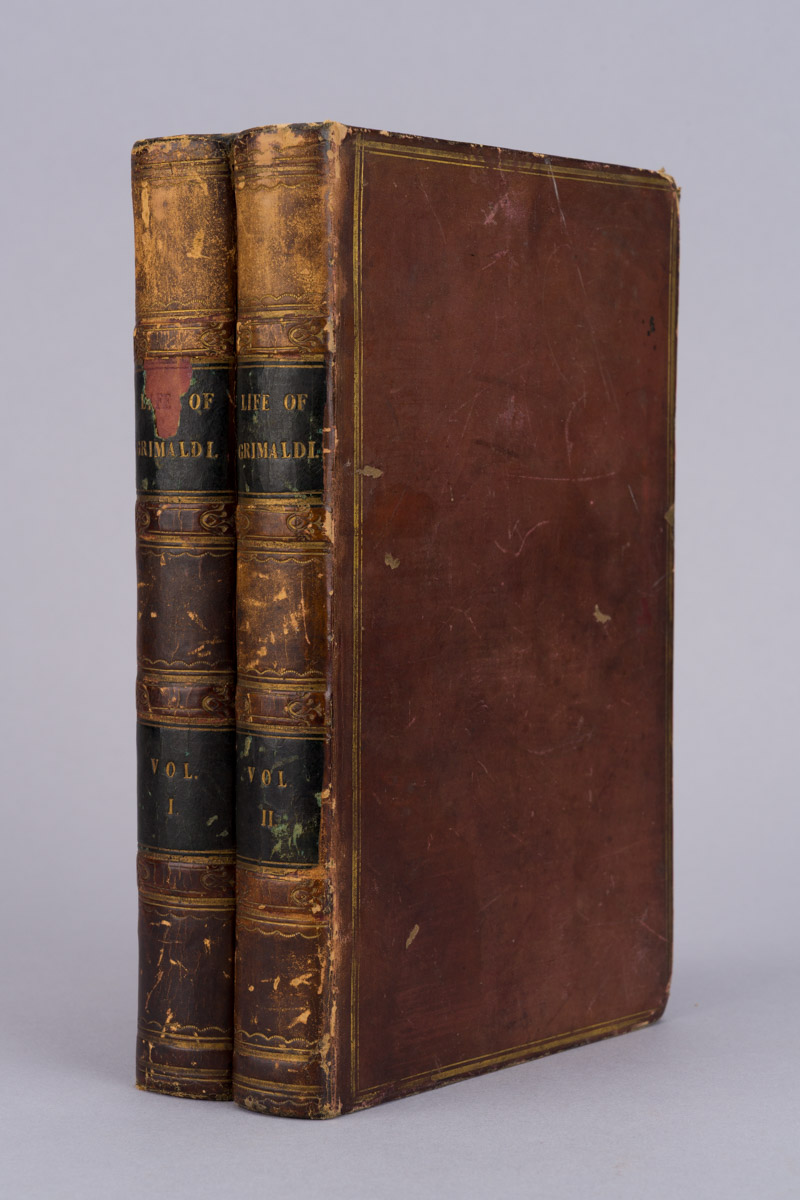
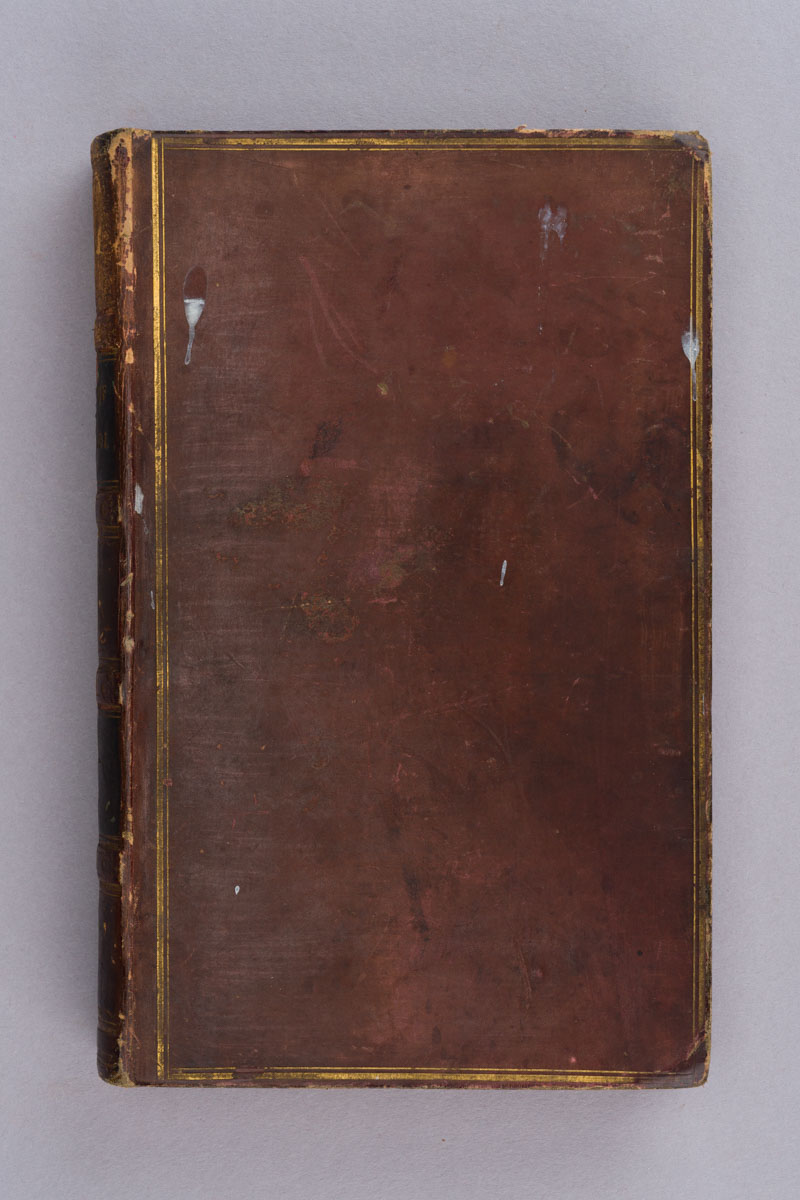
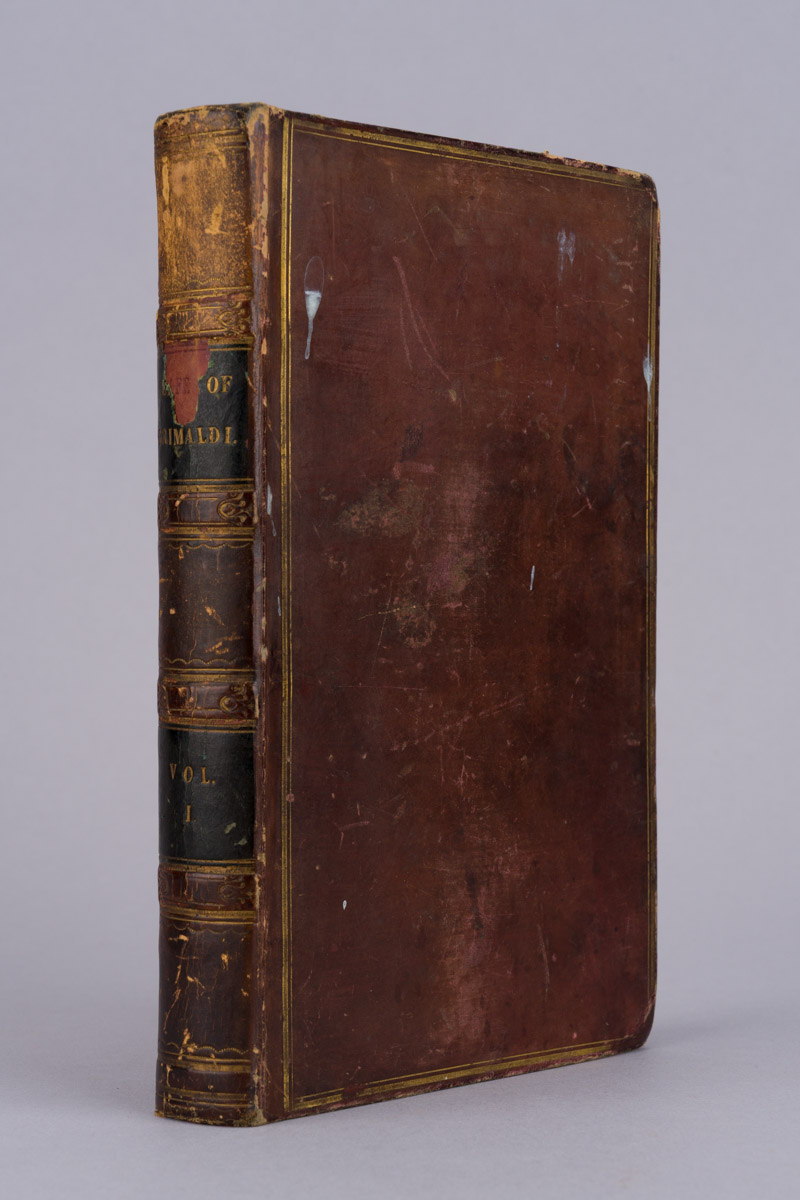
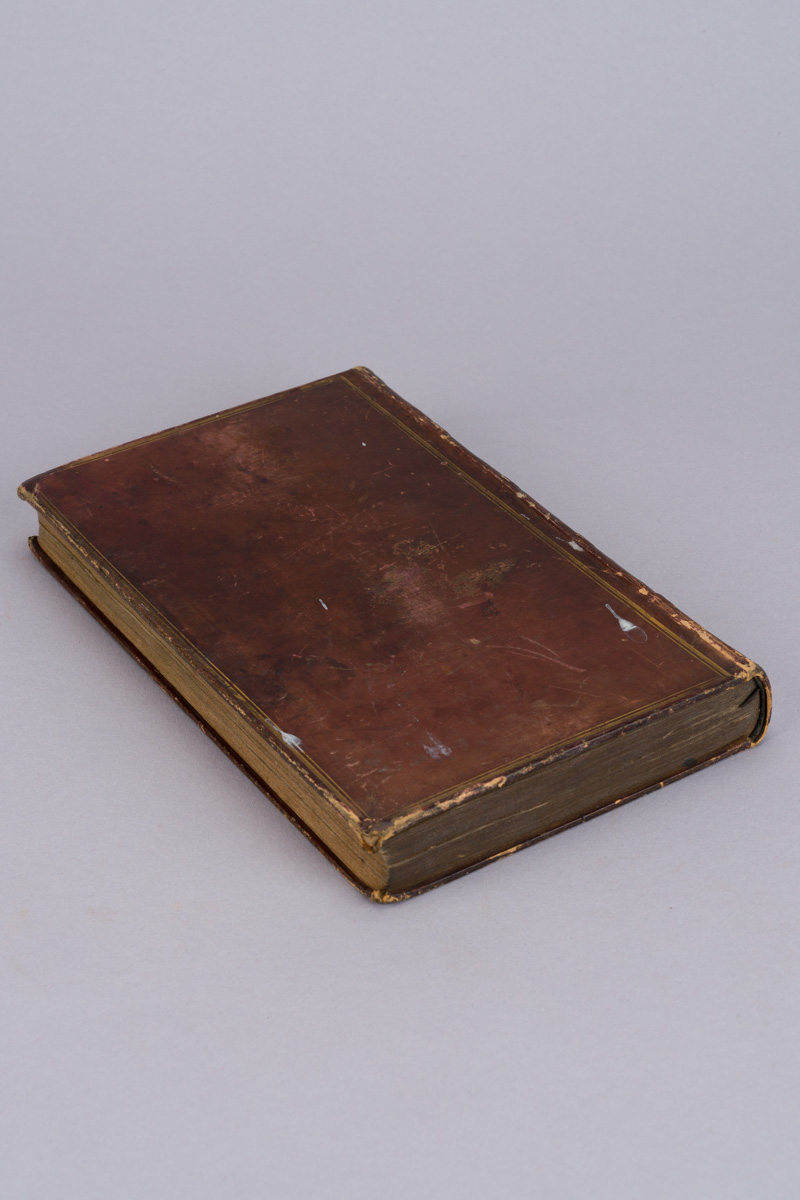
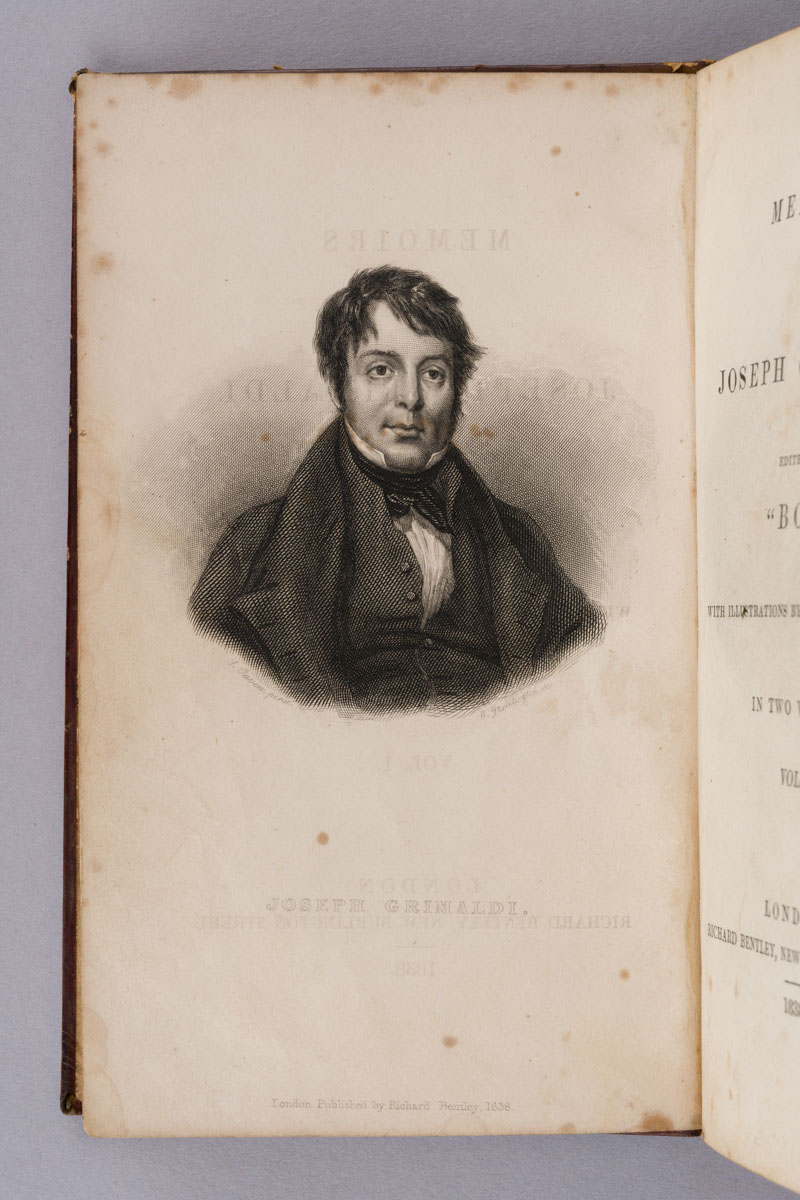
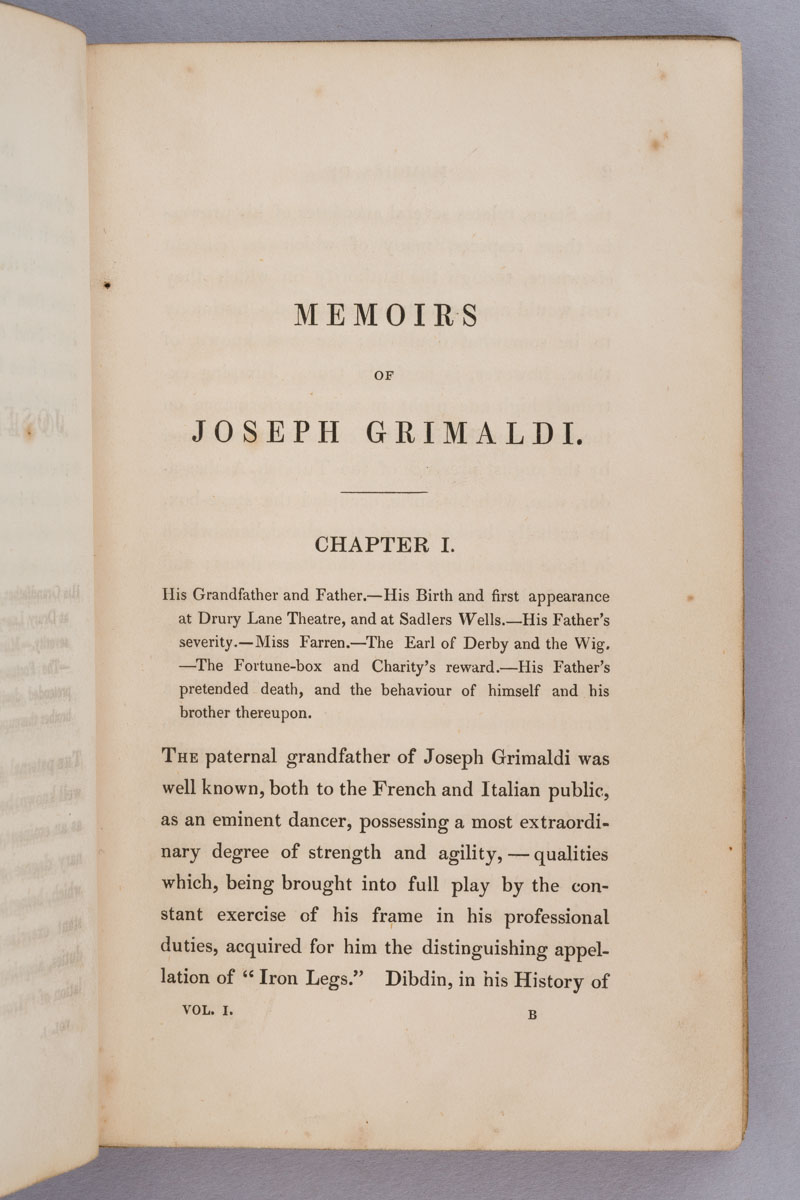
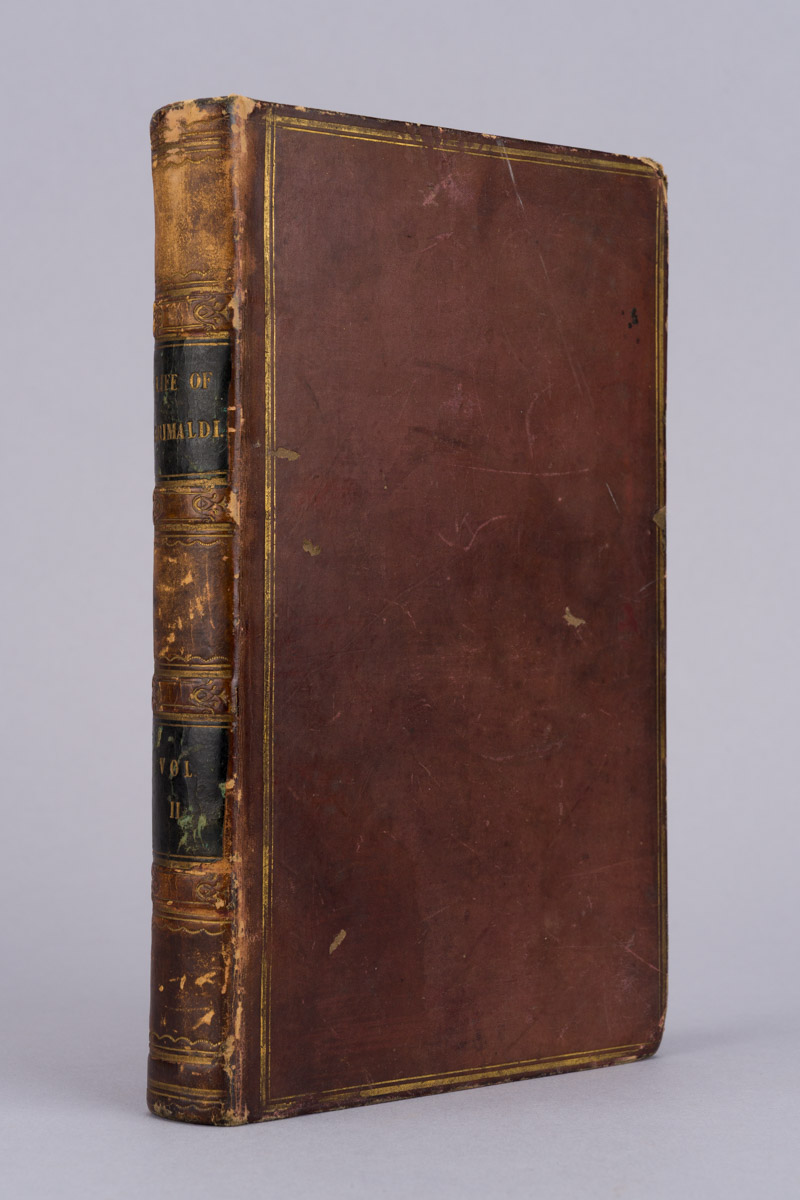
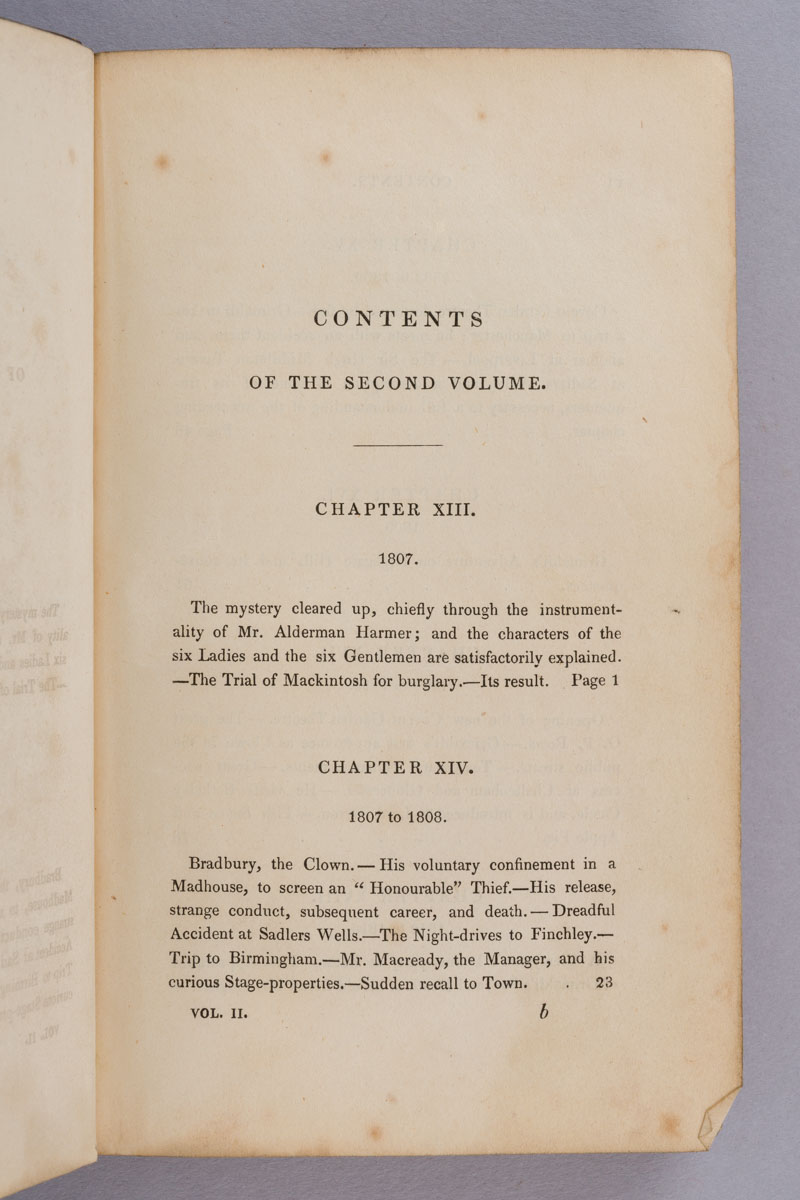
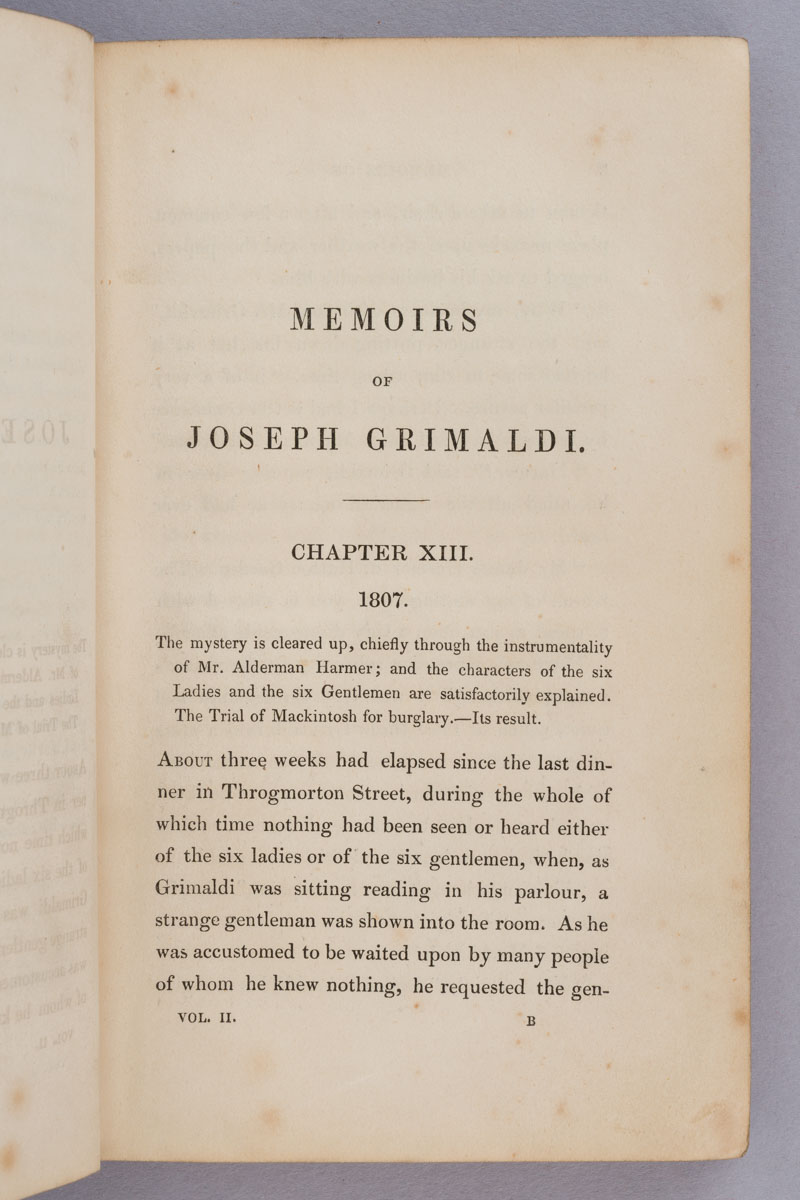
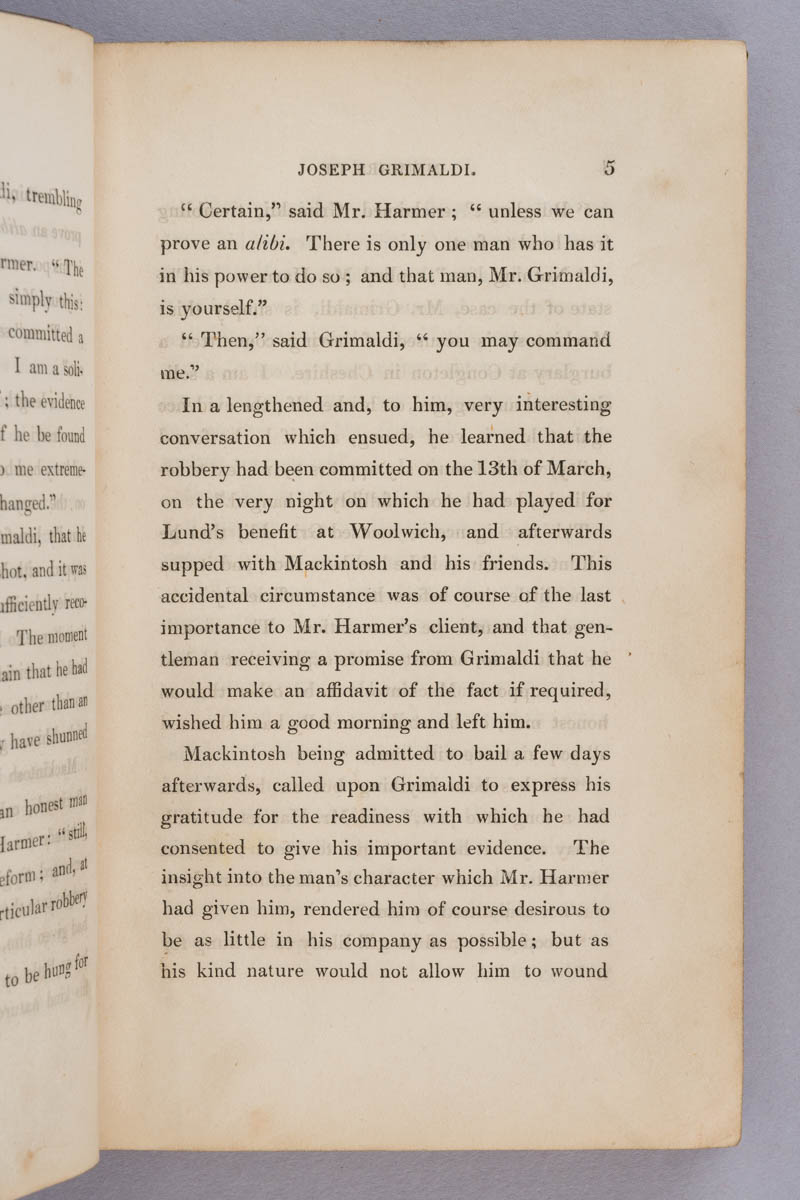
Before Charlie Chaplin, before the modern circus clown, and long before the word “clown” acquired its present meaning, there was Joseph Grimaldi.
Grimaldi transformed British comic performance. His extraordinary physical comedy, elaborate costumes, painted face and anarchic stage personality made him one of the greatest theatrical celebrities of early nineteenth-century London.
His influence was so great that generations of British clowns came to be known simply as “Joeys” — a direct reference to Joseph Grimaldi.
Yet these volumes also belong to the story of another extraordinary Londoner: Charles Dickens.
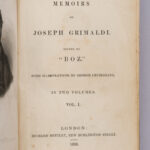
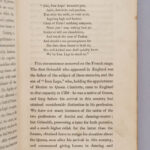
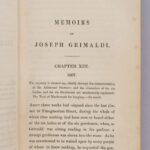
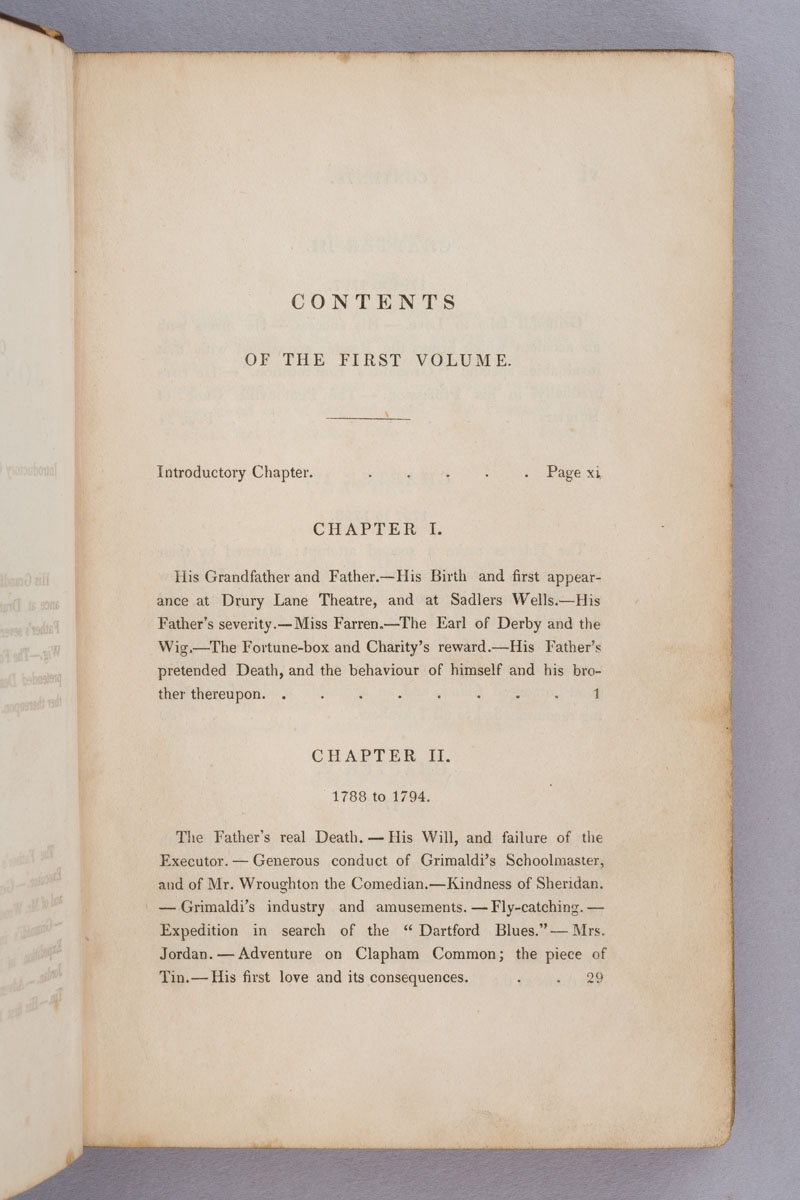
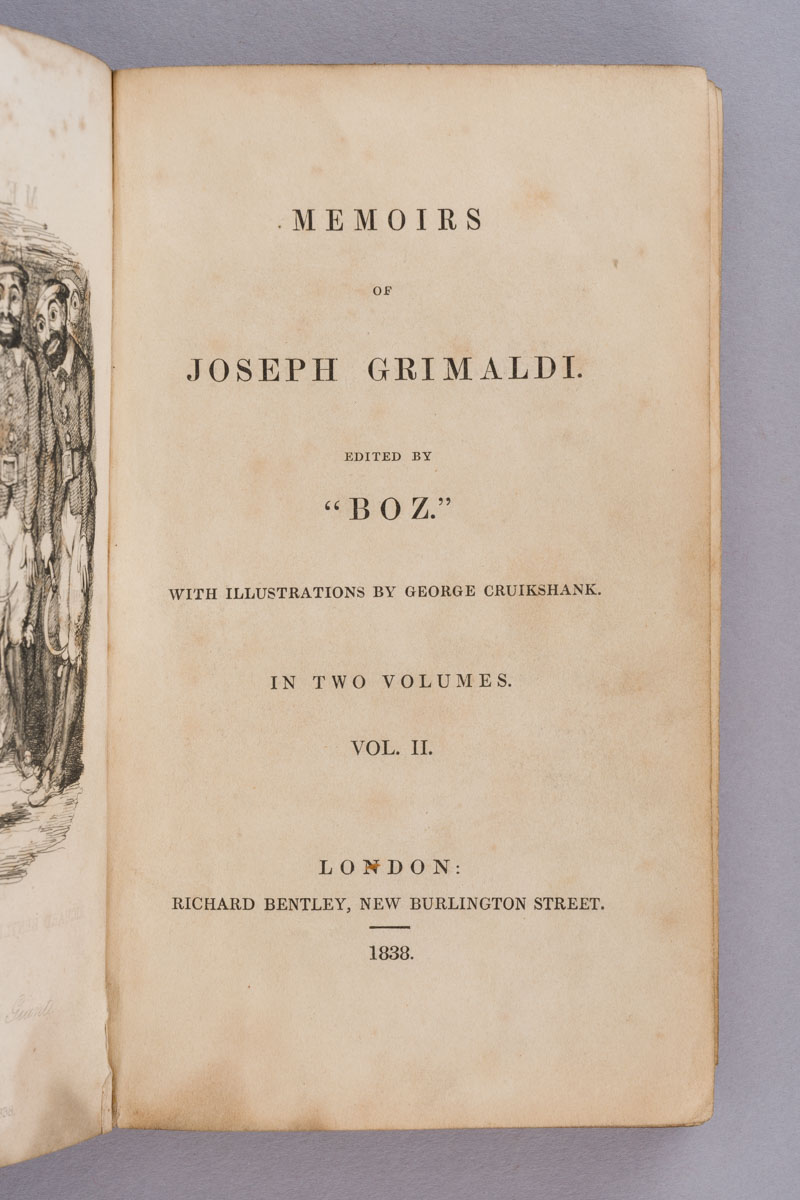
Grimaldi died in 1837. His memoirs had been assembled from autobiographical material by Thomas Egerton Wilks, and the publisher Richard Bentley subsequently engaged Dickens to revise the manuscript for publication.
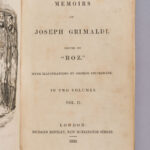
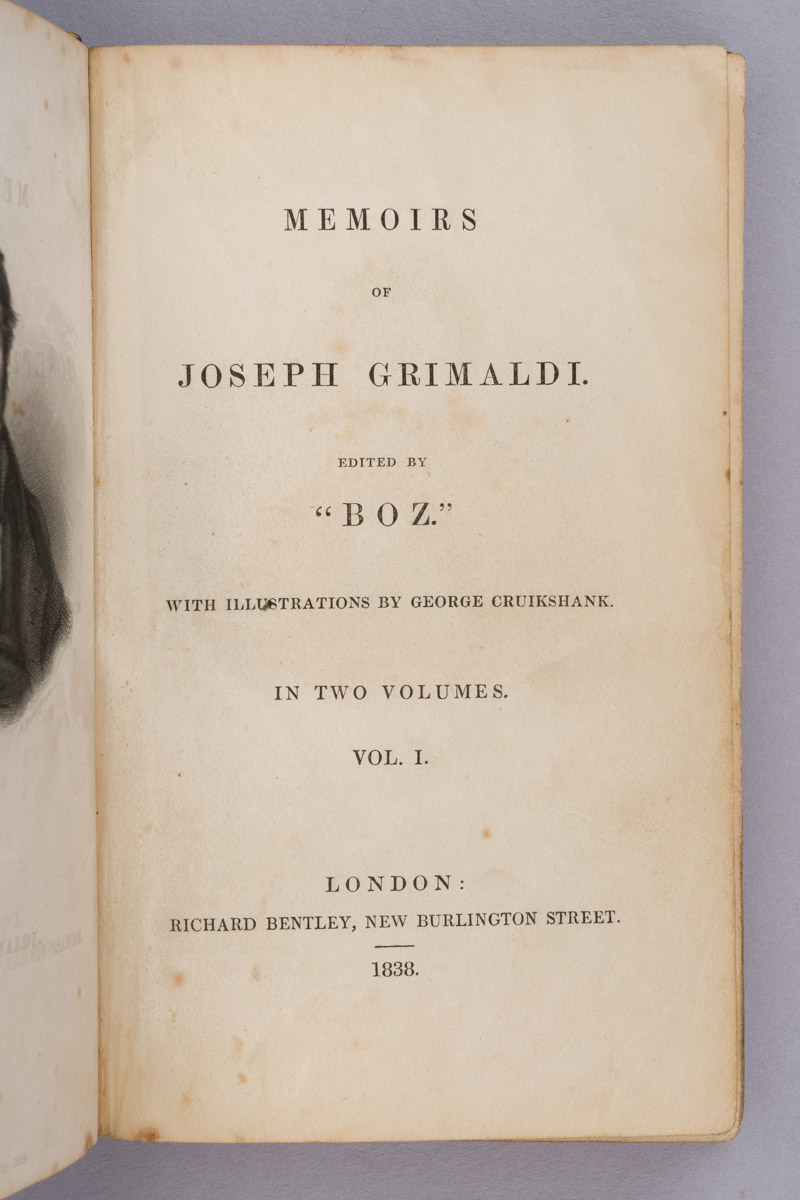
Dickens was still a young author. The Pickwick Papers had only recently transformed his reputation, and here the title page still proudly announces the editor not as Charles Dickens but as:
“BOZ.”
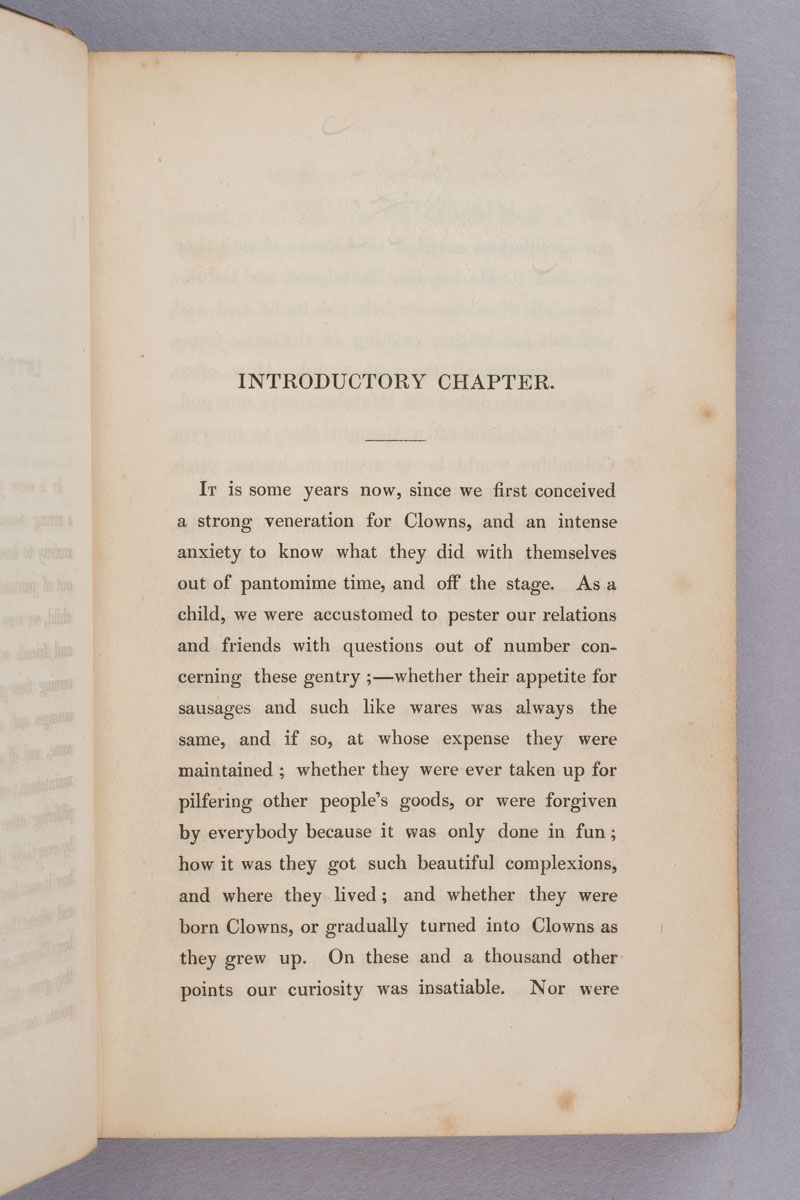
Dickens condensed, reorganised and rewrote the material, bringing his characteristic narrative energy to the life of a performer whose world — theatres, streets, poverty, comedy, spectacle and London characters — had much in common with Dickens’s own developing literary imagination.
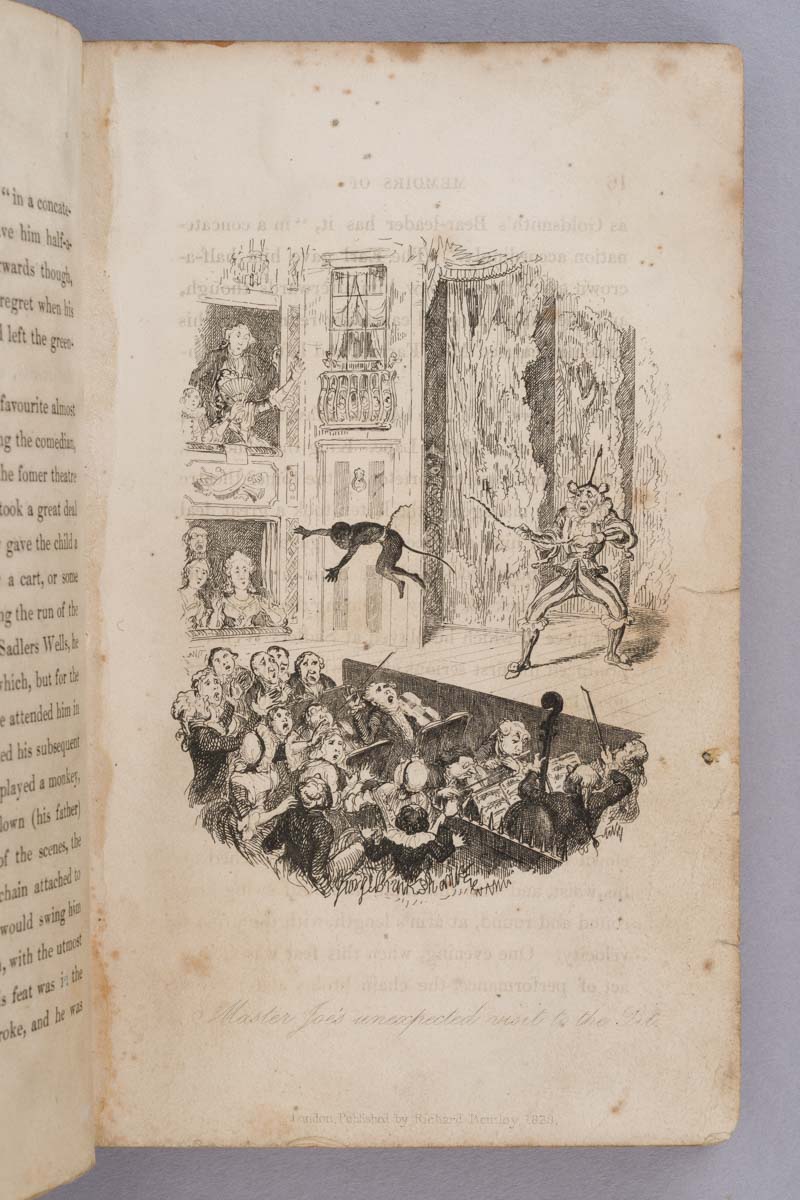
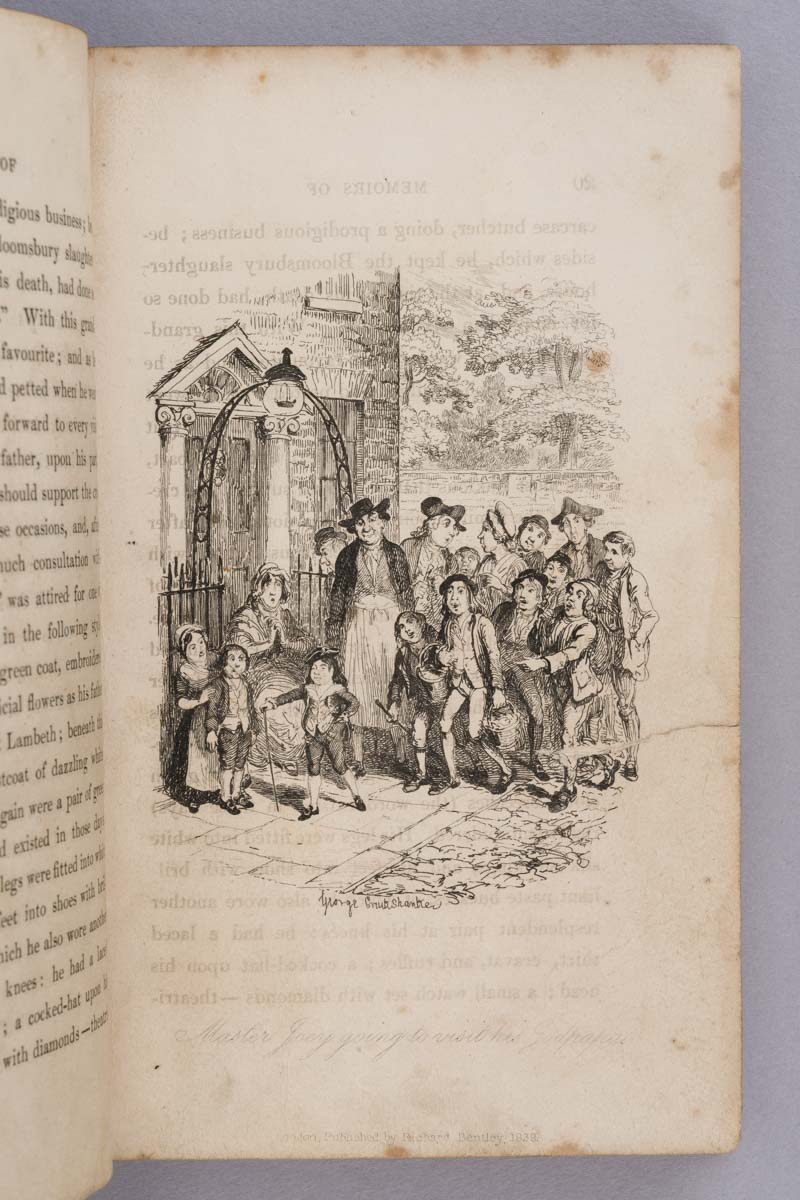
The illustrations added another famous name.
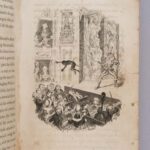
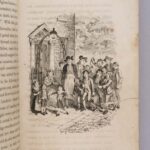
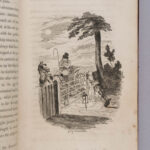
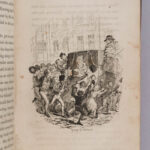
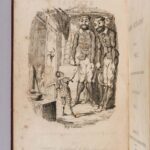
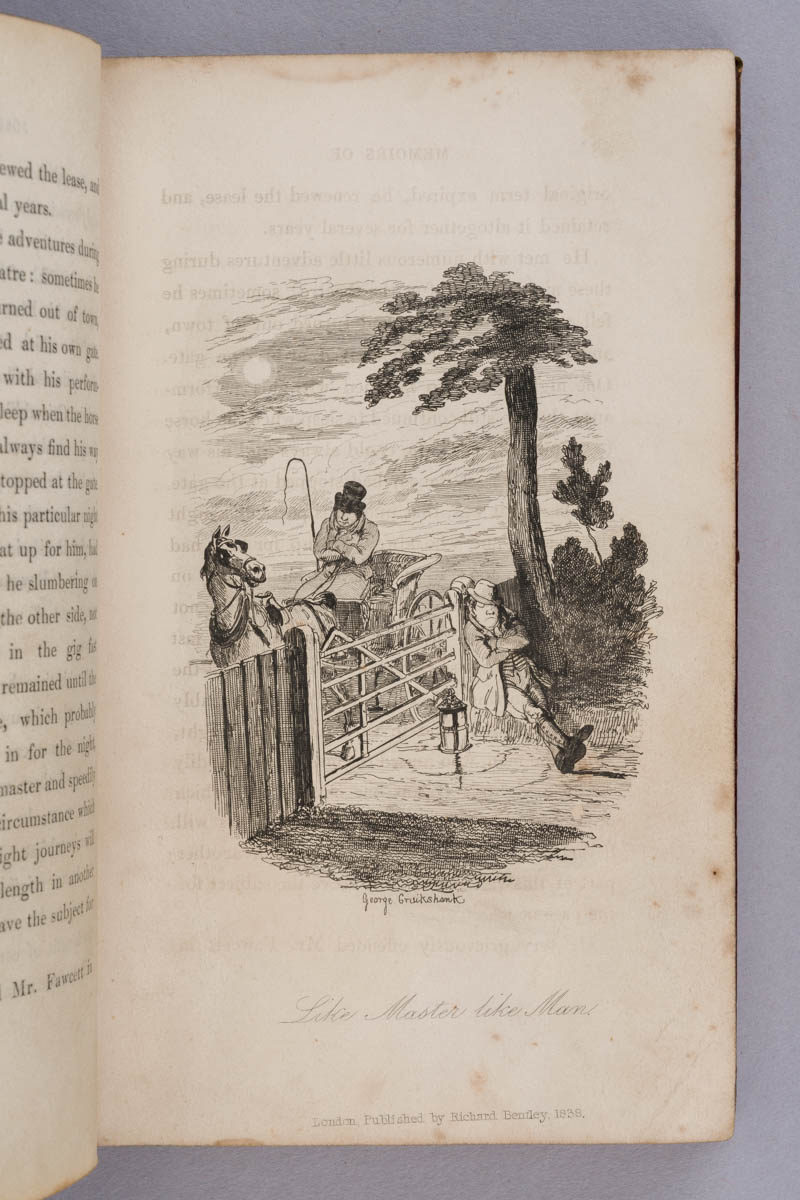
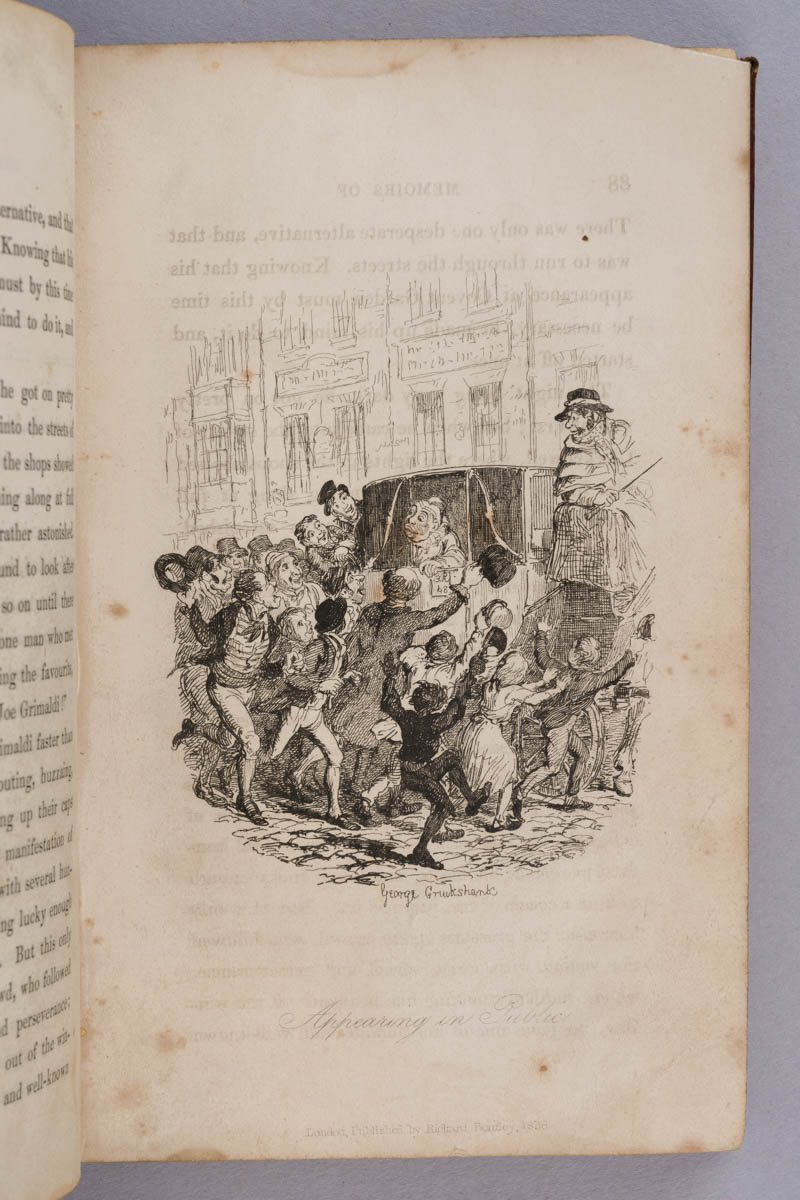
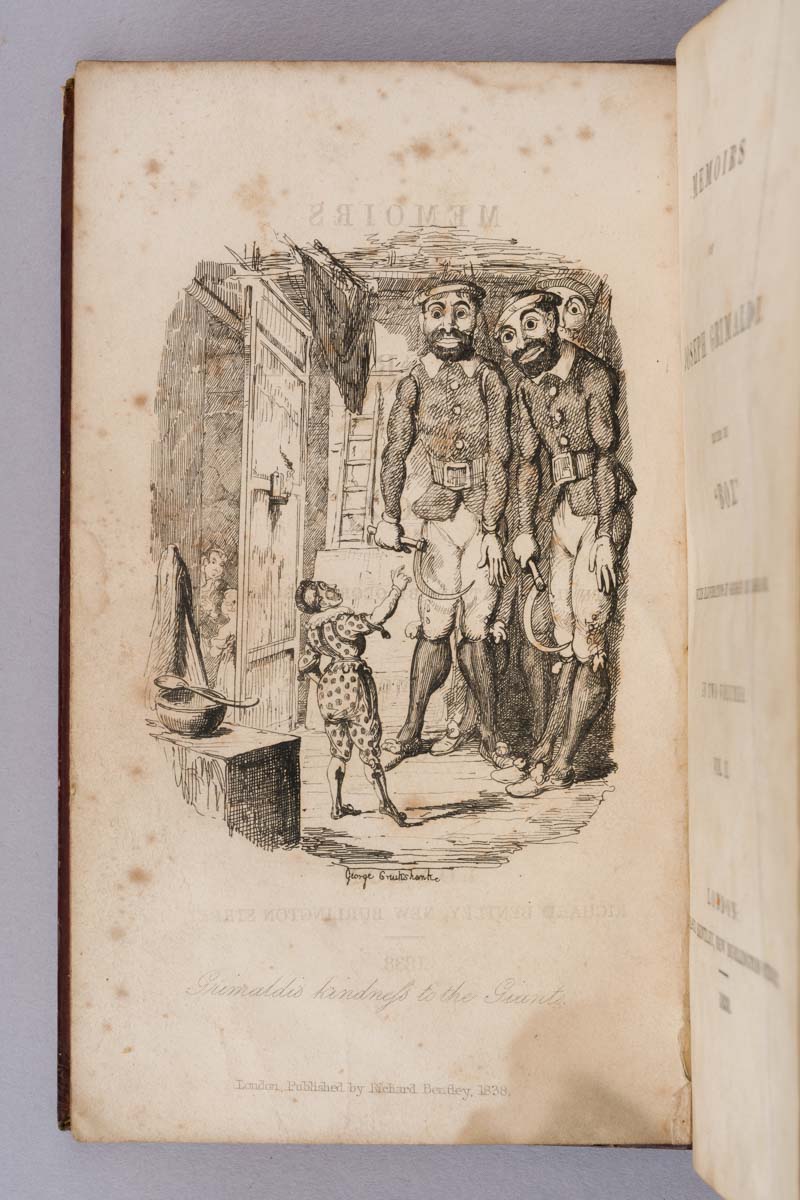
George Cruikshank, who collaborated with Dickens on Sketches by Boz and Oliver Twist, supplied the illustrations, creating a remarkable intersection between three major figures of nineteenth-century popular culture:
Grimaldi the performer. Dickens the storyteller. Cruikshank the artist.
These volumes occupy an unusual position at the intersection of literature, theatre and the history of popular entertainment.
Joseph Grimaldi effectively established the visual and theatrical vocabulary of the modern clown. His white-painted face, extravagant costume, physical comedy and mischievous stage persona profoundly influenced the development of pantomime and comic performance.
For Dickens collectors, the work belongs to an important formative period. Published in 1838 — the same year that Oliver Twist appeared in book form and while Nicholas Nickleby was being serialised — it comes from the extraordinary period during which Dickens was emerging as the dominant young literary figure of Victorian Britain.
The title page’s attribution “Edited by ‘Boz’” captures that moment beautifully.
Cruikshank’s illustrations strengthen the connection further. He was among the most important graphic satirists and book illustrators of nineteenth-century Britain and played a central role in establishing the visual identity of Dickens’s earliest works.
This is consequently far more than the biography of a famous clown. It is a tangible artefact from the birth of Victorian popular culture.