£1,995.00
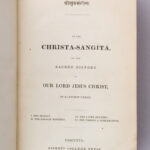
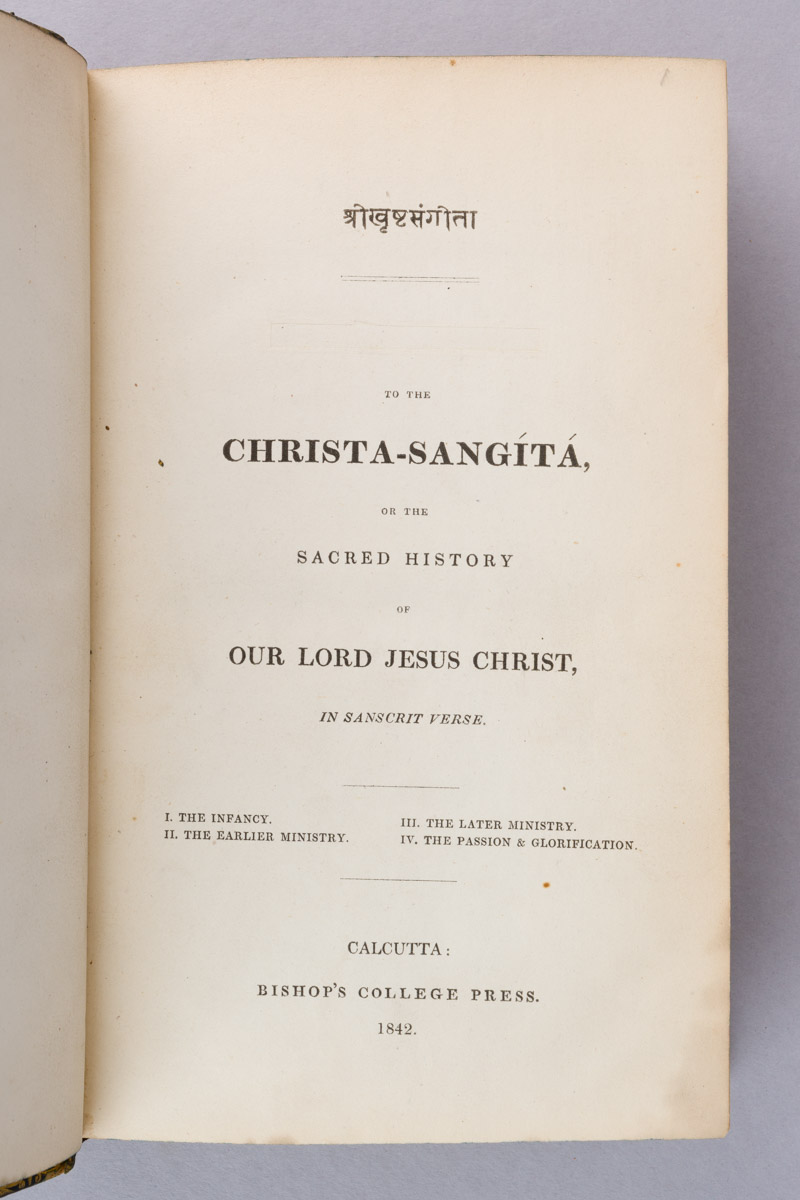
An exceptional presentation copy of William Hodge Mill’s Christa-Sangítá, an extraordinary nineteenth-century attempt to render the life of Jesus Christ into classical Sanskrit verse, printed at the Bishop’s College Press in Calcutta in 1842.
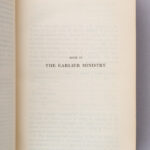
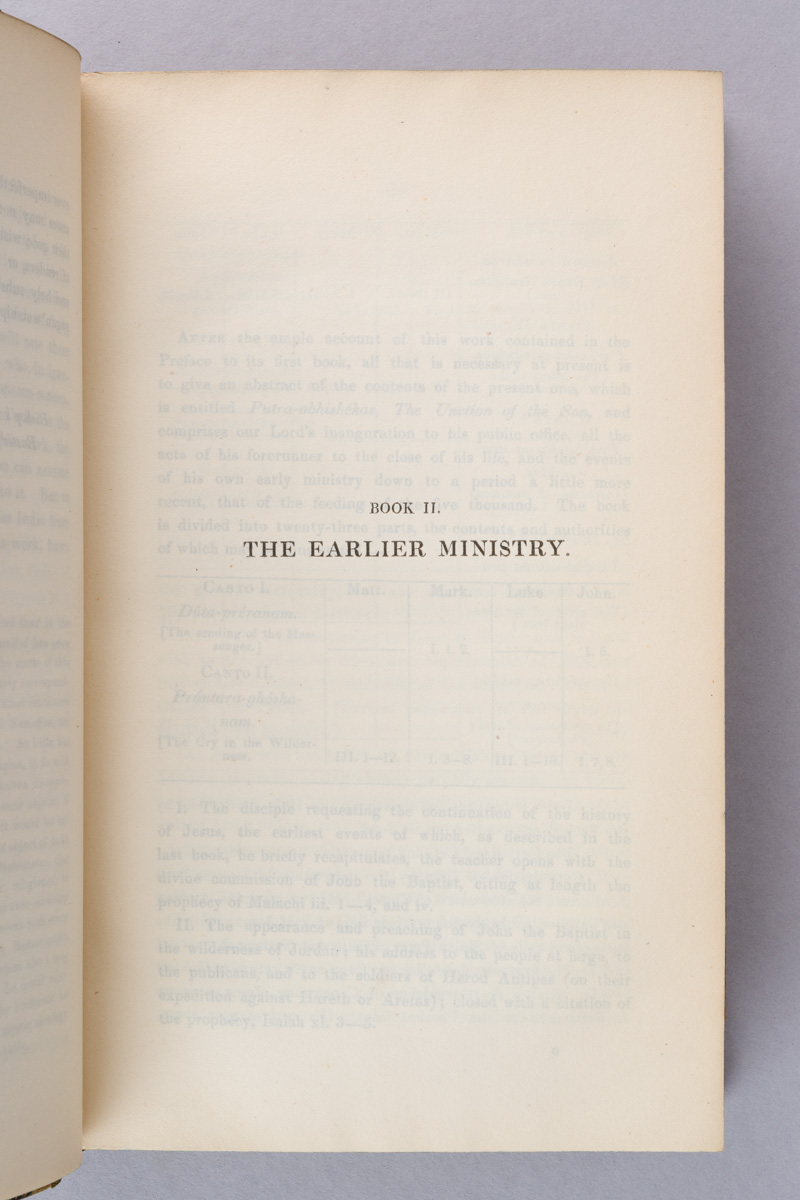
The work presents the Gospel narrative in four divisions — The Infancy, The Earlier Ministry, The Later Ministry, and The Passion & Glorification — recasting Christian sacred history through the literary forms and metrical traditions of Sanskrit poetry. Contemporary bibliography identifies the 1842 publication as the second edition.
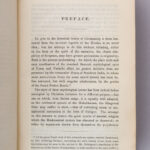
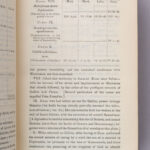
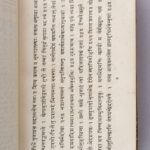
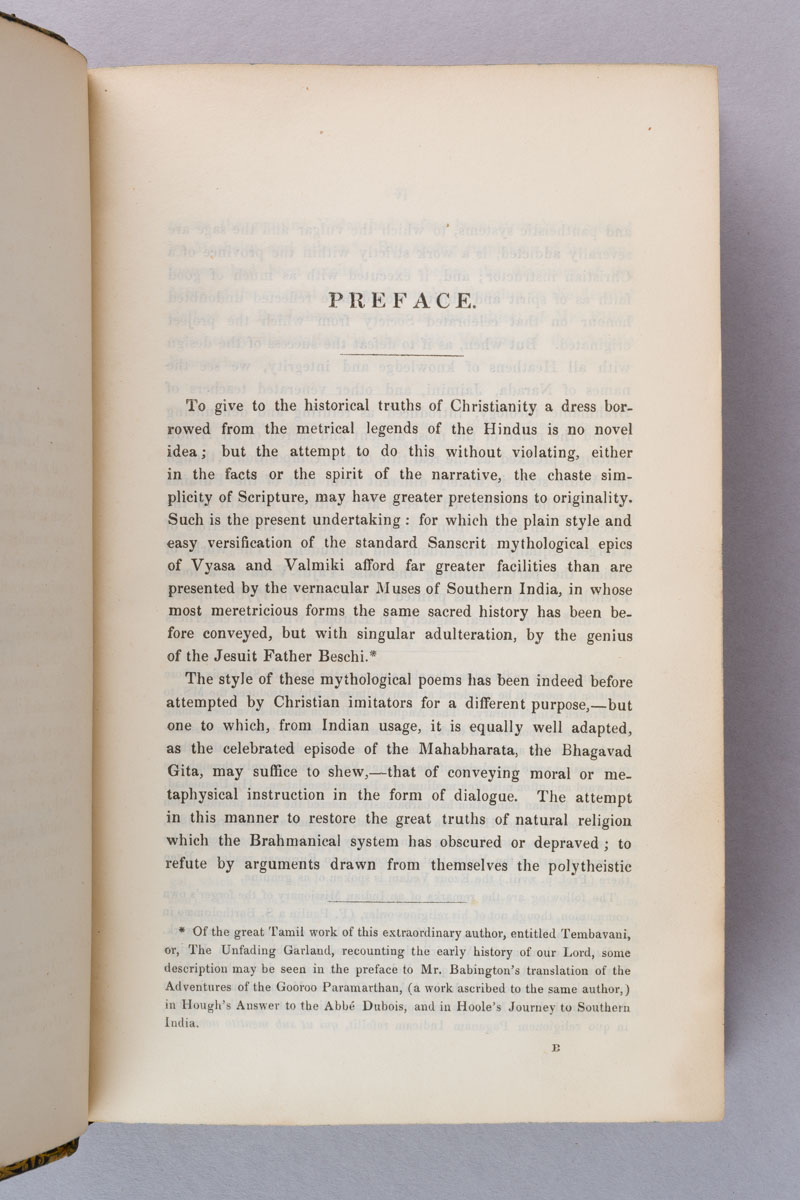
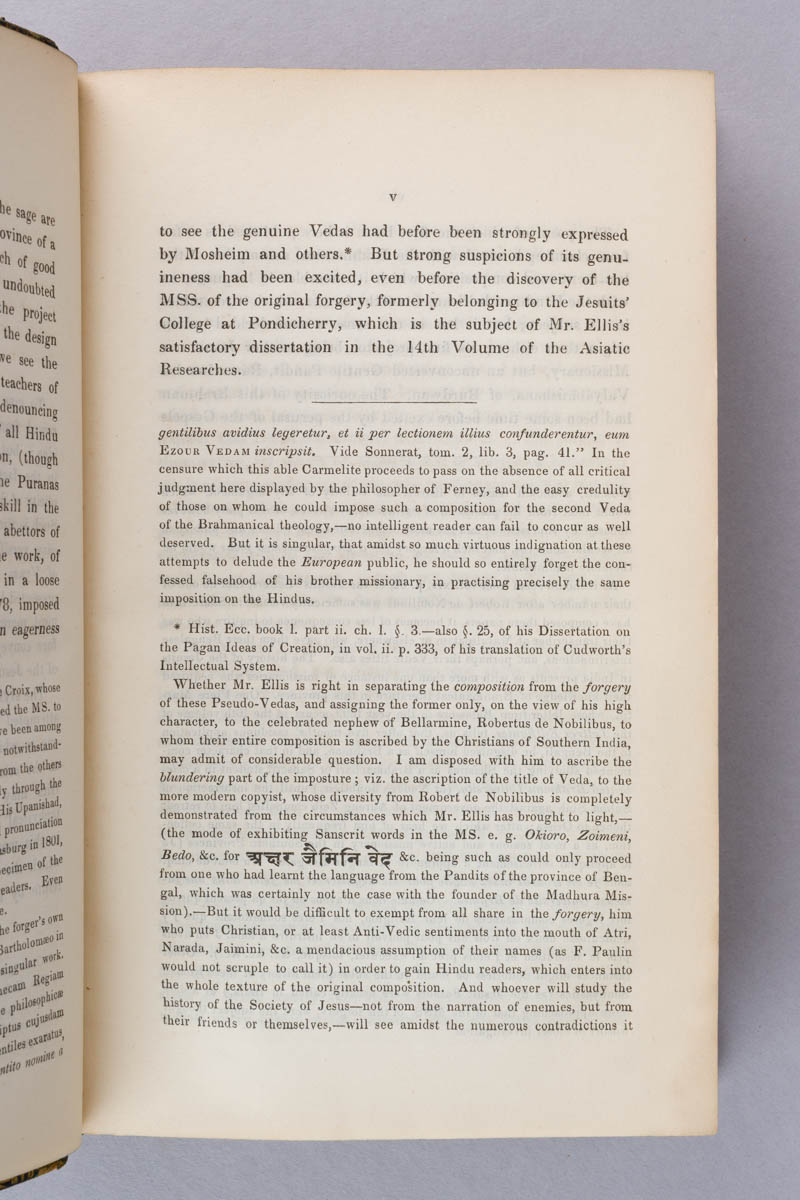
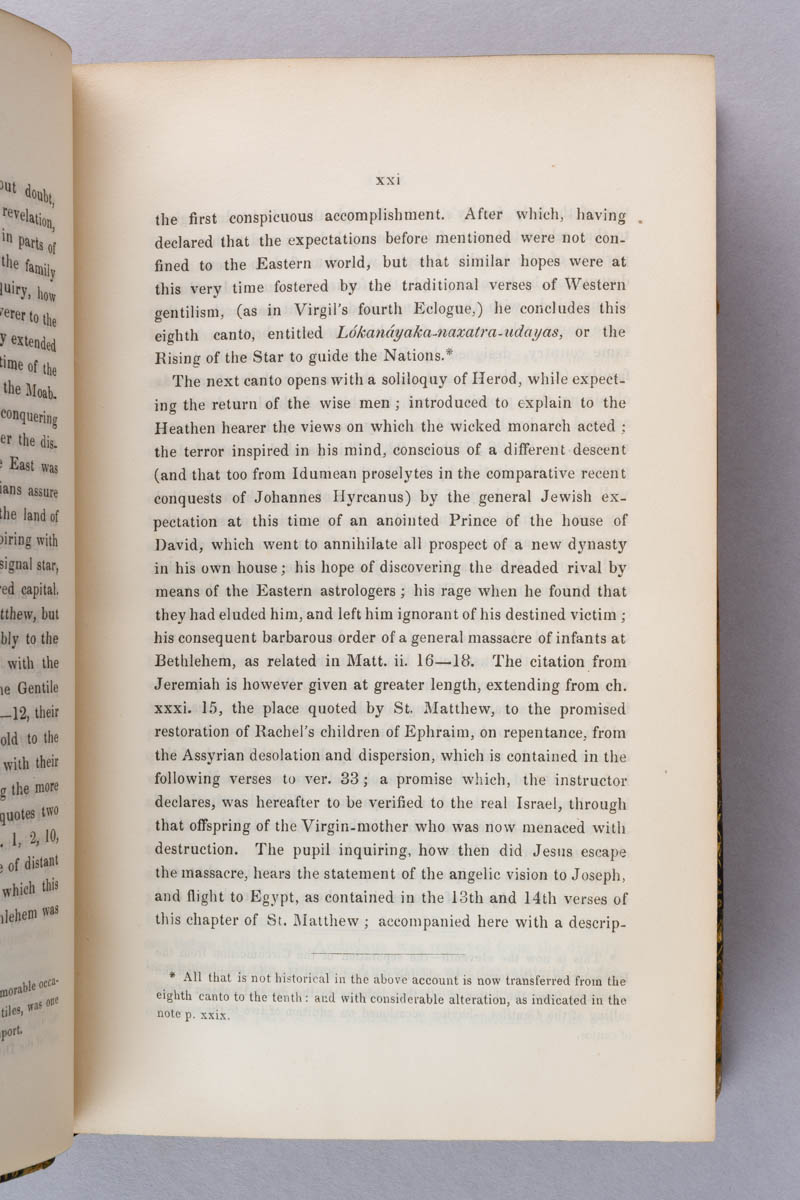
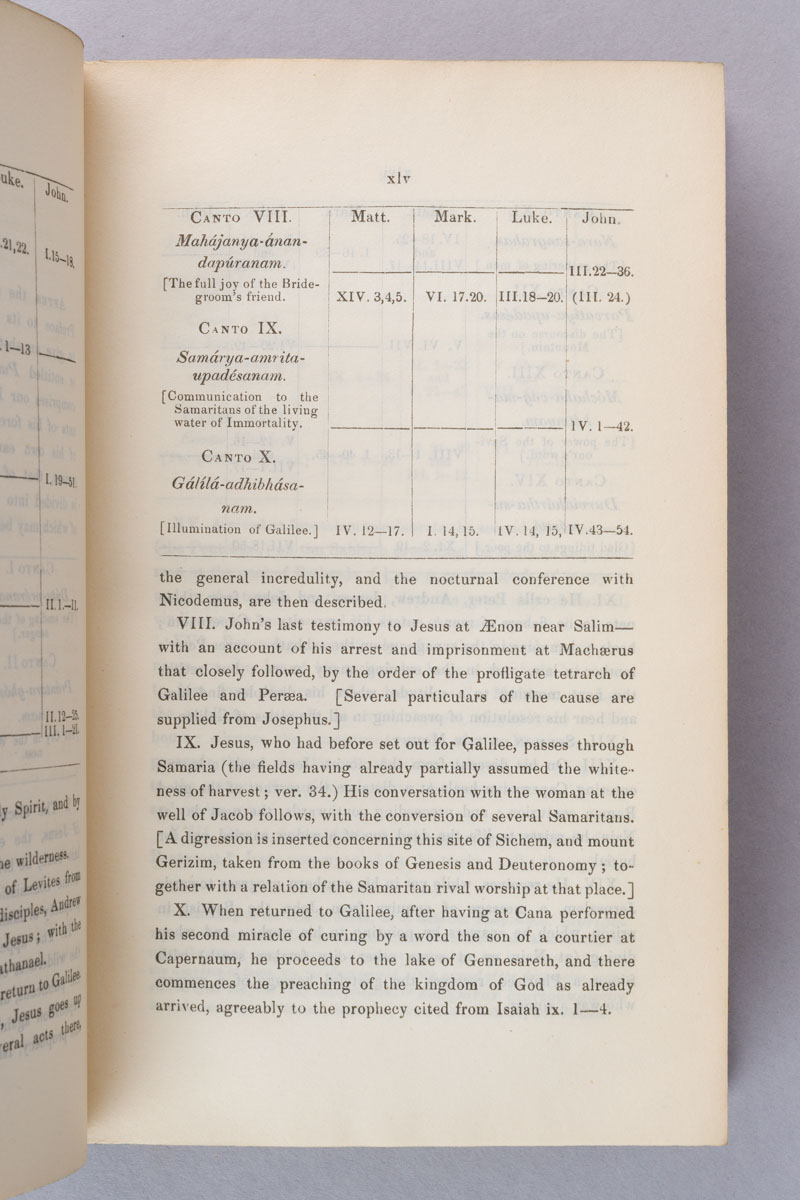
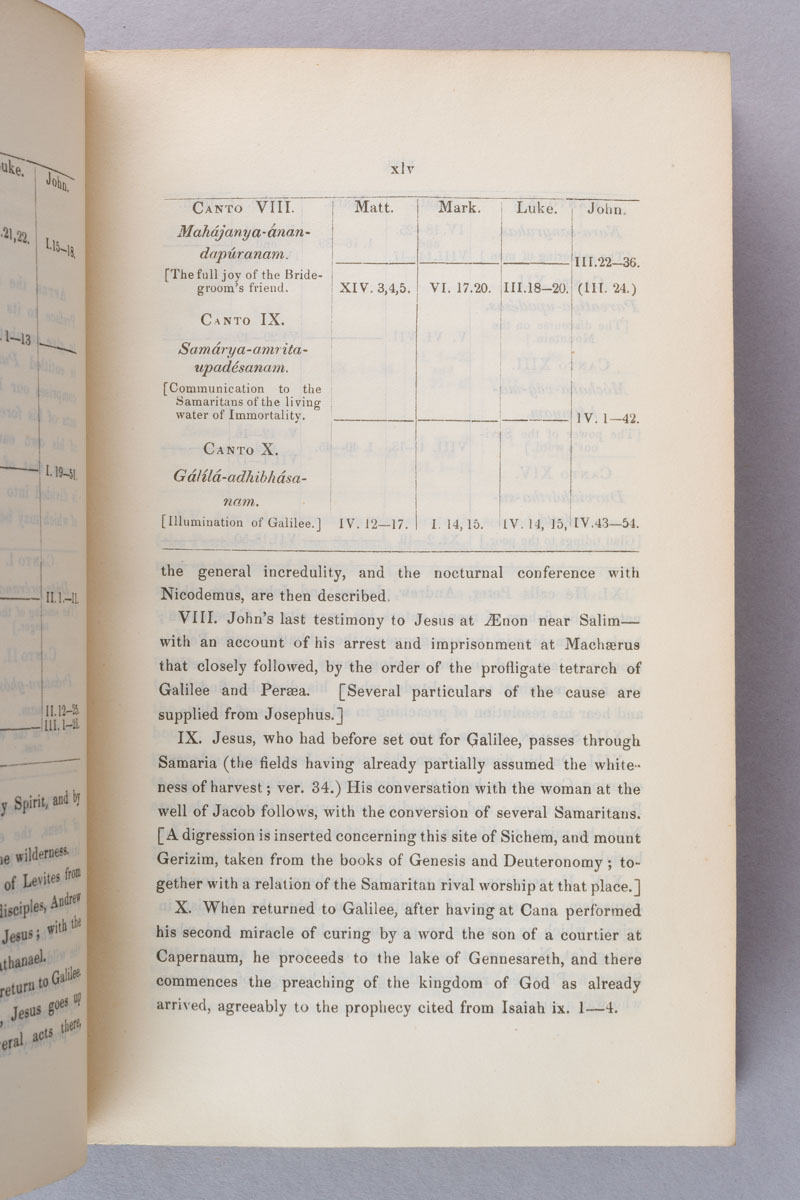
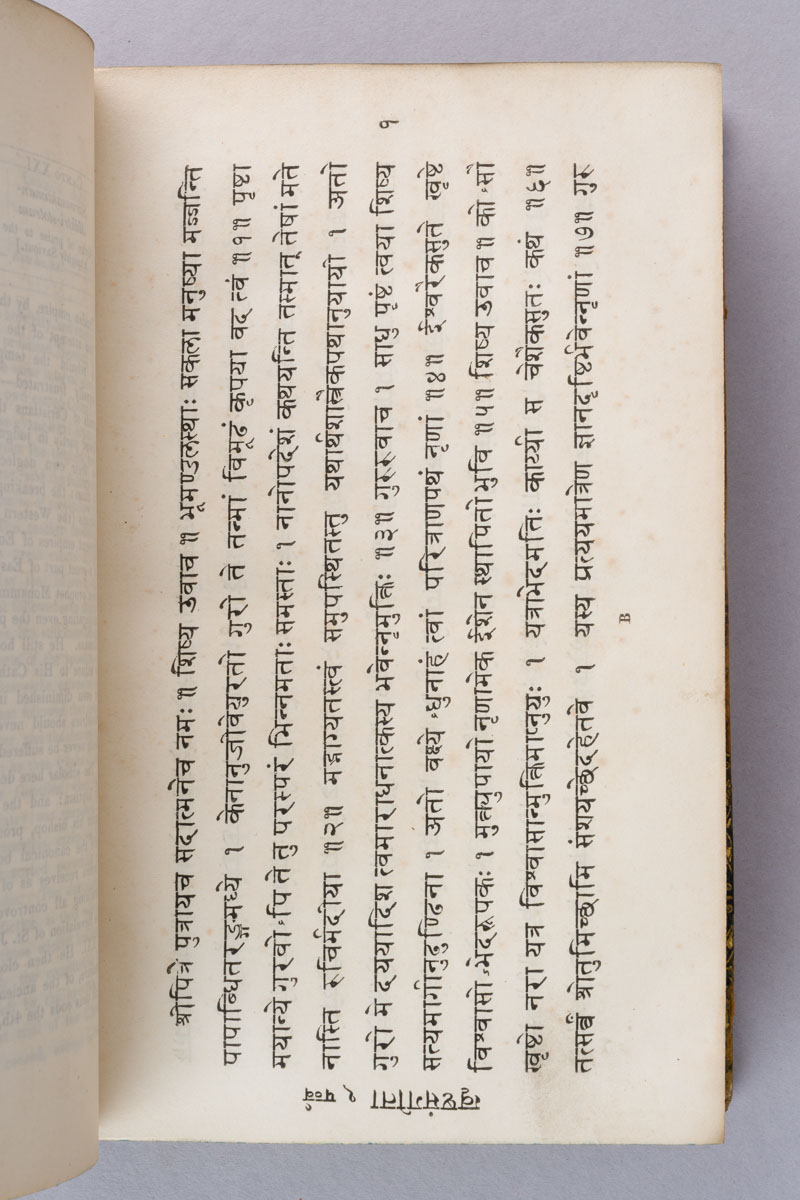
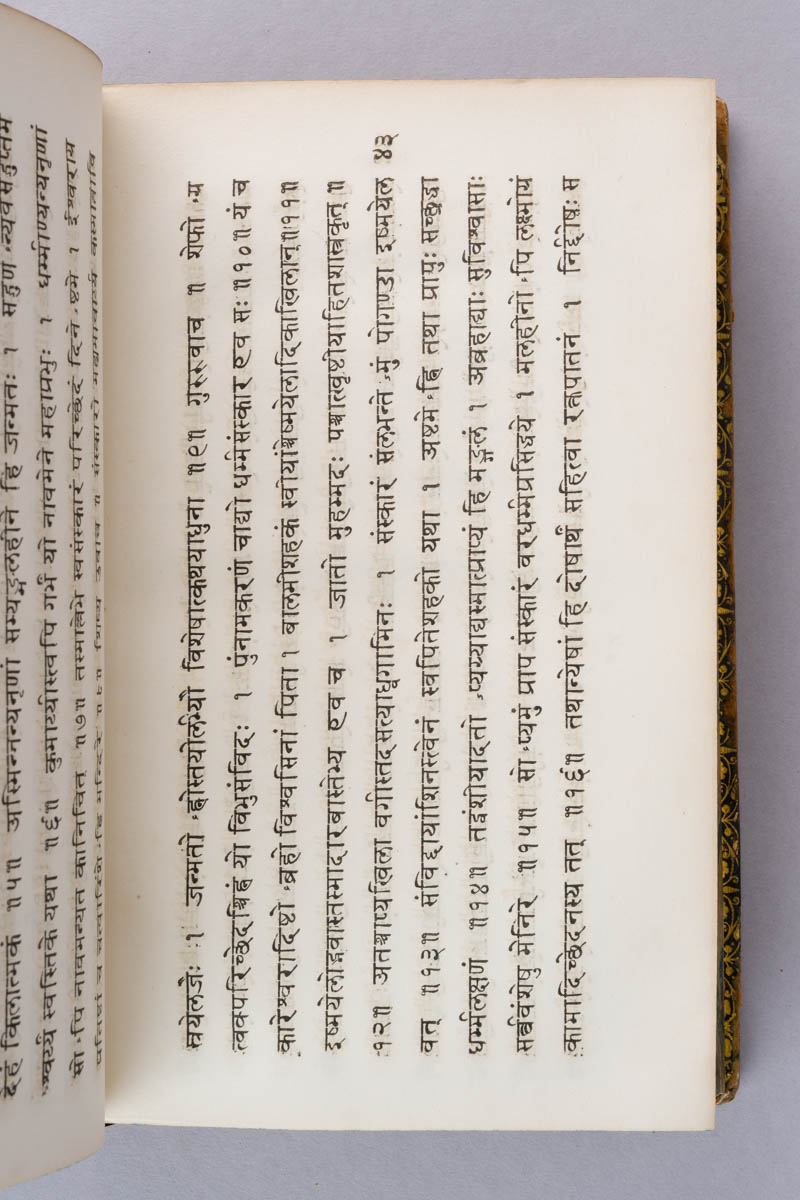
The English introductory material discusses Sanskrit literature, Hindu religious traditions, missionary scholarship and earlier attempts to communicate Christian theology through Indian literary forms. The Sanskrit text is printed in Devanagari, with the volume demonstrating the considerable scholarly and typographical ambition of the Bishop’s College Press.
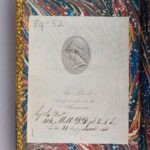
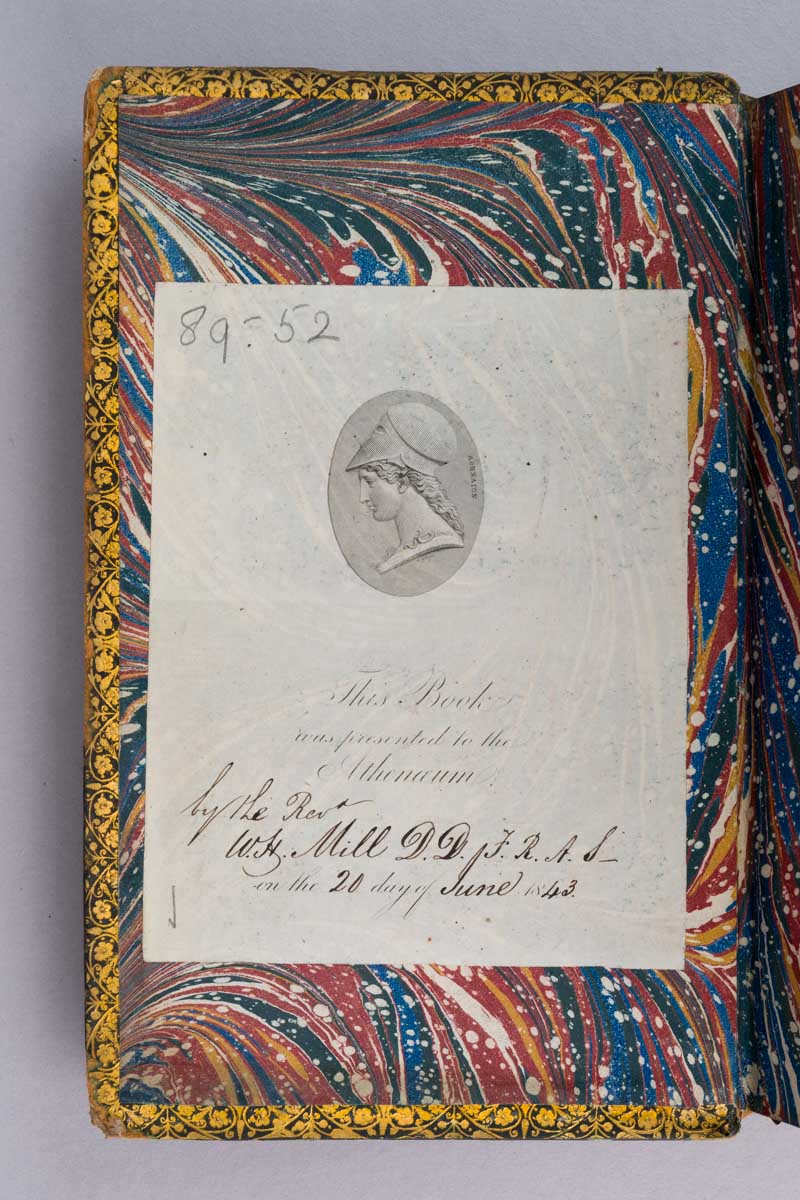
This copy is particularly distinguished by its presentation provenance. A large presentation label mounted to the front pastedown bears a classical portrait medallion and the inscription:
“This Book was presented to the Athenaeum by the Revd W. H. Mill D.D. F.R.A.S. on the 20 day of June 1843.”
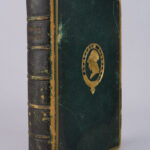
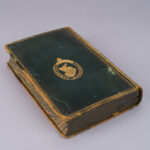
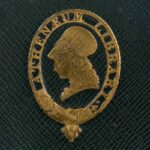
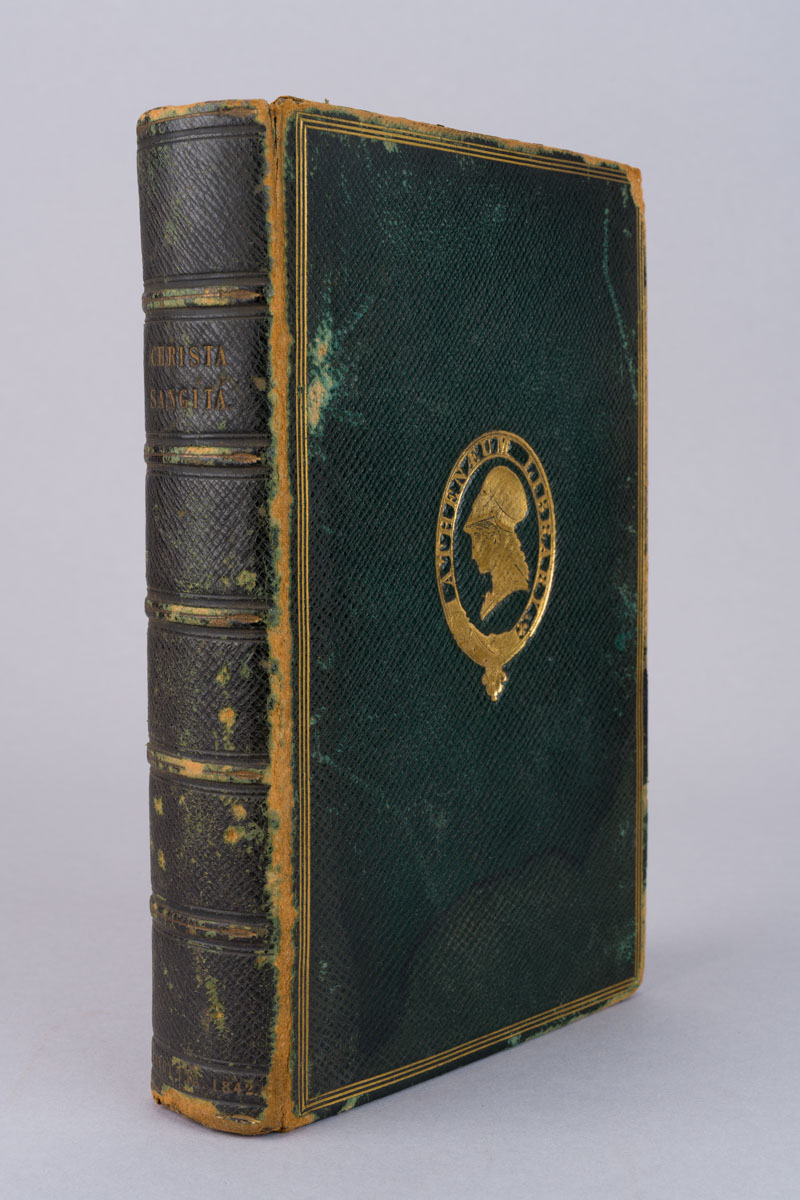
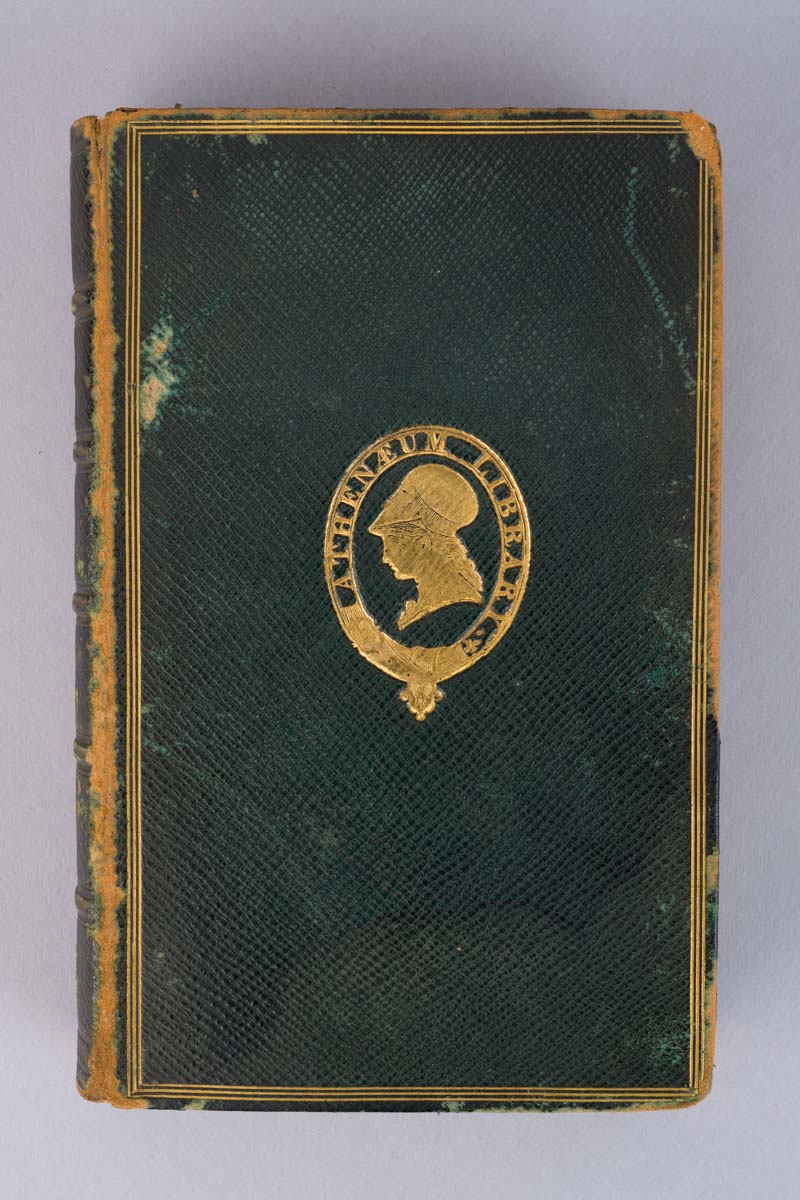
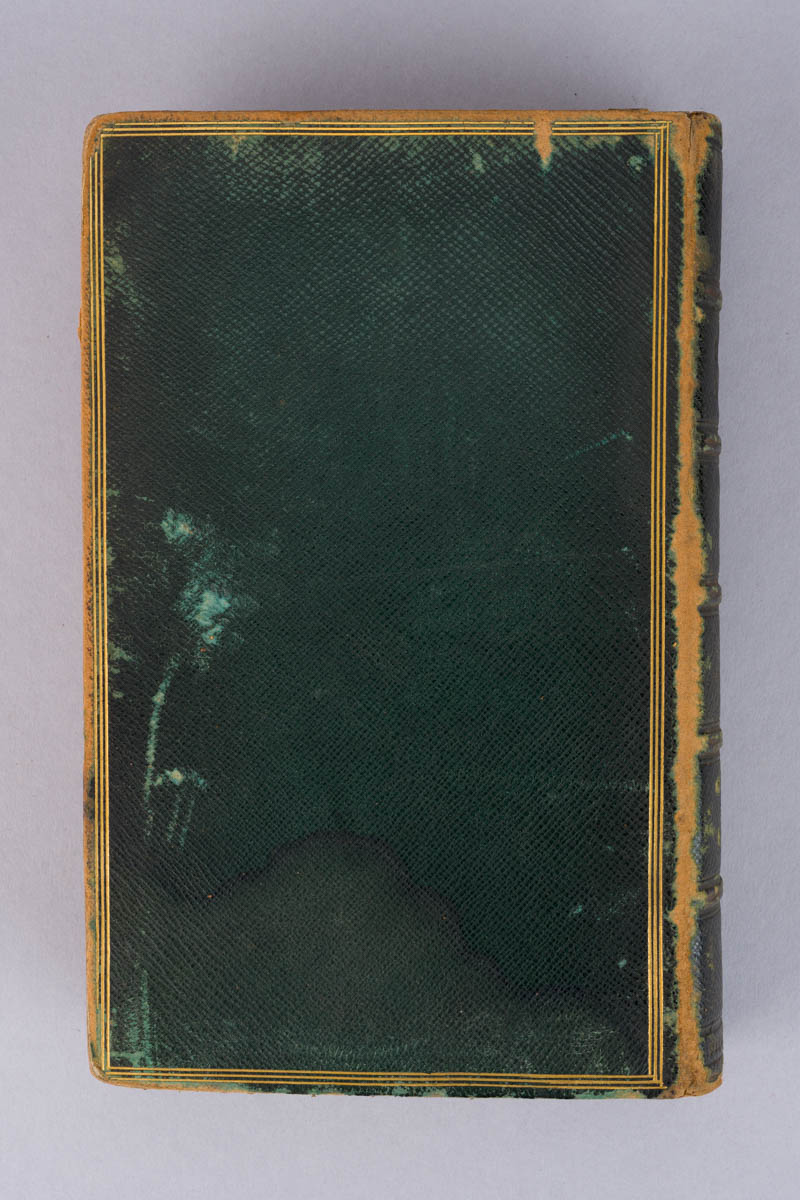
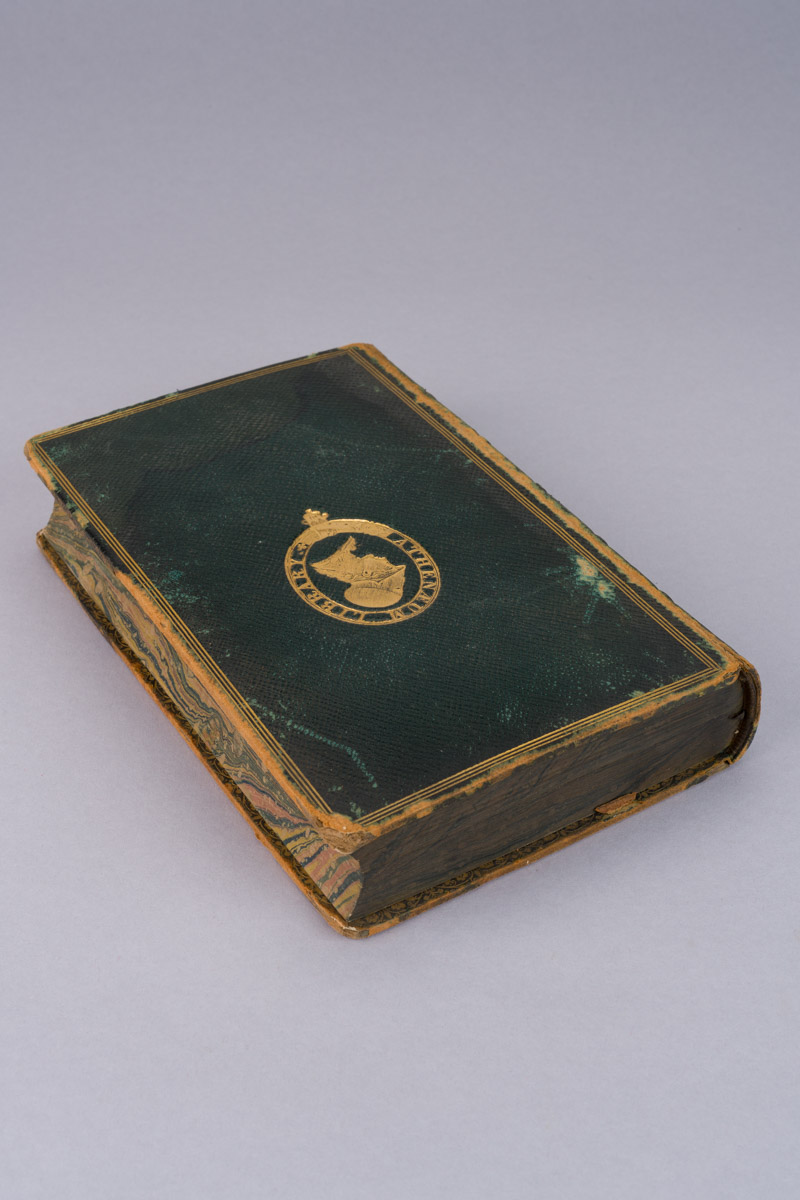
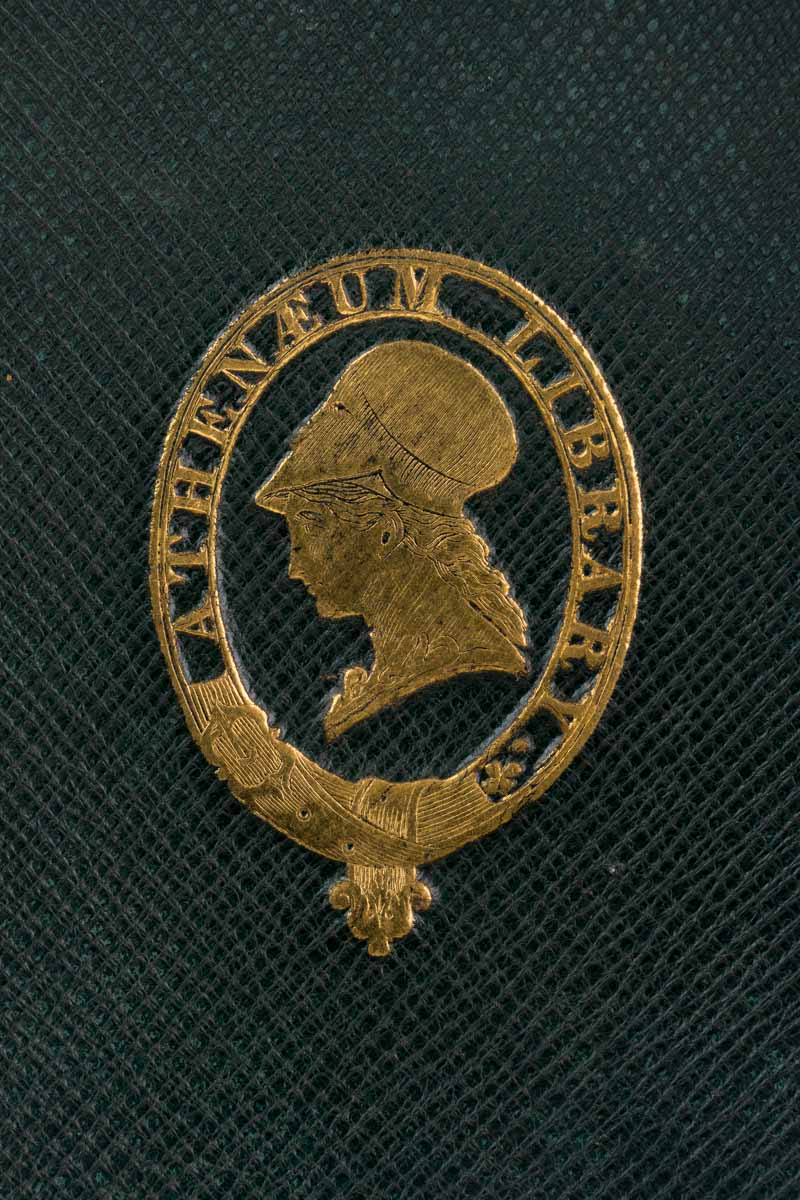
Bound in handsome dark green straight-grain morocco, the covers ruled in gilt and bearing a large gilt Athenaeum device to the upper board; spine with raised bands and gilt title, elaborate multicoloured marbled endpapers with gilt roll borders. The binding shows considerable rubbing and wear to the joints, edges and extremities, with scattered surface abrasion, but remains striking and entirely appropriate to its institutional provenance. Internally generally clean and well preserved, with occasional spotting and toning.
WorldCat records the 1842 Calcutta edition under William Hodge Mill and Bishop’s College Press.
A particularly distinguished author’s presentation copy, presented by William Hodge Mill to the Athenaeum in London in 1843. The front pastedown bears the Athenaeum presentation plate, completed in manuscript recording:
“This Book was presented to the Athenaeum by the Revd W. H. Mill D.D. F.R.A.S. on the 20 day of June 1843.”
The association is further reinforced by the handsome contemporary green morocco binding, with the Athenaeum’s gilt emblem prominently displayed on the upper cover.
Author: William Hodge Mill (1792–1853)
Title: Christa-Sangítá, or The Sacred History of Our Lord Jesus Christ, in Sanscrit Verse
Year: 1842
Edition: Second Edition
Publisher: Bishop’s College Press, Calcutta
Language: Sanskrit, with substantial English introduction and apparatus
Format: Octavo
Provenance: Presentation copy from the author, Rev. W. H. Mill, dated 20 June 1843
1 in stock
Christa-Sangítá is a remarkable product of the intellectual encounter between Britain and India during the early nineteenth century.
William Hodge Mill was not merely a missionary cleric. He was one of the leading British Oriental scholars working in India during this period. Appointed the first Principal of Bishop’s College, Calcutta, in 1820, Mill became deeply engaged with Sanskrit and Indian scholarship and later served as Vice-President of the Asiatic Society of Bengal. He eventually returned to England and became Regius Professor of Hebrew at Cambridge.
His ambition with Christa-Sangítá was unusual. Rather than simply translate the Bible into Sanskrit prose, Mill attempted to present the life of Christ using the metrical language and literary conventions associated with India’s classical sacred and epic literature.
As he explains in the preface, the intention was to give Christian history “a dress borrowed from the metrical legends of the Hindus.” The resulting work therefore occupies a fascinating position between Sanskrit scholarship, Christian theology, comparative religion and the cultural encounter between Victorian Britain and India.
Earlier portions appeared between 1831 and 1837; the present 1842 edition brought the work together in revised form. Bibliographical sources describe the complete work as extending to thousands of Sanskrit verses.
But this particular copy has another story.
In June 1843, Mill himself presented it to The Athenaeum, the celebrated London club founded in 1824 and closely associated with leading figures in literature, science, scholarship, politics and the arts.
The presentation label remains in situ, while the magnificent gilt Athenaeum emblem on the binding visually records that provenance.
It therefore survives not merely as a copy of an unusual Anglo-Indian book, but as a documented authorial presentation copy, connecting Mill’s Sanskrit scholarship in colonial Calcutta directly with one of nineteenth-century London’s foremost intellectual institutions.
What elevates this copy considerably above an ordinary example is its direct authorial provenance. William Hodge Mill presented the volume to the Athenaeum in 1843, only a year after its publication in Calcutta, and the presentation is recorded on the surviving inscription plate.
The combination of author presentation, named institutional recipient, contemporary date and bespoke Athenaeum binding gives the volume a documented history stretching directly from one of the foremost Sanskrit scholars of British India to one of London’s great nineteenth-century intellectual institutions.
The appeal of this copy extends considerably beyond the text itself.
It combines early Sanskrit printing, Indian religious history, British Oriental scholarship and distinguished provenance in a single object.
Most importantly, it is a presentation copy from William Hodge Mill himself, dated only a year after publication. That substantially elevates it above an ordinary copy of the edition.
The bespoke Athenaeum binding, gilt institutional device and surviving presentation label provide an unusually strong chain of provenance and make the volume immediately visually recognisable as something special.
The subject is equally compelling. A nineteenth-century scholar attempting to express the life of Christ through the language and poetic conventions of Sanskrit sacred literature represents an extraordinary moment in the intellectual and religious encounter between Europe and India.
Institutional holdings exist, but copies with such explicit contemporary presentation provenance are a different proposition. The work itself is represented in major library catalogues and survives digitally through institutional collections, reinforcing its scholarly significance.
For collectors of India, Sanskrit, Orientalism, missionary printing, comparative religion, association copies or nineteenth-century intellectual history, this is a particularly attractive copy.