Salvator Rosa was one of the most unconventional figures of seventeenth-century Italian art — painter, poet, satirist, actor and printmaker. His fascination with philosophers was closely connected with the cultivated intellectual identity he deliberately constructed around himself.
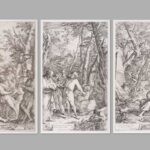
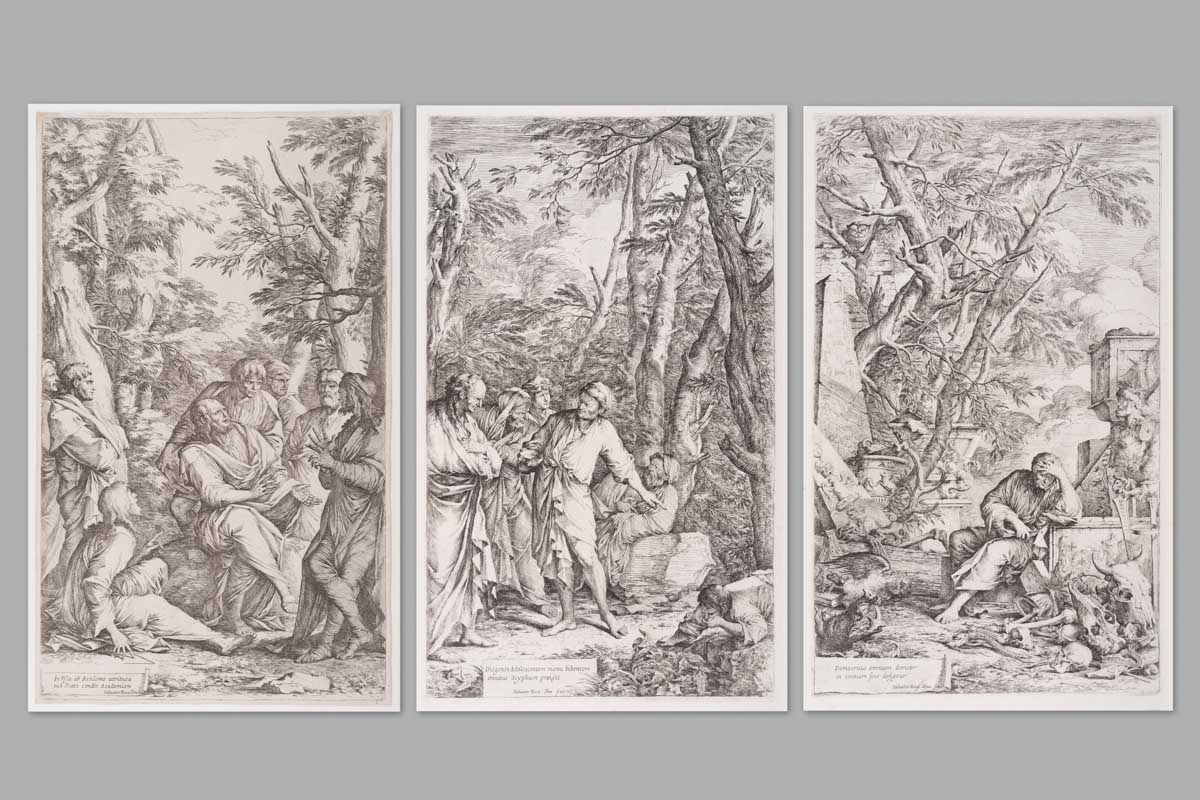
These three etchings bring together Plato, Diogenes and Democritus, but Rosa does not present them as remote classical statues. Instead, he gives each philosopher an almost theatrical human presence.
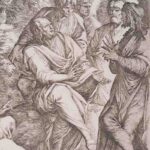
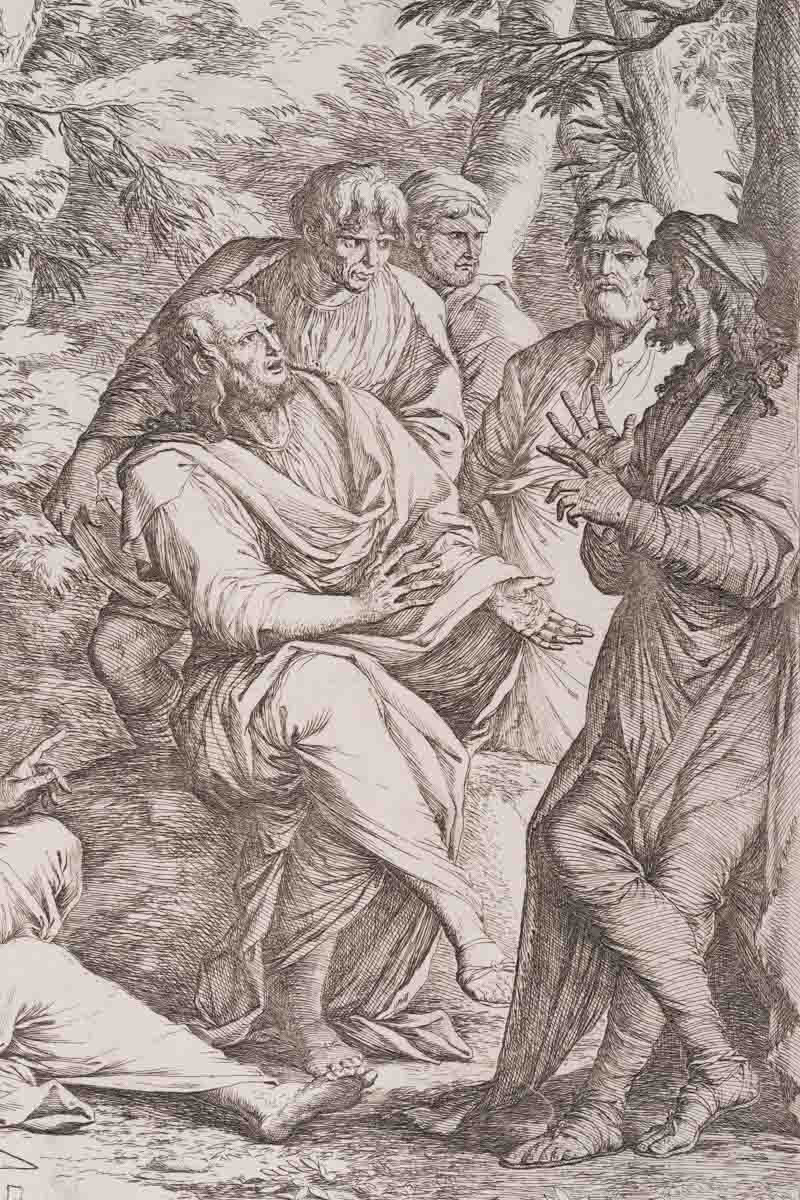
Plato appears surrounded by listeners, engaged in philosophical discourse.
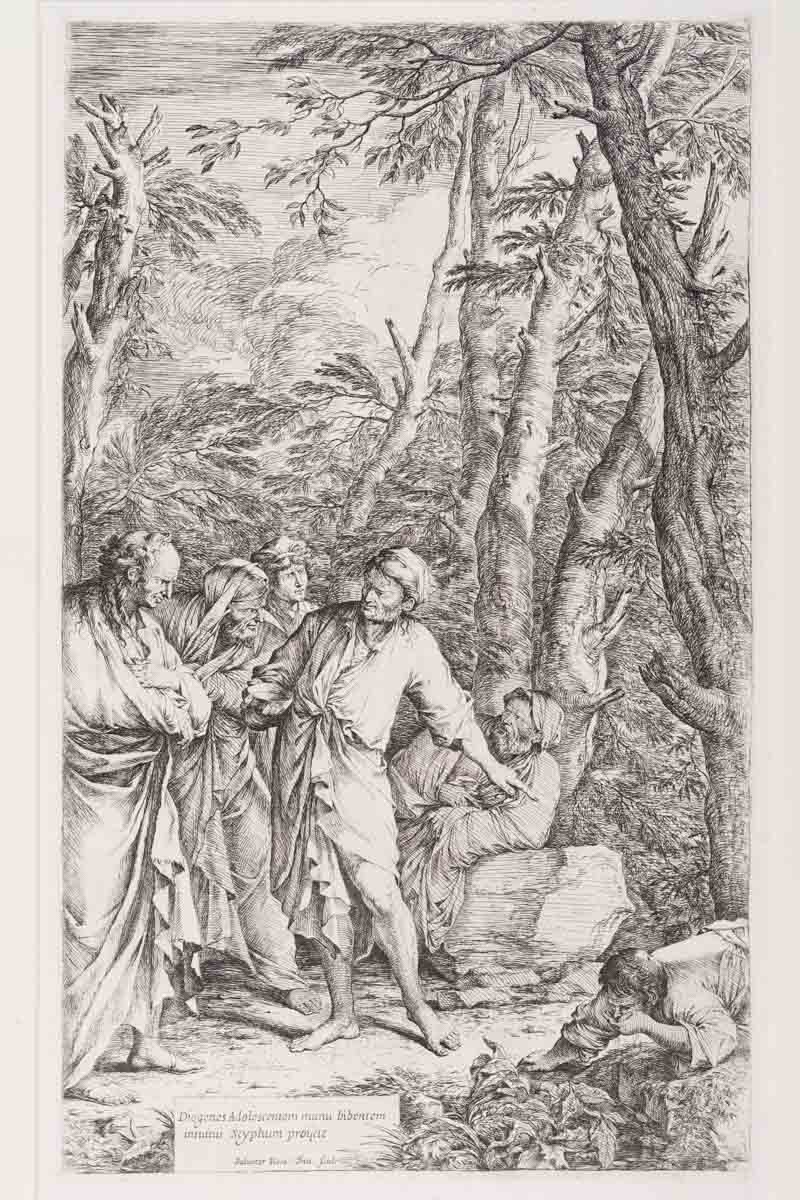
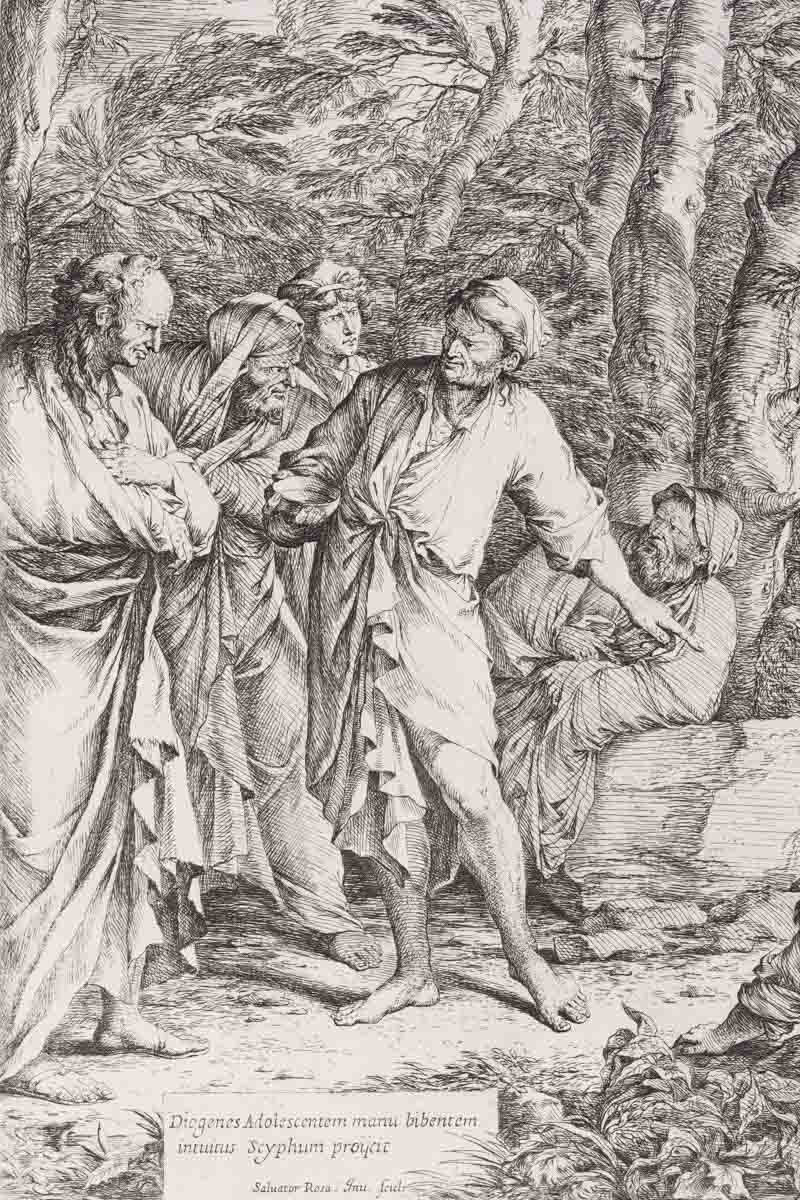
Diogenes, the great Cynic philosopher who rejected wealth and conventional society, appears amid a rugged landscape, surrounded by figures while maintaining the austere independence traditionally associated with him.
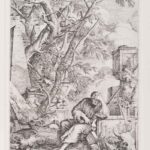
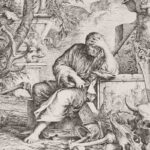
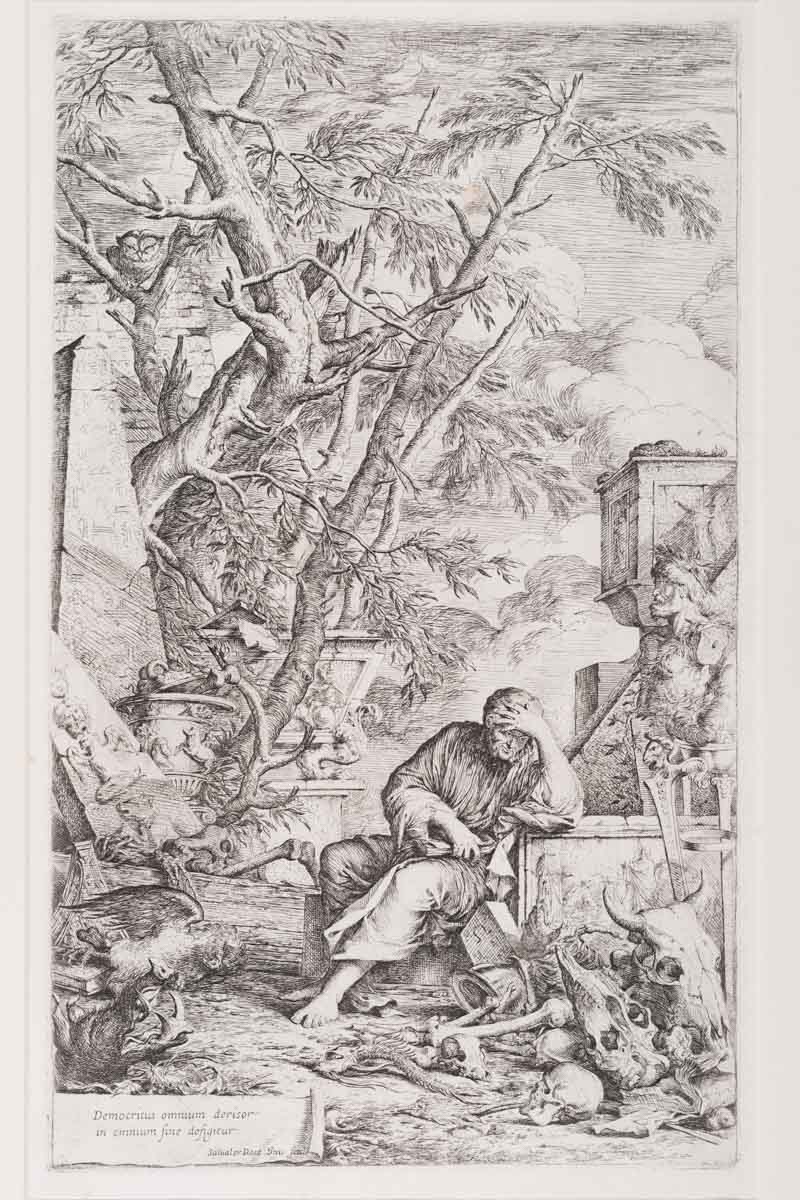
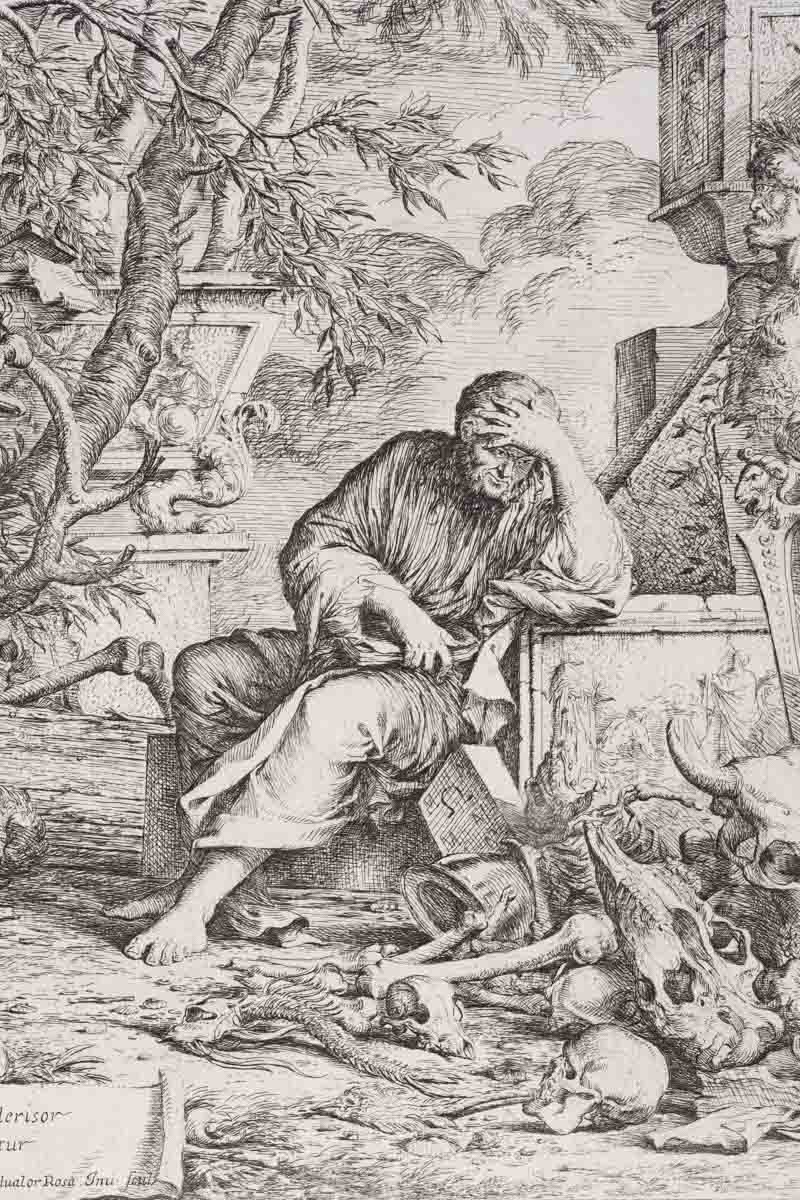
The most extraordinary composition is perhaps Democritus, the so-called Laughing Philosopher. Rosa places him among bones, skulls, animal remains and fragments of antiquity — contemplating mortality and the absurdity of human ambition.
Together, the three prints form a distinctly Baroque meditation on knowledge, civilisation, mortality and the different ways in which a philosopher might confront the human condition.
This is considerably more interesting as a three-print philosophical group than as three unrelated decorative engravings.
Salvator Rosa was himself an important seventeenth-century printmaker, meaning these are works conceived and etched by a major Baroque artist rather than reproductive engravings made after another painter.
The subjects also give the set unusually broad collecting appeal: Old Master prints, classical philosophy, intellectual history, Italian Baroque art and the history of ideas.
The Democritus composition in particular is visually exceptional. Its accumulation of skulls, bones, sculpture and decaying objects creates an unmistakable memento mori atmosphere while retaining Rosa’s characteristic wild landscape.
Displayed together, the three sheets have real presence.