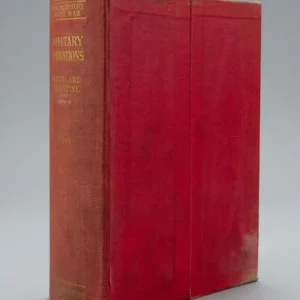
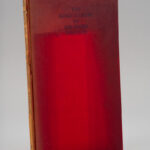
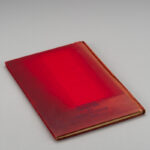
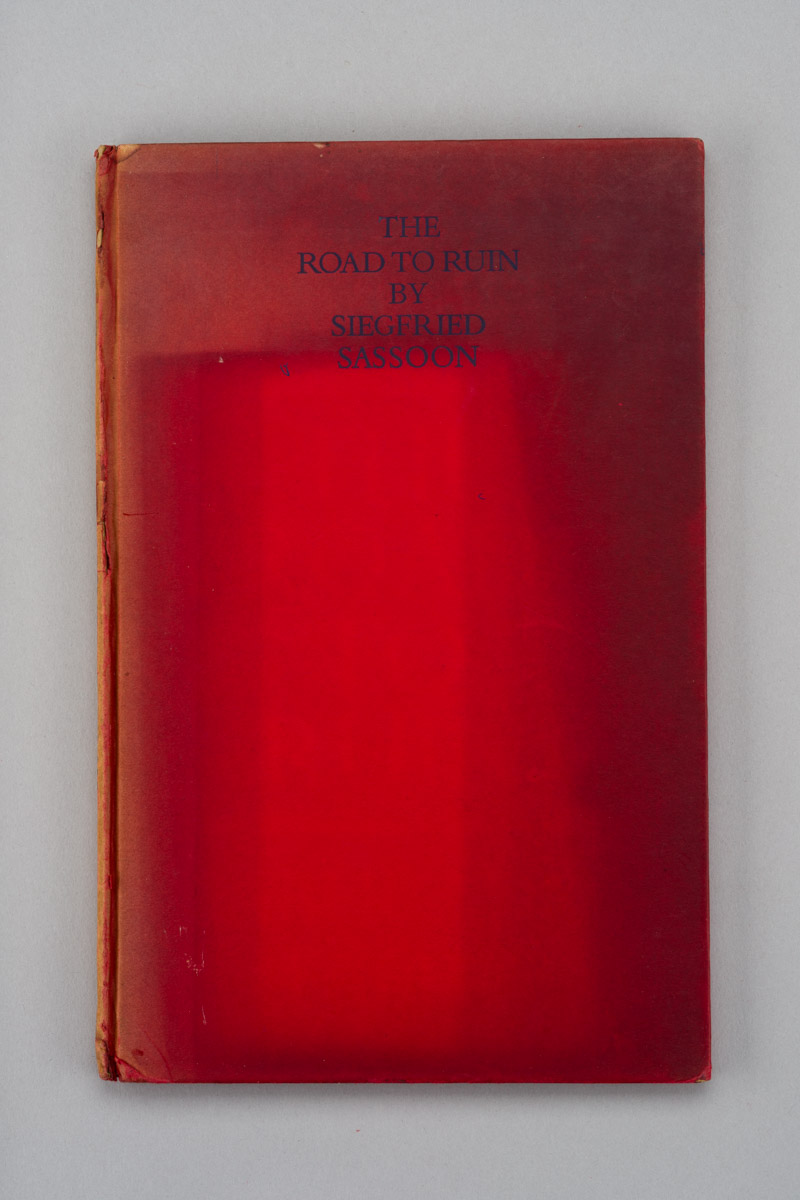
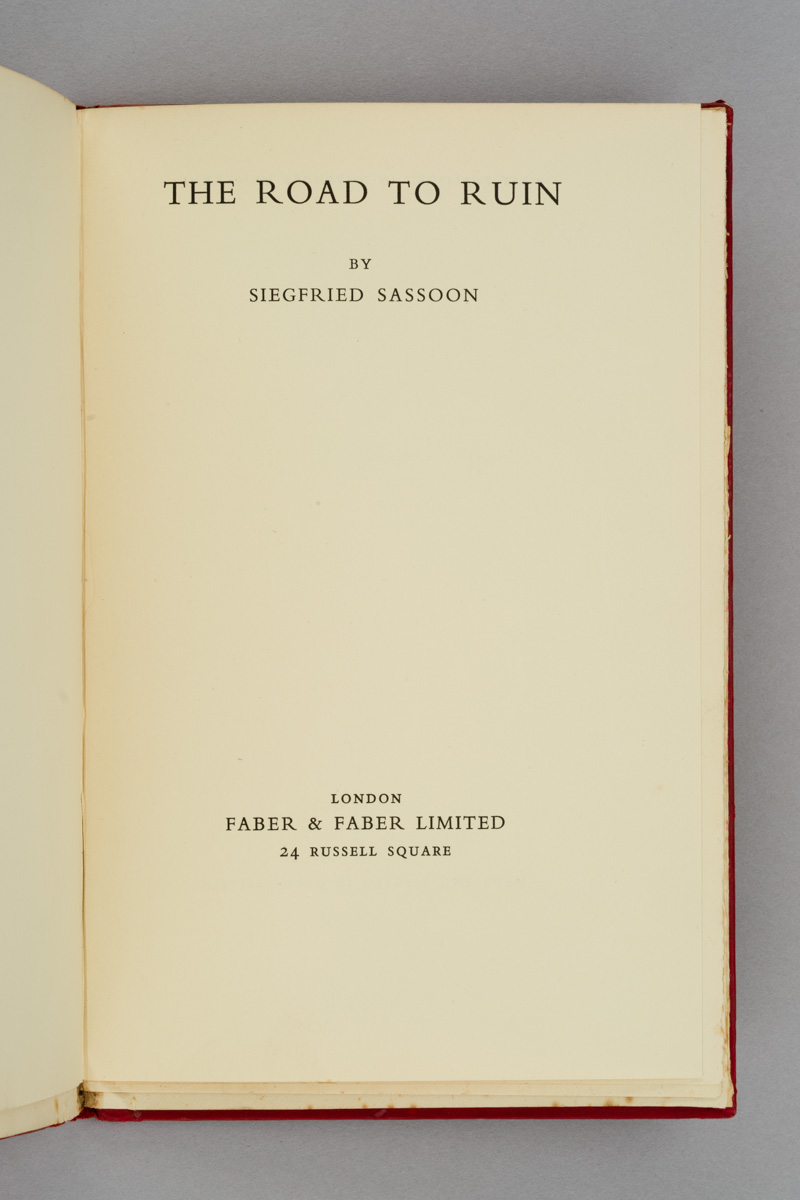
By 1933, Siegfried Sassoon had already lived through one catastrophe.
As an officer on the Western Front during the First World War, he had witnessed industrialised warfare at first hand. His poetry transformed those experiences into some of the most powerful anti-war writing of the twentieth century.
But The Road to Ruin belongs to a different and particularly unsettling moment in Sassoon’s life.
Published in November 1933, the collection appeared as Europe was again moving towards extremism and conflict. Hitler had become German Chancellor that January, the Nazi regime was rapidly consolidating power, and Sassoon recognised disturbing echoes of the world that had led to 1914.
Cambridge University Library records that Sassoon wrote to Lady Ottoline Morrell in March 1933 of his despair at the international situation, describing a sense that the forces of darkness were prevailing. The Road to Ruin emerged from precisely this atmosphere.
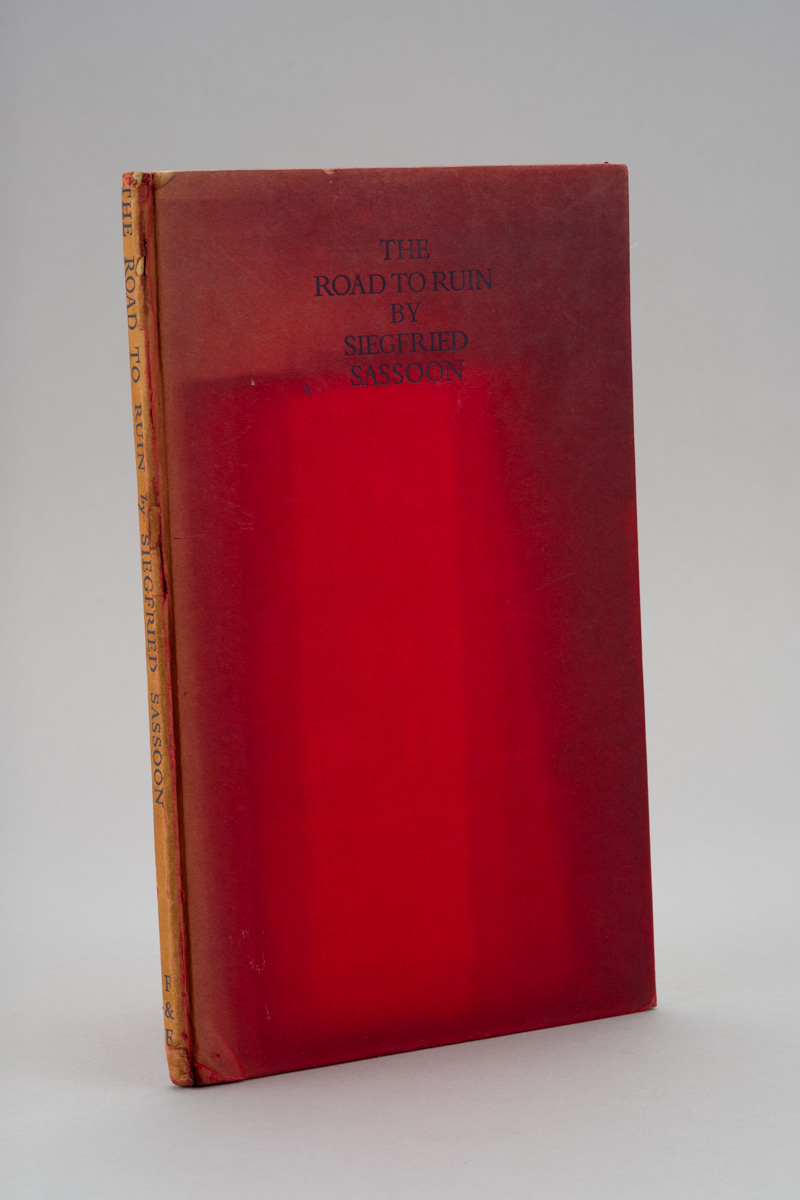
The slender volume contains seven poems, several of which had previously appeared in The Spectator and The New Statesman. Rather than looking only backwards towards the trenches, Sassoon turned his attention towards what might happen next.
That gives the book its particular historical force.
This is a celebrated First World War poet, fifteen years after the Armistice, recognising that the peace for which his generation had paid so terrible a price might not endure.
And this copy carries something more.
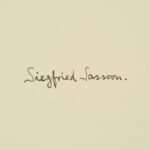
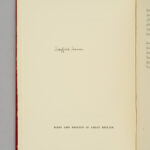
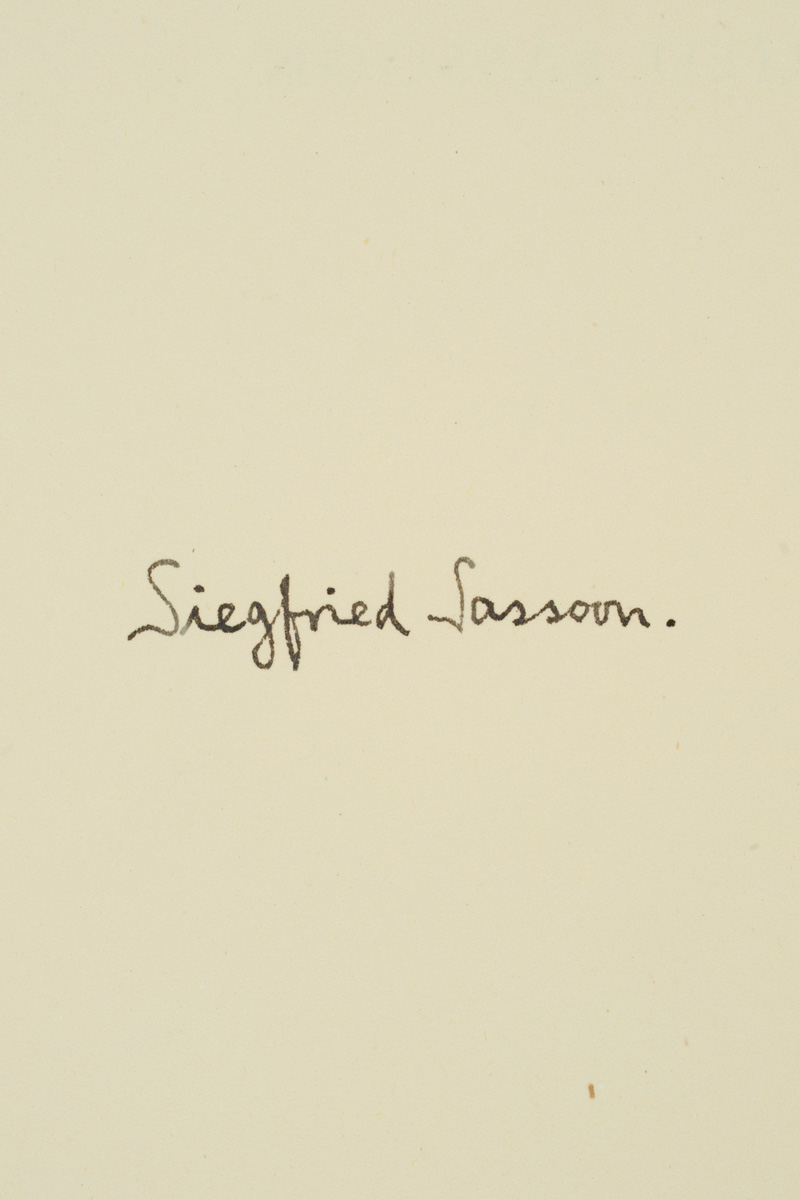
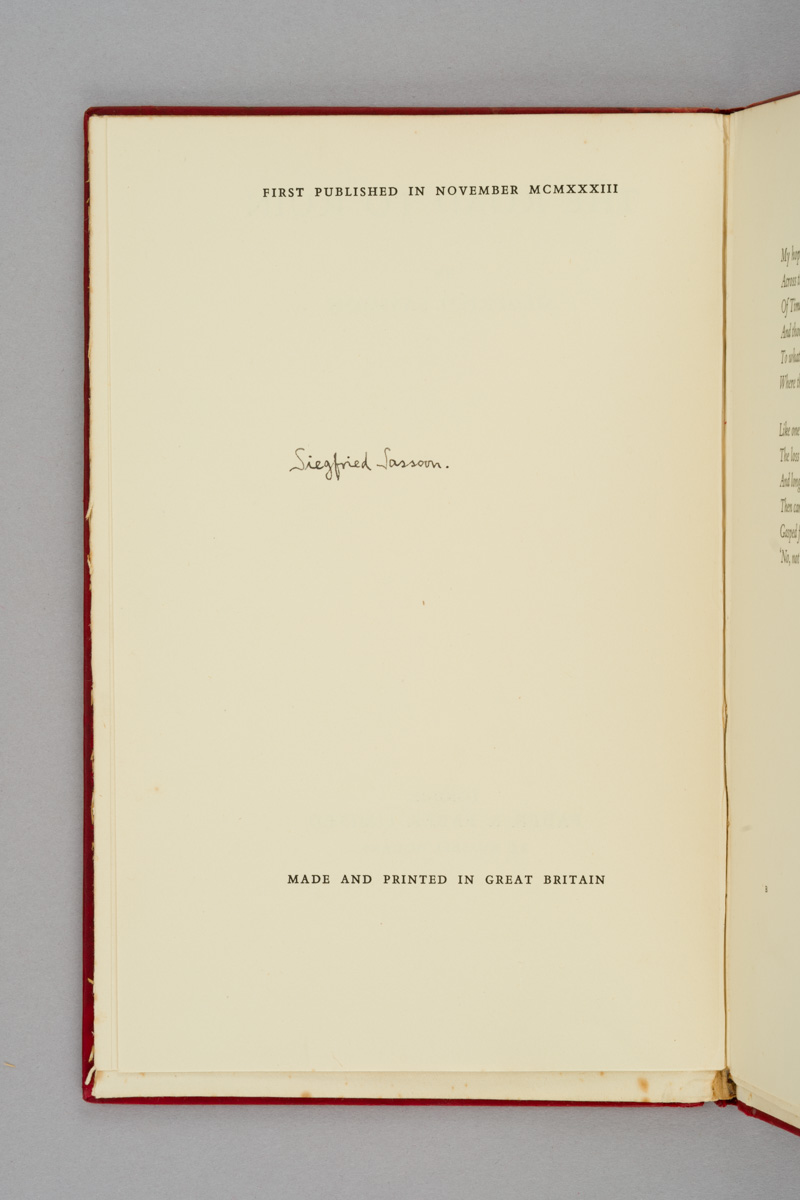
On the verso of the title page appears simply:
Siegfried Sassoon.
His signature transforms the volume from a literary document into an object with a direct physical connection to one of Britain’s most important war poets.
Within six years of its publication, Europe would once again be at war.
Signed by Siegfried Sassoon.
The clear authorial signature is the defining feature of this copy and provides a direct association with one of the major literary figures of the First World War.
First edition, 1933.
The verso explicitly states “First published in November MCMXXXIII,” confirming the first edition.
A remarkable historical moment.
Unlike Sassoon’s famous poetry written during and immediately after the First World War, The Road to Ruin looks towards the possibility of another conflict.
Published in the year Hitler came to power.
Its warnings acquire considerable historical resonance from its publication in 1933.
An important bridge between the two World Wars.
The book connects the literary culture of the Great War with the political anxiety of the 1930s.
Scarce signed.
A recent auction description likewise characterises signed copies of this first edition as scarce.
Strong collecting appeal.
Particularly appropriate for collections devoted to First World War literature, war poetry, signed modern first editions, twentieth-century British literature and inter-war history.